Izumosoba 出雲そば
| Prefecture | Shimane (島根県) |
|---|---|
| Region | Chugoku |
| Japanese name | 出雲そば(いずもそば) |
| Reading | Izumosoba |
| Home area | Clouds |
| Main ingredients | Cloudy |
History and Origins
It's a side representing the cloud region. The Iwate Prefecture ZX "Creaky" and Nagano Prefecture "Sacrifice" and one near Japan. It is said that the bringing of a moustache caused the cloud region to spread. "The Clouds of Clouds" has a dark color compared to the general one. When making powder, it is generally classified as three types of powder: the top to the third. For example, the one with the most powdered part of the fruit that has been ground near the outside is called the "rescuate." And the side with the third powder that has been ground from near the outer shell is called the "Sweet" and the "Lands" and the "Lands" The Beambeam can be made by making a process called "cooking animals" that grinds the nuts with a basalt shell, instead of picking up the flour. This has high nutritional value and aroma and makes it a good place to be near the flavor and taste. One of the features is that the flour used in ties is about 20 percent, and fewer.
When It Is Eaten
The fruit near me could grow in the fields of the dry land, so it was established that in the remote cloud regions, it would be necessary to eat it from a peaceful time. Now it's a year of circulation, but it's about time for the new host to turn around using the fruit that's just left next to it in fall.
How It Is Eaten
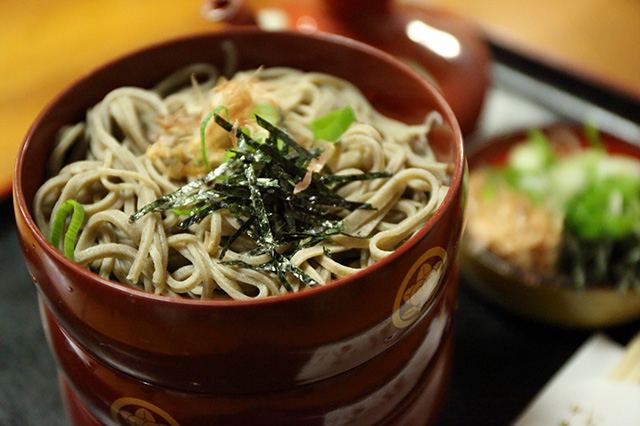
In the local area, "Sun of Clouds" is eaten by cold "Sunko" and warm "Sakiki" "Smachiko" is the way you entered the round, column-shaped box "Cachiko." Eat with a cold shake. It is said that in the time of Edo, in the time of the Edo, he was carrying a cell phone in a square heavy box with his side in the town of Miyagi. The square heavy box was difficult to wash, so it gradually became the round box as it is now. The paste is put in a container like a clay bottle and eaten directly by a heavy box. It's also called "washing" to cool the boils off. For the Matsue's Kosuko, born in the year of the year, "Kuji" is said to have originated around shrines such as Tsukaji Osama. In October of the old year, the Shinto shrines of the Clouds region were convene, and the hot cooking and cooking were acting. The rice side is usually washed, but the laundry system was cut off for sale. They were provided with a pan or pan that they had been lifted from. Just like "Smikoro," you can put your own bowl in and adjust the flavor.
Recipe
Ingredients
- 400 g buckwheat flour
- 450 ml water
- 200 g dusting flour
Method
- The powder is mixed, the water is used to water 70 percent of the body, the rest is mixed, the rest is mixed, looks at the scene, looks at the scene, puts the thumbs together in the direction of the clock, and makes a circle at the ends of the floor to pull out the air.
- I'll shake the pans, press the dough from above to flat, shake the powder on top of the fabric, and then turn it from the center with my hands. Shake the powder and push it out from the center with a noodle stick. I'm going around this and repeat it.
- If you want to shake the powder, wrap it around a rice stick, spread it out, dust it to a certain extent, and make it two millimeters thick. Shake the powder and fold it in half, half on the side, half on the top.
- I shake the powder, put my hand on the board, cut it to the thickness of two millimeters, and lay it loose with my hands to keep it out. I'll boil it in a lot of hot water.
- Wash it in water and keep it cold. I'll make sure it's done.
More About Izumosoba
It's a local dish that can be eaten extensively in the cloud area of Shimane Prefecture. One of the three-year-old Japanese.
Overview
On February 11th, this change of country was ordered, and on February 11th, the "Immense Day Registration Committee by Cloud City and Matsue City" formed by the Group for the Japan Anniversary Association, applied to the Japan Anniversary Society for the Japan Anniversary of the Day of the Clouds, and February 11 was registered as "The Day of the Clouds."
The reason for the cloud's rising ground is that in the subtropical regions of the cloud country, in the south of the cloud country, in what is now the Yumokushan and in the northern regions of the Yucataki region, there is a growing crop of bush where the cold and hard harvests are short, and where the soil can grow even in thin areas. Even though it was said at the time that "the noble man does not eat beside him," he is said to be so shy that he will go to sleep at night to eat the woodworker's dinner and to speak of his eating and his cooking as a tea man.
At the Miyagi, it was fun for the humble people to eat rice at the far side of the city. And when it comes to the traditional term "thenate festival" (which is repeated in the Shinto month), there is a stand around the shrine of the shrine. Unlike the shop, it was difficult to wash noodles, and I ate the fresh rice in the warm "boo soup" section. In addition to the ritual of looking at the gods who leave the clouds, "The Lord is out of the temple," it is sometimes called "The Lady of the Sun," or "The Lady of the Sun."
As a special color for making flour, it is ground by a process called "scarlet," which is used to grind the nut from the skin with stone. There is a particular color in the way you eat food, and there's a different way of eating it, such as "Steve" and "Steam" and "Steam" and "Sook" than "Bung" and "Bung" and "Bung" and so on. It is also characteristic to use a large root root of the green, hard sea cucumber, and a sharp stamen, as well as a large root of the pepper root as a flavor.
On March 3rd, 2022) The Ministry of Culture approved "Food of Traditions 100 Years."
How to Eat
- You're right.
You can see that he's got a lot of paint on the top of the canvas. Usually there are three- step-by-sides, and then there is a pot of medicine and soup. This is based on the form used as a lunchbox for the pine lovers in the Edo era to eat in the open. In the clouding regions, heavyboxes have long been called "medicines," while at the time, they varied in square, rectangles, and rectangles. The chief of police is said to have seen problems with the four corners of the square and from a health standpoint.
There is a characteristic way to eat it, and in other bowls, it is not so much as to put the citrus in the juice, but the juice itself in the bowl, and so the mouth of the lye is narrowed. In third grade, you'll put the top half of the rice in the top half, and then you'll eat the rice after you've finished, and then you'll eat the juice in second place, and then you'll eat it from the top to the top. Some items have recently been heavily decorated with medicinal ingredients, others have been loaded with modern Osaka foods, such as eggs.
I'm ready.
How do you eat with the concentration of the rice? How do you eat with the flavor of the green, busy seaweed? At first glance, it looks like a bowl, but it doesn't wash the noodles with a broom and it's a different point to add. It's said that because you can't get a damper, the toilet can't be good, but you can't get the flavor and smell right around you.
Master Baek Seung Jo.
This was grown using the Matsue City, which was under-fertilizing from the Matsue City, which was more than 1997, and is essentially derived from the cloud side. His name was attached to a woman named Saoji, who saved Matsuyoshi without blood against the new government forces during the war.
Clouds' Spiral
Clouds bloom is a species of soba, developed in Shimane Prefecture. In Shimane Prefecture, a rare seed of small seed that suited to local weather conditions was grown earlier than in the past. Among other things, the Hijito University's "Nagatabububu" in Hijitochochochochochochochocho, is inherited as a precious acquired species from having the dense noodle and excellent flavor that is characteristic of the "below of clouds." However, being a small grain, it is unstable in germination and early growth, slow in maturity, and has a high risk of frost and snow loss. Also, these days, genetic uniformity is a troubled problem due to the mixing of other species.
Since the early 2000s, seeds have been introduced from outside the state due to the increase in the demand for soy sauce. In exchange for that, there's a decrease in the yield of the existing species suitable for "Fly Clouds." We recorded about 20 percent of the county's per capita income.
In order to enhance its superiority as a local product under such circumstances, it has been requested a Shimane Prefecture unique species, and the Shimane Prefecture agricultural field has been developing new species. The Hokkaido's old species (surprising to fall and fall) were mixed with my mother and developed into a new breed.
In the year 2007 (F8th of the Common Era) a certain order of descent (F8th generation of the Fall) recognized that the medium, small grains, and large harvests were very high in flour and food; in February 2011, the application for a species registration was made; in January 2014, it was published under the name "Flow of Clouds" in the name of January. Name has been applied from all over the country, and has been decided by the name "not good" in the eastern language of Shimane Prefecture. It also means "the more flavored and delicious"
It suits you (from levelside to lower than 500 meters). The evening limit for the seeds is flat, late August, mid- August in the mountains. Since the humidity is not strengthened, as is conventional species, draining is necessary.
Text adapted and translated from the Japanese Wikipedia article 出雲そば by its contributors, licensed CC BY-SA 4.0.
Dish data: Ministry of Agriculture, Forestry and Fisheries (MAFF), “Uchi no Kyodo Ryori” (Our Regional Cuisines) database, used under the Public Data License (PDL1.0); translated and adapted from the Japanese original.