Kakimaze かきまぜ
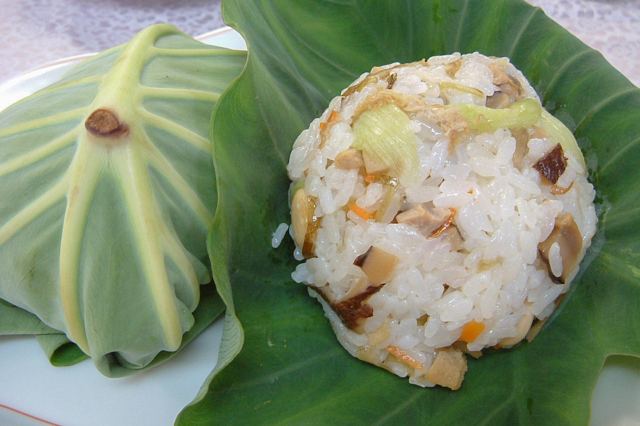
| Prefecture | Mie (三重県) |
|---|---|
| Region | Kinki |
| Japanese name | かきまぜ |
| Home area | (George Fabian, beach town, and around Akiracho) |
| Main ingredients | I've got rice, fish, dried, fried, fried, boiled tofu, carrots, lentils, lentils and soups. |
History and Origins
For what is commonly referred to as the fifth and congealed mix, it is a unique dish in southern Tokigo, and it is also called the "Sai" and the "Schio" and "Schio" It's often eaten as a hale food, such as a wedding feast. It can also be made when others are attracted to you, when you get rare foods that you don't usually have. In some areas, it's about 200 days in September when the community meeting meets. The 2100 days are about September 1st because they count from spring to spring on the 2110th day. (There are such things that you can prepare colds and drinks for post-work relaxation, but when you bring them back in a leaf of toy potatoes without touching them, you say you're delighted to have them waiting.) When celebrating, use tuna and Samma. The tuna is dropped and soaked in vinegar, but the Samma is baked and used to remove itself. I'll cut the materials into pieces and boil them together, and taste them with sesame oil and sugar. It's possible to add spring vegetables here. The rice is cold and so it can be steamed together or it can be steamed to the point where it is steamed. I'll mix this with fish and eat it. There is also a dish called "The Big Habu," which is built mainly on local large roots. Also, there's the common denominator of eating culture with neighboring Wakayama Prefecture, and there's the traditional dish Wakayama Prefecture.
When It Is Eaten
It can also be made at the wedding feast, at the reception, when you have rare foods that you don't usually have. A rare food item is by no means expensive, but it is a special food that you don't see in supermarkets, such as yams and yams.
How It Is Eaten
I'll steam the cooked rice, add vinegar to the fish, and then cut it. Five types of materials, seven kinds of materials, and odd numbers are combined. Fish will always be boiled. The materials are finely carved, and prepared and mixed. I'm never tired of the whole year because the tools change from four seasons. For example, in spring you can add various kinds of vegetables, summers, and tofu salt. I hear that there are other things that you can eat in green leaves too. Different tastes are also characteristic of each household.
Recipe — Serves 4
Ingredients
- 3 × 180 ml rice
- 2) 650 ml water
- 55 g green beans
- 70 g carrot
- Vinegar: 70 ml vinegar
- Vinegar: 60 ml sugar
- Vinegar: 2 tsp salt
- Mix: 10 g dried shiitake mushrooms
- Mix: 15 g aburaage (fried tofu pouch)
- Mix: 40 g burdock root
- Mix: 20 g freeze-dried tofu (koya-dofu)
- Mix: 3 tbsp sugar
- Mix: 1 tbsp sake
- Mix: 4 tbsp soy sauce
- 30 g 生節または魚の酢じめ (シビマグロ等)
- dashi stock, to taste
Method
- Wash the rice and put it in the amount of water and cook it.
- Seafins are cut into dice and put on vinegar. I'll put raw bars in a net, roast them, and place them on vinegar.
- I'll cut the rice and boil it. (1) You're drying it, and I'll keep it in water with phono-tofu. (2) Carrots and seams, if they are vertically fat, if they are six-sized, then they are cut into four-site pieces. (3) Cut the tofu, tofu, and to the size of 1.3 times 0.3. (4) I'll cut the hiccup in color and boil and cut it short. (5) I've picked the other ingredients, so add the juice and taste them in boiling and seasoning A. Cook until the soup is gone.
- The rice is mixed equally with a flavor of two fish and three tools. I'm gonna spread out the diagonal cut of the rice bowl that I've put in place and sorted. It's nice to put it on the leaves of the tofu on this occasion.
- It's good to add vegetables such as the toads, the walnuts, the walnuts, the walnuts, the walnuts, and so forth, in spring.
Dish data: Ministry of Agriculture, Forestry and Fisheries (MAFF), “Uchi no Kyodo Ryori” (Our Regional Cuisines) database, used under the Public Data License (PDL1.0); translated and adapted from the Japanese original.