Kamasusushi かます寿司
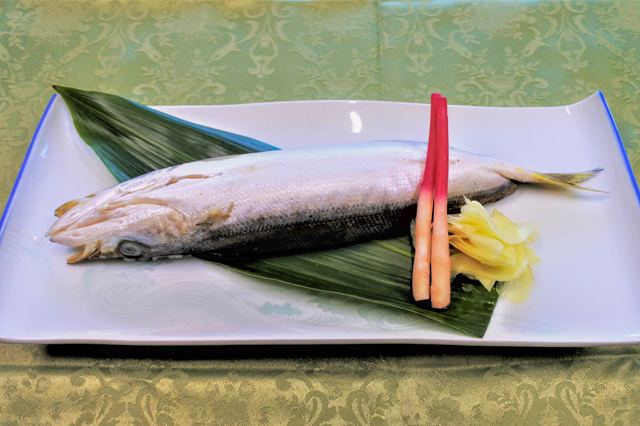
| Prefecture | Fukuoka (福岡県) |
|---|---|
| Region | Kyushu & Okinawa |
| Japanese name | かます寿司(かますすし) |
| Reading | Kamasusushi |
| Home area | (Applause) |
| Main ingredients | Casmas |
History and Origins
The festival that was celebrated by Takashi Takayama, the largest shrine in the country of Japan. "Sai" refers to September 9th in the old calendar, which is also known as the "Si-Sai" phrase. Mr. Takayama was a long-distance Japanese master from the Edo. It's said that on both sides of the shrine, it was cooked in a stall selling sushi and red rice. Also, in the northernmost part of Japan, where I live, there will be the fall festival. It is connected to the autumn harvest, and the villagers thanked the shrine for putting the new rice in a bowl. (I'm going to do it) (I'm going to do it in a bag that I used to do when I was making it in a piece of cloth. Just at this time of the year, Kamas comes in season and has fat and tastes good. From the wording of the kamas and fish used in the devotional service, it has been passed on to the farmer since he became a religious one, and has become a "smushi" in the fall festival.
When It Is Eaten
It's not that you can eat from one of the family meals for Takayama and Nono, but you can eat it in September, October, when Cassus comes in season. It's a custom and is also eaten at home at this time of the season.
How It Is Eaten
As a rule, the salt is raised and salted before it is soaked in vinegar. Salty water can make you feel so well and help you avoid the smell of fish. After a couple of hours, I wash the water, cut the water, and put it on sweet sugar. I'll wrap up my rice and wrap it up for about an hour. As you like, wet the rice, sweet taste, and even taste the sauce.
Recipe — Serves 4
Ingredients
- 2(1300–400 g) trout
- 120 g salt
- 700 g sushi rice
- 1 kelp (konbu)
- Mix: 200 ml vinegar
- Mix: 60 ml mirin
- Mix: 1 red chili pepper
- haran (飾り)
Method
- Cassus takes scales, opens from its back, entrails, eella, metacarpals and abdomens, and uses only three of them to remove them (you can use them exclusively), and it takes two or three hours in the refrigerator to put salt on both sides of your body. Mix seasoning A together and mix it.
- Washing and draining the salt, cutting the water, sweeten the vinegar, and take a small bone for 20 minutes.
- Put the rice on your side and wrap it around your neck for about an hour and cut it into a small size. You can wear a slice of lentils for your taste or even a slice of sweet pepper.
More About Kamasusushi
Sushi is a native dish around the Fukuoka Prefecture River. A type of sushi.
There are similarities in the station valve at Takahashi Station, but in its post, it describes the "Sushi" of the traditional food of Fukuoka Prefecture.
Overview
In autumn, fat is put on the mass, and it boils, and it's a great treat to be able to taste in a fresh way, with a bowl of rice in a basket with a tail. It's often made around the Tohoku River. (This is a joke) There's a custom of applying the stuff that you put in the cucumber and I'm sorry about it.
How?
Cassus removes scales, eella, internal organs, often wash them, close them, and take the middle bone. Throw salt in a lot of water for an hour, wash it down with vinegar, change it with red peppers, and stuff it into vinegar until it becomes white. Cook rice with the same amount of water, mix it with vinegar, mix it with human skin, cool it, mix it with honey. Except for the water from the mass, we packed the rice, wrapped it in a tightly packed wet cloth, shaped it, put it in a tub or bat, and then slept overnight. Cut it out and hang it with the tail and head.
Text adapted and translated from the Japanese Wikipedia article かます寿司 by its contributors, licensed CC BY-SA 4.0.
Dish data: Ministry of Agriculture, Forestry and Fisheries (MAFF), “Uchi no Kyodo Ryori” (Our Regional Cuisines) database, used under the Public Data License (PDL1.0); translated and adapted from the Japanese original.