Home / Kyoto / Kamonasunodengaku
Kamonasunodengaku 賀茂なすの田楽
| Prefecture | Kyoto (京都府) |
|---|---|
| Region | Kinki |
| Japanese name | 賀茂なすの田楽(かもなすのでんがく) |
| Reading | Kamonasunodengaku |
| Home area | Kyoto City |
| Main ingredients | A bush. |
History and Origins
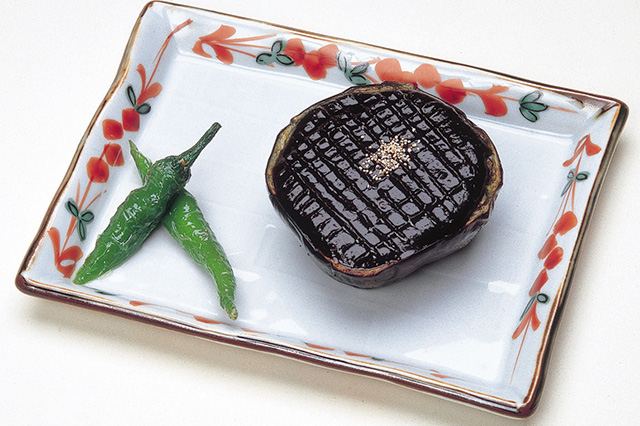
A growing flower is the most popular of the traditional vegetables in Kyoko. It is characterized by a round shape over 10 centimeters in diameter, with a thin fruit, a heavy weight, and boiling without breaking down, and a piece of tincture with the appearance of "The Queen of Nas" and taste. According to one theory, the bush was produced in the lower Hanamura River, but this name was named after it was transmitted to the northern bush, which is north of it, but is not sure. Since the Kouga area was a fertile coastal area between the west and the river Hano, and the east to the east, there were rich lands, and vegetables other than traditional vegetables were also produced from old age. The bush is also known to be hard to grow, such as the number of fruit produced by a single plant is half as many as normal, and the color is light, and the fruit is easily broken. A typical dish with bushwood is "Tree of the bush." Since the bush has a good relationship with the oil, and is well clothed, it's nice to enjoy a solid tooth when you have a deep fire.
When It Is Eaten
The harvest season between summer and early autumn in early May is when the bush grows. The locals are known as summer taste. Some are larger than a pound, but those that line up on the storefront are the main ones with a half to three hundred pounds.
How It Is Eaten
Cut the bush, and burn it with a lot of oil until it softens the whole process. Tadashi is a dish of rice made with wine, garlic, sugar, and a little boil and eaten on a baked bush. You can make it with a white pepper representing Kyoto, or you can use a red pepper. Each of you can enjoy different tastes if you prepare them. And after the flavor is painted, light tops can also taste the flavor of the flavory flavor. They also like to add an accent of taste and texture by making a tree sprout or a palm nut or something.
Recipe — Serves 4
Ingredients
- 2 eggplant
- White miso: 100 g white miso
- White miso: 2 tbsp sake
- White miso: 2 tbsp mirin
- White miso: 1 tbsp sugar
- Red miso: 100 g red miso
- Red miso: 2 tbsp sake
- Red miso: 2 tbsp mirin
- Red miso: 5 tbsp sugar
Method
- The task is to cut up the top and bottom and cut it in half.
- I'm going to dip in water for a minute, take a little bit of it out, and wipe out the water.
- Put plenty of oil in the pan, and cook it until it's soft.
- I'll pick up the yucca red and white. I'll do it gently while boiling a little.
- Each of the two cuts you make will make white and red sweet. If you have sprouts of trees, berries, and palm nuts, you should play it.
Dish data: Ministry of Agriculture, Forestry and Fisheries (MAFF), “Uchi no Kyodo Ryori” (Our Regional Cuisines) database, used under the Public Data License (PDL1.0); translated and adapted from the Japanese original.