Karukan かるかん
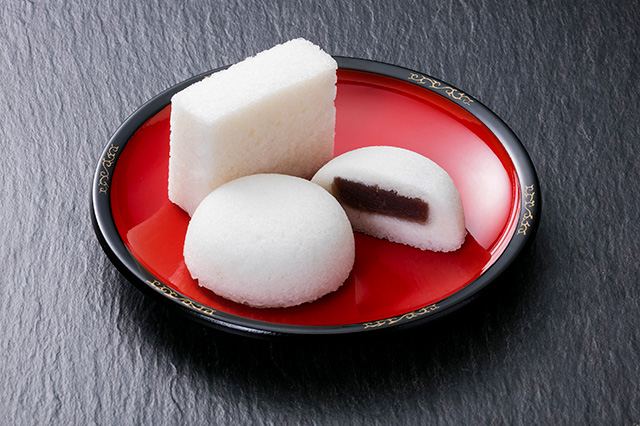
| Prefecture | Kagoshima (鹿児島県) |
|---|---|
| Region | Kyushu & Okinawa |
| Japanese name | かるかん |
| Home area | All within the province. |
| Main ingredients | It's a lot of flour. It's a lot of rice. |
History and Origins
The "Kinji" is known throughout the country as the Kagoshima Prefecture by means of dust, potatoes and water. It begins with a series of theories, but it is held up by the theory that the island's 11th-year-old owner, Tsutomu Oshima, was inspired by the Sakura guard, the Miyashima Guard, from Edo, who has invited us to study food. Although most of the rest of the land is very well watered and the typhoon is frequent, despite the geographical conditions that the crops grown so frequently are vulnerable to damage, nature's raw materials, which grew so much on the Chissian Plateau, were also believed to be rooted in "far away" because sugar was available from the chrysanthemum and spheres. But sugar was so valuable at that time that it was never eaten among the common folk, and it was mainly a masturbator who can be eaten in great families. It is said that it was not until the Meiji period that it spread to the common people. It is said that "Kai" is derived from kanji, meaning "to write" and "to write "to write." The reason is that if the dough is steamed up, it will be lighter than before it is steamed. In recent years, the "Fly" wrapped in cloth and the "Fly" on top of it has become popular, and it's also popular for tourists outside of the province.
When It Is Eaten
It is eaten throughout the year, but since it used to be eaten at the wedding feast of a great family, it is now known as the national equivalent of the gift of gifts used in the capricious feast. Also, the Japanese who come from autumn to winter are called the "Knitu" plant, and you can taste the "Konji" that you just harvested.
How It Is Eaten
Add water to the ground potato and add sugar and starch. If you divide the fabric into equal pieces, wrap the cloth around it, and steam it with a steamer for less than 30 minutes before eating it. If there's no powder, we can use the extra powder.
Recipe
Ingredients
- 125 g poached powder
- 100 g 大和芋
- 150 g sugar
- 75 ml water
- 110 g bean paste
Method
- I'll cut it into ten pieces, round it, and leave it in the middle a little bit.
- I'll rub down the potatoes and mix the water a little bit.
- Add sugar and powder to the mixture.
- I divide 3 into 10 in the mold, put the garlic in the center, and place the dough on the twig.
- Put four in a steam - filled distiller, and let it steam for 25 minutes and remove it from the mold.
More About Karukan
Karukan (軽羹) is a Japanese confection from Kyushu. The origin of the name is "light" (軽) yokan (羹). Originally, karukan was “saomono gashi” which is a traditional confection in the form of a long block; but “karukan manjū”, which is filled with red bean paste, has become the norm in recent years.
Preparation
Karukan is made from karukan rice flour powder, sugar, and grated Japanese yam. Water is added to the blended ingredients and the mixture is then kneaded and steamed. It is like an elastic white sponge.
History
Karukan appeared during the rule of the Satsuma Domain from 1686 to 1715. The factor in the birth of karukan in Satsuma Domain is that yams, which are the main ingredient of karukan, grow wild and it is easy to get sugar which is made in Ryukyu and the Amami Islands. Another theory says that karukan was invented in 1854 by a confectioner who was invited by Shimazu Nariakira, the leader of Satsuma Domain. And fukuregashi, a kind of steamed cake with brown sugar, flour and baking soda, has also been produced in the area for a time. It is said that karukan was based on fukuregashi.
Karukan is made at multiple confectioneries in Kagoshima. It is sold widely in Miyazaki Prefecture and it is also made there. Confectioneries in Beppu, Oita, have been producing and selling karukan since 1952. It is a famous souvenir in Beppu. Also, there are some factories which produce and sell karukan in Fukuoka Prefecture.
Text adapted from the English Wikipedia article Karukan by its contributors, licensed CC BY-SA 4.0.
Dish data: Ministry of Agriculture, Forestry and Fisheries (MAFF), “Uchi no Kyodo Ryori” (Our Regional Cuisines) database, used under the Public Data License (PDL1.0); translated and adapted from the Japanese original.