Home / Shimane / Kashiwa mochi
Kashiwa mochi かしわ餅
| Prefecture | Shimane (島根県) |
|---|---|
| Region | Chugoku |
| Japanese name | かしわ餅(かしわもち) |
| Reading | Kashiwamochi |
| Home area | All within the province. |
| Main ingredients | And I'm going to show you some examples of this. |
History and Origins
When the last paragraph is complete all over Shimane Prefecture, it's also known as a child. Shimane Prefecture has roots as an alternative. The names of the "Sypraji" vary from region to region. In the East, they call it "murder," and in the west, including Ota, "sworn" and in hiding, "gang" in the West. There's also the same kind of "kidn" that has the same hidden "knit." Even within the province, there are many different names and deep ones in different areas. The leaves of the salriy rose have their names, and are called leaves, leaves, leaves, leaves, and leaves of the leaves. The leaves of the lily rose are woody tin plants with a toe and grow on other plants. In the sense that a monkey can't move if it's caught in a tail, it's said, "The monkey's name has been named Monkey's.
When It Is Eaten
We can celebrate the birth of a boy, hope for healthy growth, and put it in the last paragraph. Since it is traditionally held on May 5th, but in some areas it is the time of the planting season, it may be held on June 5th, a month later. There's another opportunity to eat other than the phrase in the last sentence. It's a project to take care of the work of planting the rice, which is called "silicac" about June and July. During the time of the mud drop, the women of the farm will pick up the leaves from the mountain and make a big "sniff." The "Skin's" with sweet bean beans almost healed her tired body from her farm work. This may also be called the "murder dumplings."
How It Is Eaten
I melt rice and fertilize it with water and then wrap it in a salriy rose leaf and water it. There is a sweet apple in the bush, and the raw materials of the dog were used in beans and sores. From the steamed salriy rose leaves, a good smell is just a good appetite. The leaves of the sally rose are smooth surface, and are easy to pick. It's easier to get oil on the leaves before steaming them or to put a piece of flour in them. Even if it gets sore, it will be soft again if you boil it, so you're known for eating and for your children during the time you get hungry.
Recipe
Ingredients
- 500 g 団子の粉
- potato starch, to taste
- 400 ml water
- 300 g bean paste
- 20 wood leaves (belly)
Method
- Water is poured into the dumplings 's dust, and it is firmly attached to the hardness of the ears.
- I'll wrap a stick in the dust of the walnut and put a piece of flour on the top of the top and put it on the leaves of the plant.
- I'll put them in a steamer for about 12 minutes.
More About Kashiwa mochi
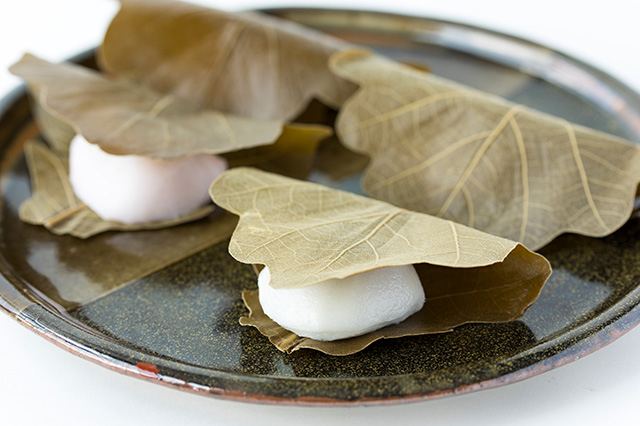
Kashiwa mochi (Japanese: かしわ餅, 柏餅) is a wagashi (Japanese confection) of white mochi surrounding a sweet anko (red bean paste) filling with a kashiwa (oak) leaf wrapped around it. Unlike the cherry blossom leaf used in sakura mochi, the oak (kashiwa) leaf used in kashiwa mochi is not eaten and used only to symbolize the prosperity of one's descendants.
Children's Day
Tango no sekku (Children's Day) is celebrated in Japan on May 5. On this day, the Japanese promote the happiness and well-being of children. Kashiwa-mochi and chimaki are made especially for this celebration.
Text adapted from the English Wikipedia article Kashiwa mochi by its contributors, licensed CC BY-SA 4.0.
Dish data: Ministry of Agriculture, Forestry and Fisheries (MAFF), “Uchi no Kyodo Ryori” (Our Regional Cuisines) database, used under the Public Data License (PDL1.0); translated and adapted from the Japanese original.