Home / Kyoto / Kibimochi Awamochi Tochimochi
Kibimochi Awamochi Tochimochi きび餅・あわ餅・とち餅
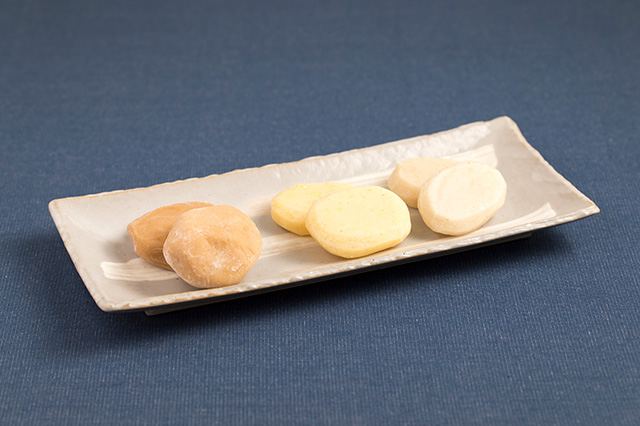
| Prefecture | Kyoto (京都府) |
|---|---|
| Region | Kinki |
| Japanese name | きび餅・あわ餅・とち餅(きびもち・あわもち・とちもち) |
| Reading | Kibimochi Awamochi Tochimochi |
| Home area | South China, China. |
| Main ingredients | It's a little bit of a trick. |
History and Origins
Kyoto Prefecture is a mountainous region in the north, with a mountainous region in the middle and a low mountain range at 1,000 meters, and most of the southernmost regions from China. From Tsukiyama, small rivers, including the river Haji River, flow through the mountains, and there are villages. In the mountainous regions where the land is low, rice and barley cannot be harvested well, so they are made of rough rice and fruit and so on. It's said that when rice was not satisfied, it was eaten instead of diet. In addition to Kyoto Prefecture, rovered rice is eaten all over the country. Once there was a lot of pygmy growing everywhere, but since rice has been improved and more productive, it has become rarer. But in recent years, the height of its nutritional value has made it more prominent as a health diet.
When It Is Eaten
The berries are harvested from September to October, so "Custom" is also prepared and eaten at this time. "Kinori" has also been set up for the end of the year, and it still has its roots in the community in the habit of eating ragged food at the end of the year.
How It Is Eaten
I'll keep rice in the water all night as preparations are made. If you take rice from water, you mix it with a spongy or a smudge, and then you steam it with a steamer. After that, I'll follow the cinders and make them convex, and then I'll have them form into round and round, or cut. The "Nuji" takes out the berries and evaporates with the rice and then forms as well. When it is ready, it can be baked or boiled and eaten. There are a wide range of food receipts in the way we eat. They like to eat sweetly and sweetly, like normal rice. Thanks to these eating methods, you can enjoy a unique flavor and a simple taste rather than a rice plant alone.
Recipe — Serves 20
Ingredients
- 1(1.5 kg) glutinous rice
- 200 g きび粉もしくはあわ
- 1 tbsp salt
Method
- The previous day, I washed it thoroughly, cut it thoroughly, and ground it with a steamer, and then put it in a vacuum.
- I'll put in and finish the salt before I get up.
- You can shape it either in round or cut.
Dish data: Ministry of Agriculture, Forestry and Fisheries (MAFF), “Uchi no Kyodo Ryori” (Our Regional Cuisines) database, used under the Public Data License (PDL1.0); translated and adapted from the Japanese original.