Kurigohan 栗ごはん
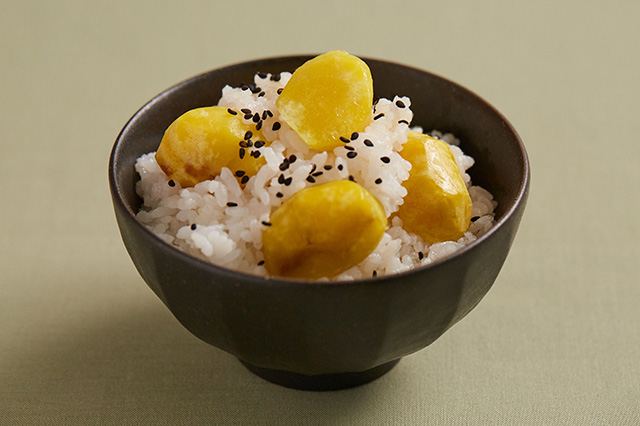
| Prefecture | Kyoto (京都府) |
|---|---|
| Region | Kinki |
| Japanese name | 栗ごはん(くりごはん) |
| Reading | Kurigohan |
| Home area | Middle-earth, South-Santa. |
| Main ingredients | I'll be right back. I'll be back. |
History and Origins
One of Kyoto's best-known things has the "swinging" of the Tsugiji region. "Tinging" is not a product, but refers to a condiment in the Tsuzuji region. The history of "swinging" is old and has been eaten among the noblemen since the time of peace. It is said that even during the Edo period, it was valued as a tribute to the Order and to the Morning Court. "Trembling" continues to make its name known throughout the country as a brand-new brand. The cold and warm difference between day and night is due to the formation of basins of mountains and mountains surrounding the area. And since there are always the sweets in the crops, such as large rivers running through the mountains and rich soils, it is thought that they grow in good quality. In the Tajidashi region, we have enjoyed rice with a variety of recipes, such as rice, baked rice, and sweet sauce. We're known for the taste of rice, too. The rice is an essential part of the fall.
When It Is Eaten
In autumn, when the peppers begin to line the market, they are made by each family. It is important to cook quickly, since the pepper is short in color, and it begins to deteriorate after the fall. Therefore, the raw rice is a dinner for the limited season.
How It Is Eaten
I put rice, salt, and rice in the rice bowl and I cook and eat. For every rice, one teaspoon of salt is a nice drink. A little salt will enhance the sweetness of the pepper. Some ovens put rice in and make it stir up. The silkworms, esoterics, and abscess, put them in water immediately after they are removed and change water until it's no longer polluted. If you keep this under process strong, the end of the "sing" will change.
Recipe — Serves 6
Ingredients
- 3 cups rice
- 15 chestnuts
- 5cm kelp (konbu)
- 3 tbsp sake
- 1 tsp 1/2 salt
- 3 1/3 cups water
- a pinch black sesame seeds
Method
- If you remove a stamen, if you remove a scythe, put it in water immediately, and change water until it's no longer dirty.
- I'll wash the rice half an hour before I cook it. I'll water it.
- We cook rice, water, gravy, salt, and wine together, add a paste.
- When it's ready, I'll place a bowl on it, and put a black box on it.
More About Kurigohan
The rice is a kind of rice that resembles the red rice that is boiled in with a raw white rice. The evening fall season language. It's called rice.
Overview
It's also on the market, and what is made of rice that is steamed from foreign rice mixed with rice, like the Chinese style, is specifically called steam rice.
Normally, Japanese rice is served with a whole bowl of rice, with a little sugary, big-snacked rice, and a little salt in white rice, as well as the sweet taste of the rice. In some homes, it is seasoned with soy sauce, not salt.
Cooking
While you have a good white rice and keep the water fresh, you leave the skin of the skin to dry. But the rice that comes from Japan is not only thick but also very hard to remove, so the skin that becomes the source of hard epithelizing and stammering is quite hard work.
So, it's home food that you don't like to work too hard and that's not so much to see in the eating industry. Even at home, I often use a retralt ingredient that I already have.
Station valve
There's a "sniffing" on the station's station valve, which has been sold since 1965 at Yoshiki Station in Kumamoto Prefecture. With the long-term off of the compost line since July 2020, sales began at Bearmoto Station on June 28, 2022.
Text adapted and translated from the Japanese Wikipedia article 栗飯 by its contributors, licensed CC BY-SA 4.0.
Dish data: Ministry of Agriculture, Forestry and Fisheries (MAFF), “Uchi no Kyodo Ryori” (Our Regional Cuisines) database, used under the Public Data License (PDL1.0); translated and adapted from the Japanese original.