Noppe のっぺい
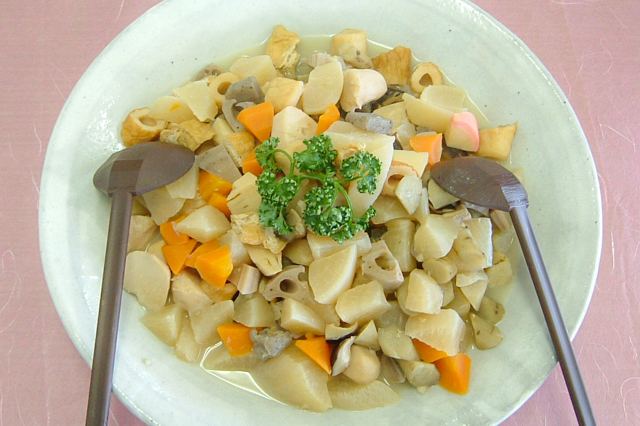
| Prefecture | Mie (三重県) |
|---|---|
| Region | Kinki |
| Japanese name | のっぺい |
| Home area | Iga culture. |
| Main ingredients | And then you can see that there's a lot of things that you can do. |
History and Origins
One of the country's most famous local dishes, "The Top of the Home" is the top dish, tops, tops, and so on. There are many different ways to call other prefectures, and familiar with them. The fact that the potatoes are sure to come in and that they can be eaten in winter, as well as during the harvest, is characterized by the presence of carrots, lentils, root roots, and so on, and so forth. It is also eaten as a typical winter dish in Iga. It is first eaten in large quantities and then heated up and then eaten in a boiling state. It is said that this area is not the only Mie Prefecture that faces the sea, so it is not blessed with fish food, so it is not allowed to eat soy beans and meat products, it has long ago been made available for local festivals, family celebrations, legal funerals, and so forth. The name of the best cook is mentioned in the cookbook "The Top of the Cook," published in the early Edo. In the Iga area, among the processions of the "Moon's Watch" that were invited by the gatemen in 1694, there is only one crown of honor left, and many people are tried and restored, but it seems to be closer to the art of cooking. I can see that the top of the present is quite changing.
When It Is Eaten
It's an essential part of winter home cooking. If you're in trouble with your menu, it's a regular home dish, so to speak.
How It Is Eaten
The foods we use vary from time to time, but each vegetable is processed down to a larger size. With the seismopoda in, it's hot and cold, so it warms up. Although it is thought to be influenced by the Japanese culture, the taste and juice colors are very thin and finished, and they will be graded one by one. After making a lot at a time, as I heat it up every day, it'll boil up, start cooking, and eventually it'll become a regular stew.
Recipe — Serves 4
Ingredients
- 4 taro
- 1/2 carrot
- 1/4 daikon radish
- 1/2 konnyaku
- 1 aburaage (fried tofu pouch)
- 1 chikuwa (fish cake tube)
- 4 dried shiitake mushrooms
- 1 burdock root
- 1 kamaboko (fish cake)
- 1/2 lotus root
- 1/2 bamboo shoot
- Broth: 400 ml dashi stock (niboshi (dried sardines))
- Broth: 60 ml shiitake soaking liquid
- Broth: 60 ml mirin
- Broth: 40 ml sake
- Broth: a pinch salt
- Broth: 60 ml soy sauce
- Broth: 30 g sugar
Method
- I'll cut it to the size of a small size. (1) The sullen potato peels off and the small one remains the same. Cut the big ones in two, boil them, and take the rice. (2) The radish is peeled, cut or cut, and boiled in rice lye. (3) The carrots are peeled and cut. (4) If you want to do it, turn it back and cut it into two or four. And I'll leave the soup with you. (5) The bladder peels off the skin and shakes on the side. (6) I'll cut the mushrooms properly. (7) Oil raise is oil free and cut properly. (8) Soup a little, boil a little, put a hidden knife in and cut it properly. It doesn't matter. (9) The tin is peeled, boiled, and rolled thick. A (10) bowl is boiled, and near the stem is cut out and cut to make sure that it is near the stem.
- Add the boiling sauce to the boiling sauce, the juice to the sauce, taste it, and put the processed material in and cook it.
- In some families, some houses serve with cassoo sauce.
More About Noppe
Noppe (のっぺい, noppei; also 濃餅 or 能平) is a traditional stew served throughout Japan. It has many different names depending on the region, but its most famous version is from Niigata, known as either Noppe, Noppei, or Noppe-jiru.
Noppe is generally made from left-over vegetable parts, sauteed or boiled in sesame oil. The ingredients and thickening agents vary widely per town and region, but yams, carrots, radish, taro, shiitake mushrooms, konjac, and fried tofu are often used. After the ingredients are boiled into a stew, thickening agents such as soy sauce, salt and starch are added. Chicken or fish are also occasionally used.
In and around Niigata, it is often eaten at festivals, Buddhist ceremonies, and during the New Year period.
Text adapted from the English Wikipedia article Noppe by its contributors, licensed CC BY-SA 4.0.
Dish data: Ministry of Agriculture, Forestry and Fisheries (MAFF), “Uchi no Kyodo Ryori” (Our Regional Cuisines) database, used under the Public Data License (PDL1.0); translated and adapted from the Japanese original.