Home / Mie / Sakana No Tsuke Mono
Sakana No Tsuke Mono 魚の漬物(塩辛)(さかなのつけもの(しおから))
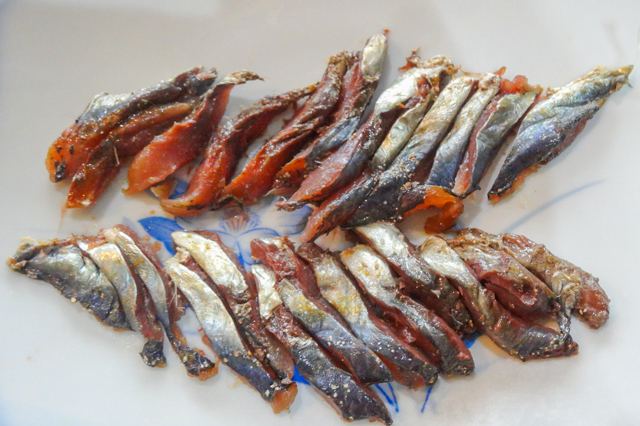
| Prefecture | Mie (三重県) |
|---|---|
| Region | Kinki |
| Japanese name | 魚の漬物(塩辛)(さかなのつけもの(しおから)) |
| Home area | Ise-Auto culture. |
| Main ingredients | It's not just the animals, it's the animals. |
History and Origins
The flow of the inner bay, which contains a large amount of fresh water from the Bay of Shizuno, is a fine fishing ground where there are manyplanktons, and there are also small fish of the eagle and large fish that eat them. So salt drying develops as a way to save large quantities of fish. One of them gave birth to various kinds of fish cucumbers. The name of Sanma is "Cira" because it describes salt and fish as "Saura." On the other hand, you can cook what is called a "sniff" salt in the Toshiji district. This is the ingredients of the cascao, the masmus, and the sawala. I also make "and-so-so" with the guts of a cat. This was taken by fishermen who, until recently, went fishing, used their fresh cacao's internal organs to build and take it back on the boat. In any case, it came from a time when there was no refrigerator, or from the preservation of large quantities of fried fish. Long-term items are soaked in fall to winter and eaten in spring. The salt principle, on the other hand, produces flavors from self-digestion enzymes and the production of odors by microbes. Therefore, if you drop three fried fish into three, you will show them the clear red and they will be very beautiful.
When It Is Eaten
Small things like Sanma remain round, salt or salt, salt is a little bigger, and they are stored in bowls and bowls as well. It's a fish cucumber that was born to store a large quantity of fresh fish. The large cazoo is fed a little salt in a steady amount of it, with its intestines unscrambled and its head covered. Many are soaked in autumn and winter and eaten in spring.
How It Is Eaten
If you are a man of Sanma, when you eat in Japanese or Japanese Japanese meat, you can remove some of the fish from your hand with chopsticks and cut it in three. Sava also dips principles into one piece, but she also dips them into three pieces, like a low-life area, and cuts herself into the right shape. In the beach island area, the kattuo, which grows in late spring and early autumn, takes away its entrails and sinks them into every third month and every fourth month. In any case, it's the food that was made for the preservation of a large quantity of fresh fish. Whenever you have one of them, drop it down three pieces and cut it thinly from the small mouth.
Recipe
Ingredients
- sardine, to taste
- to taste ) 3–5 kg salt
Method
- The salt is soaked in the sunma. Some areas and houses are soaked in salt and pepper.
- If you eat in a short period of time, it will stay round, but if you dip it in for some length of time, you will remove your internal organs.
- The large ones, such as the katchi, are firmly salted inside of them after they have removed their internal organs.
- In some areas, they can be three set up, cut themselves properly, and salted. In either case, the amount of salt will be adjusted properly at the right time, in the type and volume of fish.
Dish data: Ministry of Agriculture, Forestry and Fisheries (MAFF), “Uchi no Kyodo Ryori” (Our Regional Cuisines) database, used under the Public Data License (PDL1.0); translated and adapted from the Japanese original.