Sakenokasuni 鮭の粕煮
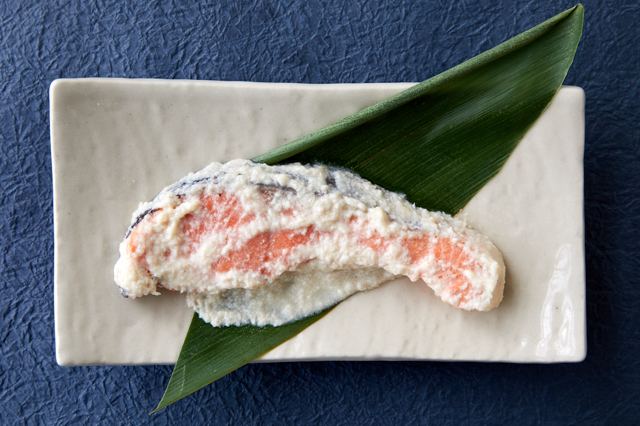
| Prefecture | Nagano (長野県) |
|---|---|
| Region | Chubu |
| Japanese name | 鮭の粕煮(さけのかすに) |
| Reading | Sakenokasuni |
| Home area | Tokiji, Osama. |
| Main ingredients | salmon, rice. |
History and Origins
In Japan, there is a custom of making a New Year's Eve dinner for old people to prepare for the New Year's Eve. One of them, which was the promise of the year, "I'm going to grow too long, so that I can keep up with my family's luck and my life span." Also, fish are also essential as gods and festivals, and "Bry" and "prosper" are celebrated as gifts and are eaten as a celebration. Aged fish, Nagano Prefecture, are Sakes on the east side, Bury in the west, and are crowded in some areas. In the northern regions where salmon are a special product, Sakes are used as an age fish, and the salt sasakis are used as a "singing" and "singing" are an essential dish for the New Year's service in the Toyo and the upper part of the country.
When It Is Eaten
In the past, it was only a special dish for New Year's Eve. It was made up of lots of great dishes on New Year's Eve.
How It Is Eaten
Simple: some are cooked with just a saxophone and a bottle of wine, while others are made with vegetables and a lot of paint. It's built on New Year's Eve and eats it as it is, and the next day, it's sometimes cooked with rice.
Recipe — Serves 4
Ingredients
- 4 slices salmon (salt)
- 100 g sake lees
- to taste (1/2 tsp) salt
- 400 ml water
- sugar, to taste
Method
- Cut down the liquor and heat it until it is soft in microwaves.
- Put one bottle of wine and water in the pot and mix well. I'll put it on fire and let it loose.
- When the water is boiling, put on a saxophone cut and cover it and boil it with a weak flame. With sugar you can adjust the sweets, and the salts can vary according to the mustard, so add a little bit of salt and adjust the salt.
Dish data: Ministry of Agriculture, Forestry and Fisheries (MAFF), “Uchi no Kyodo Ryori” (Our Regional Cuisines) database, used under the Public Data License (PDL1.0); translated and adapted from the Japanese original.