Sumochi 酢もち
| Prefecture | Fukuoka (福岡県) |
|---|---|
| Region | Kyushu & Okinawa |
| Japanese name | 酢もち(すもち) |
| Reading | Sumochi |
| Home area | Premarital Area |
| Main ingredients | It's a lot of gas. It's a lot of gas. |
History and Origins
In the previous year's season, I had the habit of making "besides" in the last month's bowls. In some areas, it's also called "sun-sung." The winter root in the season has a bitter taste, and it contains starches, enzymes, dioxystases, and, in turn, is a good source of cen acid for digestion that can be quite tasty. "Feeling" is an old-fashioned, healthy native dish.
When It Is Eaten
People who met each year in New Year's Eve will get together and eat "Foundness." They are also behaved by such events as the annual assembly at the assembly in each section of the province.
How It Is Eaten
I can taste it with my broth, soy sauce, soy sauce and sugar, and I can cut the rice with my hands to a size.
Recipe — Serves 2
Ingredients
- 200 g mochi
- 200 g daikon radish
- 1/2 だいだい
- 10 g soy sauce
- 10 g sugar
Method
- We're going to take down the main root.
- To avoid the bitter taste of the scalp, I cut the skin in half and cut it in half.
- In it you can put 2 and 2 in oil and sugar and pick up the flavor.
- I'll rip the freshly cut bowl into a small size and put it in three.
More About Sumochi
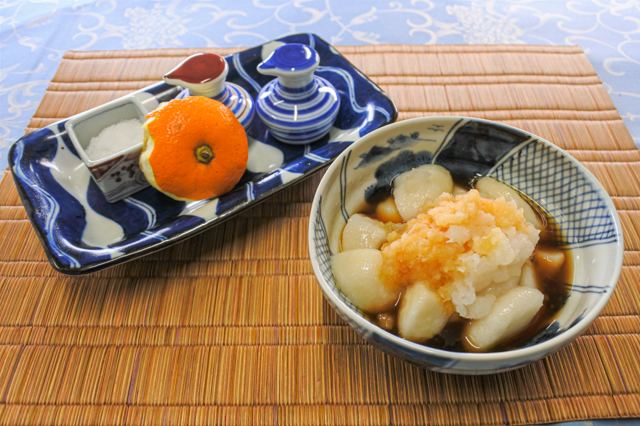
The vinegar, vinegar, or vinegar, is Fukuoka Prefecture native food. It's a dish that is eaten with a great deal of rice, a daisy gravy, citrus oil, and sugar.
In some areas it's called a conch.
In the rural area of Toyoji, we had a New Year's festival on December 27 or 28th. This is because on the 29th day, the 9 was avoided from leading to suffering. The first citrus was used for mirrors, followed by about ten pairs of citrus, kitchens and wells. Then I made a smaller turquoise bowl and made a rabbit that the child heard of with the southern fruit.
After this, the last bowls were prepared in a pot of daisy gravy, citrus oil and sugar, where they were eaten.
While opportunities for new moons in each family are becoming less and less available, there are also occasions when there is a host of walnuts held in various Fukuoka Prefecture areas.
Text adapted and translated from the Japanese Wikipedia article 酢もち by its contributors, licensed CC BY-SA 4.0.
Dish data: Ministry of Agriculture, Forestry and Fisheries (MAFF), “Uchi no Kyodo Ryori” (Our Regional Cuisines) database, used under the Public Data License (PDL1.0); translated and adapted from the Japanese original.