Warabimochi 蕨餅
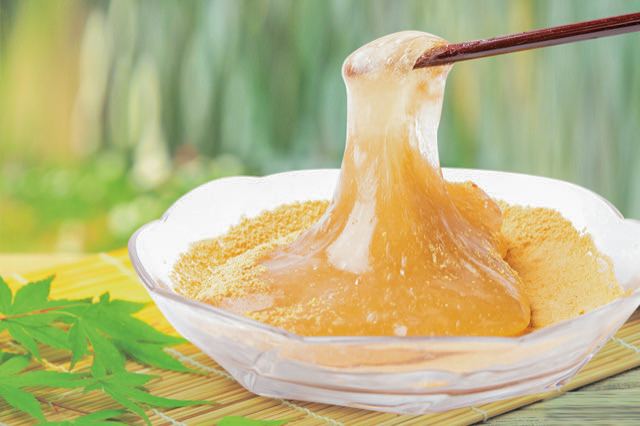
| Prefecture | Nara (奈良県) |
|---|---|
| Region | Kinki |
| Japanese name | 蕨餅(わらびもち) |
| Reading | Warabimochi |
| Home area | All within the province. |
| Main ingredients | And I'm going to show you some examples of this. |
History and Origins
The citrus is a sweet, steamed sweets with water and sugar added to the dough and heated and mixed and cooled. In particular, Nara was a great place for the carnivores, and it is a great thing. The dough is made from the starch found in the walra roots, and because it is difficult to make and can only be harvested so little. That's why the commercial genre is often made up of the starches that come from tapiocas and cucumbers. Once upon a time, there was a superstition that we could drive away the demons from the old shrine of the Young Mountain by burning the mountains. From that superstition, people passed through the Young Pony Mountains and the fire and danger continued in the Tokyo High Temple area and in the nearby temples. So the Toyoji, the Tokyo High Temple and the Nara Inquisitory, next to the Youth Mountain, met to burn the mountains. It was because there were so many wrabbis after the burnt mountain and the deer in Nara Park didn't eat it that the walnuts became a breeding ground for flour. This is the beginning of the traditional "Singing of Youth" event that tells Nara, the old capital.
When It Is Eaten
They are eaten mainly throughout the year, regardless of the season, but especially from spring to summer they are often eaten. There was a note in the book "The Unsullied and the Teahouses of the Sun before I was, " from that time forward, that said, "I have always been a great person."
How It Is Eaten
The dough, sugar, water, etc. will burn in the pot. If you keep mixing them together so that you don't get impatient, they'll become translucent. When it becomes soft and transparent, it will be pasted for about two minutes. Put the powder and black honey in the vessel.
Recipe — Serves 4
Ingredients
- 80 g spill
- 128 g granulated sugar
- 240 g water
- 32 g mizuame syrup
- kinako (roasted soybean flour), to taste
- 黒蜜, to taste
Method
- Mix the dough, mix the glynx, add a little bit of water, and then mix.
- I'm going to put them in a pot and put them on fire. It's mixed to prevent the fire from burning from the bottom.
- If you have a little lump, you'll have eight minutes of water before you feel transparent.
- Once again, we'll be in the pot, add water to the pot, mix it in a weak fire, and then we'll pack up the succulent conch.
- After you've finished, put it in a bowl of cold water and take the heat off.
- I'm going to put it in a vessel and put it on a piece of dust or black honey.
More About Warabimochi
Warabimochi (蕨餅, warabi-mochi) is a wagashi (Japanese confection) made from warabiko (bracken starch) and covered or dipped in kinako (sweet toasted soybean flour). Kuromitsu syrup is sometimes poured on top before serving as an added sweetener.
Since real bracken starch is rare and expensive, cheaper warabimochi sold in regular stores often uses starches made from sweet potatoes or other sources instead.
History
Warabimochi is a traditional Japanese dessert that is believed to date back to the Heian period (794–1185) in Japan, when it was a popular delicacy among the aristocracy. It was one of the favorite treats of Emperor Daigo.
Hayashi Razan's "Heishin kikō (Travelogue of 1616) [...], which is considered to be the first travel diary to mention food on the road," highlighted warabimochi as did other Tōkaidō travel guides in the 1600s. The dessert became more widespread during the Edo period (1603–1868) when it was served in tea houses as part of the traditional Japanese tea ceremony. It is now popular in the summertime, especially in the Kansai region and Okinawa Prefecture.
Production
Warabimochi differs from true mochi made from glutinous rice. Mochi refers to sticky food generally made with glutinous rice or waxy starch, and is categorized into tsuki-mochi and kone-mochi. Tsuki-mochi is a rice cake made by pounding steamed glutinous rice. Although warabimochi is not made from glutinous rice or other waxy starches, it is called "mochi" for its sticky texture. Warabimochi features a smooth, silky texture different from mochi.
Warabimochi is also frequently made with katakuriko (potato starch) instead of bracken starch due to cost and availability. In 2021, Warabi starch sold for JPY 12,000–15,000 (US$116–145)/kg, and it was 30–35 times more expensive than sweet potato or tapioca starch and 20–24 times more expensive than sago starch.
Text adapted from the English Wikipedia article Warabimochi by its contributors, licensed CC BY-SA 4.0.
Dish data: Ministry of Agriculture, Forestry and Fisheries (MAFF), “Uchi no Kyodo Ryori” (Our Regional Cuisines) database, used under the Public Data License (PDL1.0); translated and adapted from the Japanese original.