Home / Yamanashi / Yoshidanōdon
Yoshidanōdon 吉田のうどん
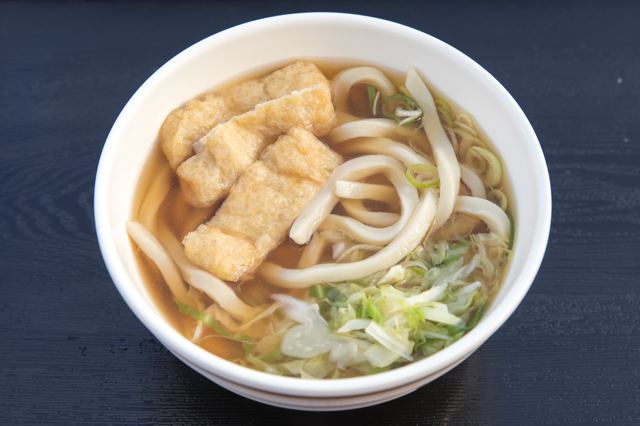
| Prefecture | Yamanashi (山梨県) |
|---|---|
| Region | Chubu |
| Japanese name | 吉田のうどん(よしだのうどん) |
| Reading | Yoshidanōdon |
| Home area | Yoshida Fujita. |
| Main ingredients | And I'm going to show you some of the things that I've been doing. |
History and Origins
Yoshida's rice is a traditional dish around Yoshida City, where you eat amazing teeth, rice, and thick flour, from the juices from the juices such as rice and soy sauce. Yoshida City, at the north of Mt. Fuji, has long been not suited for rice cultivation by cool climates at an altitude of some 600 feet [700 m] and volcanic ash. Instead, they grew wheat, rice, rice, and other gravy, together with the eating culture of flour. It is also said that in the early days of Showa and Yoshida, the fabric industry has become so popular that women who run the textile machinery do not stop working on lunch preparation, and their hands do not get rough, so that men in business are making bread for lunch. The men say that teeth and cicadas became distinctive in order to make strong progress in their stomachs and their stomachs.
When It Is Eaten
I can eat the year of my life. Also, since ulysa is a long food, it is good to pray for long life and be happy forever, as well as to be eaten at parties such as trays, New Year's, weddings, and so forth, so that it is often served in a place where people are still gathered.
How It Is Eaten
If you put salt water in the powder and put a package of fabric in a plastic bag for an hour, I'll step on it with a plastic bag on my foot. I'm going to step on something too thick again and put it on one centimeter thick. If you ground it with powder, if you have a five-millimeter thickness with a rod, you will fold it in three and cut it in five-millimeter width. In boiling water, in cold water, in boiling water, in boiling water, in boiling water, in boiling sauces, in casseroles, in boiling sauces, and in steamed cabbages, and in soft - boiled beefs.
Recipe — Serves 8
Ingredients
- Mix: 800 g( 500 g、 200 g) all-purpose flour
- Mix: 320 ml water
- Mix: to taste (ーー、) dusting flour
- Mix: 1 tbsp salt
- Broth: 56 g miso
- Broth: 48 g soy sauce
- Broth: 24 g seasonings
- Broth: 16 g niboshi (dried sardines)
- Broth: 20 g tightnessing
- Broth: 6 g bonito flakes
- Broth: 2 L water
- Mix: 1/4 cabbage
- Mix: salt, to taste
Method
- I'll mix the salt water with a little bit of flour. The amount of water is small in summer and the winter is much better.
- If you mix them together, they'll be placed in plastic bags for about an hour.
- I'm going to sit in the plastic bag with a bow in it.
- I'll take the procedure four times the length of the procedure and go up to about one centimeter.
- After the citrus process is applied, the rod will be applied to about five millimeters.
- I'll fold the six-step procedure three times and then cut it to about five millimeters wide.
- I'm going to prepare the 7-step procedure. 12 minutes.
- The procedure is to soak the rice with cold water while the rice is covered with water. It would be better if you had hot water once before eating.
- I'll boil the water in a bowl. I'll boil it. (BREAKING)
- I'll turn off the fire immediately before I cook two steps. (Female fire)
- I'll mix the citrus sauce with the citrus sauce, the citrus, the citrus oil, and the powdered powder. When you have tasted it, make it as hot as a fire and avoid boiling the rice.
- I'll apply water to the process.
- I cut the cabbage in a pot on the 4th of01, and then I will water it for about five minutes. (SCREAMING)
- It'll cool down for about five minutes with 3 linoleum procedures.
- I'll cut it in 5mm width except for the 4mgg of procedure. And make it half length. You can make beef with sugar, soy sauce, and wine, as you like.
More About Yoshidanōdon
Yoshida's rice is a native dish that is eaten around Yamanashi Prefecture County, including Yamanashi Prefecture and Yoda Yota City. The hard, hard, and very strong rice is characterized by soy and sly-dane.
History
These are eaten extensively in the Yoichi and county areas. At the foot of Mt. Fuji, rice was difficult to produce because of the cool climate and the poor water from volcanic ash and lava. Thus, in the lower part of the mountain region, wheat was produced by "fishing" by pouring water between the fields during the cold season, and traditionally the meal of flour around wheat was a daily diet. Yoshida Yoda, the name from which Yoshida is derived, had a sea-wide temperature of between 500 and 900 meters, the average temperature of the year was from 11 degrees and was not suitable for cooking because of volcanic soil. They ate the wheat and flour that were grown in their place.
During the Edo, there was a high school class, and in the northern part of the country, there were teachers' towns where he met his customers, such as Yoshida's and Haji's. However, it is said that he did not set up a professional store, but offered a condo that opened the general home only at noon. There are still many shops that remain, using the first floor living room of the living house, without signs or signs.
His relationship with the attendees of the Toshimoto School is also considered one of Yoshida's history. There is a theory that the "Ozuzu Yuzu" that was trained by the Toshigi class was eaten by eating white in a transparent bowl of rice and by eating a meal to purify himself before mountain climbing.
Also, from the end of Edo to the end of the year, the main industrial industry in the county was a women's craft and craft. On the other hand, because of his poor land, the men went to the land to trade and received a living. The men took advantage of the cooking of women who were busy with farming and weaving and gave them a lunch meal that they could eat without stopping the weaving. It is also said that it is necessary to show the sense of taste in Hale, and that strong male force is responsible for the formation of Yoshida's rice, which is characterized by corn, hardness, and fatness. I also avoided the cooking of women to prevent roughness or tear due to water work and staining of the threads used in weaving.
Characteristics
Noodle
The biggest feature is that the noodles are hard and very hard. This point has a definite difference from the difference between the difference in the difference between the difference between the need of the rice produced by the gluten.
The noodles are thick and the sides are usually close to the square. But there are a lot of houses where there's a break-in. The noodles are very hard. He tends to leave a hard touch, especially toward the center. The common udon can be cut a thousand times with the upper jaw, tongue, lips and chopsticks, but Yoshida's rice can't be cut with a firm bite. Even more, some stores are soft and soft. Many things become habitable because of the breaking of hands. In addition to the thickness and hardness of the previous sentence, this twist increases the volume of the noodles. When you pick up the noodles, the rice in general falls down in a straight line with its own weight, but Yoshida's rice leaves many twists and turns.
The flour used for noodles is not much different from the rice in other areas, but it tends to be preferred to grind hard. There are also many shops that use earth dust and hand-to-hand.
Juice
The juice is often used in boiling and in the juice of the mushrooms. It's different from citrus oil, taste buds, citrus oil and citrus flavors, and different from house shops. It also seems to be halfway between the yuzu and the yuzu sauce. There are also a lot of slices of carrots and seams in the soup. Since the flavor is made from soy sauce and the flavor of soybeans, it's called "bubble." These days there's a taste of a smooth bar or cloth to suit the taste of the foreigners in the state. Even when it comes to eating at home, the soup and flavors are not very different.
Addition
The meat that has been roasted with cabbage, oil, and sweetened with meat often uses beef (many times these days it is used in pork), and sometimes it is added to a topping bowl. In recent years, meatless rice has been offered cheaply, and rice has been served in separate menus. It is said that the cherry-snap citrus begins to add cabbage to the bed.
It's a "sharp" for the flavor. This was based on red peppers, which was made into goma and pepper and fried with oil. This is also typical of Yoshida's shop.
How to Eat
In general homes, it is customary to have a celebration at the wedding. In that case, there are a lot of "noodle" ways to eat it.
A typical menu in a store is the "Cournut" with the sweetly boiled meat, such as "Cournut" with cold noodles and cold soup with dishes, and "Found Soy sauce" with warm soup and cold noodles. All of them are made of boiling cabbages. In some stores, you can warm the soy sauce and keep the soup warm.
And when you eat with noodles, there's a lot of noodles on the plate, assuming you're going to have another one. In stores there are not many people who ask for something to drink because there's a volume per cup, not to mention noodles and so on. Also modest in frequency.
There's also a way to eat "Sourt" with a bowl of boiled noodles and a bowl of soup. In this case, it is common to eat with citrus oil over the top of the sierra.
A shop.
There are more than 60 haiku stores in Yoshida City, which number 50,000, is about one in every 1,000 people. The price is relatively low as well as 500 yen per cup. Many of them are only open (until around 2 p.m.) and they're off Sunday. It's provided in the snack corner of Yoshida, and throughout the city. In addition to being located in nearby areas, there are also localities that go to remote areas, such as Kofu City and Tokyo.
From the time the textile industry was in business, Yuzu, which was provided at home at home, developed into a store, it is now estimated that many stores still remodel and sell their houses.
There are about 50 stores displayed on "Nuzu Map" by the tourist service. While the number of stores is declining because of the succession difficulties, there are new moves when local Yamanashi Prefecture high school areas open their stores on Sunday or provide food with a Japanese noodles.
A commercial item.
I've made Yoshida's rice a chief, but I've been keeping up the pace at Cupnut, Sebu-ebububububun, and what's the name of Koda on market?
Video
In order to make Yoshida's connoisseur public, the maharata dancing from Yoshida, Japan, is being produced by the local Tomari Yoshida.
Text adapted and translated from the Japanese Wikipedia article 吉田のうどん by its contributors, licensed CC BY-SA 4.0.
Dish data: Ministry of Agriculture, Forestry and Fisheries (MAFF), “Uchi no Kyodo Ryori” (Our Regional Cuisines) database, used under the Public Data License (PDL1.0); translated and adapted from the Japanese original.