Zōni 雑煮
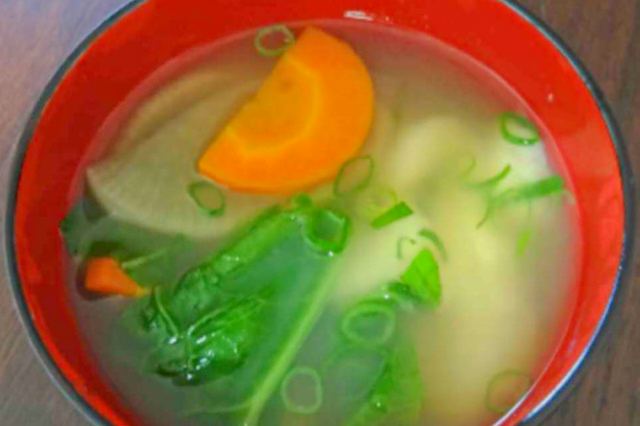
| Prefecture | Mie (三重県) |
|---|---|
| Region | Kinki |
| Japanese name | 雑煮(ぞうに) |
| Reading | Zōni |
| Home area | All within the province. |
| Main ingredients | (Customer) The materials change from small pine plants to lily potatoes to large roots to rice and tofu to to tofu. |
History and Origins
Mie Prefecture is a special zone in the country where East and West are in chaos. With the walls and walls of the Ikekagi and the Berkka mountain system to protect the interior, the flow of eastern simplified culture to the west was blocked and quickly affected Iseshima. In the district of Togo, when sailing ships came from sea roads, culture came from the east. In the four countries that were originally classified from the time of the law as different winds, the Eastern culture was mixed with Mie Prefecture. On the other hand, from the relationship of Isemiya, there is a 2,000-year tradition that leaves the old culture on the island of Sagigit or Iseshima in Iseshima. This complexity was passed on to the zithers of the festival as the old and western meridian of the Middle East. When it comes to boiling, it's the shape of a cucumber. Even though the modern military culture has grown rapidly to the west, it has been blocked by the mountains of Ike Mountain and Stowsho Mountain, and has become crowded in the Mie Prefecture. It is also a province where locals can find hot water, water, and baked rice. There's also a gold and silver bowl with a tin and a white bowl. Until the beginning of the Shogun, the New Year's soup culture has passed on to the remote islands, and some houses still have the custom of eating with the leftovers of the hot water.
When It Is Eaten
During the first New Year's season, the cooking of New Year's season is served on a shelf with young water, served on the table with a cup of tea, and then the whole family is together to drink a half cup of second tea.
How It Is Eaten
As to how to handle the rice bowl, the hot-sour districts boil the ingredients, and the soup boils and then the rice is poured. The area of the burnbay is covered with baked rice, and then the juice and tools are put in the bowl and eaten. The juice is in the hot and the steamy areas. In some areas, they also use chicken and carrots.
Recipe — Serves 4
Ingredients
- 4 cut mochi blocks
- 100 g daikon radish
- 120 g komatsuna
- 4 shiitake mushrooms
- 100 g carrot
- 4 taro
- a pinch green onion
- 700 ml dashi stock
- 20 ml soy sauce
- a pinch salt
Method
- I'll boil it in hot water. Or cook it and let the hot water pass through.
- The soup procedure in Toto-do is two jijiji-dono. I'll cut the okuana into three-inch cubes in boiling water. I'll return the scene and turn it into a turtle shell.
- I'll put two in here and add 1 in when the vegetables are tender and then taste them again. I'm gonna cut off the small cut at my liking.
- I'll cut the rice bowl from the north. I'll make it tender with hot water. Prepare the pure soup, cut the rice into four-inch cubes, and then add it when it's tender. I'm going to make a lot of money.
- I'll keep the soup in a round bowl and the soup in a bowl at the end of the year. In New Year's season, you make citrus, boil the horn and the tools, and then apply them to the bowl when they are soft.
- I'm going to make a design. I'll make it into a baked pot. I'll prepare a pure soup, round potatoes, cut-and-cut radishes, and cook them. Sometimes you can add vegetables at the end.
More About Zōni
Zōni (雑煮 or ぞうに), often with the honorific "o-" as o-zōni, is a Japanese soup containing mochi rice cakes. The dish is strongly associated with the Japanese New Year and its tradition of osechi ceremonial foods. The preparation of zōni varies both by household and region.
Etymology
Zōni is written in the Japanese language using two kanji characters. Since the first, 雑 means "miscellaneous" or "mixed", and the second, 煮, means "simmer" or "boil", it is thought that the word is derived from the fact that zōni consists of many miscellaneous items of food (such as mochi, vegetables and seafood) being boiled together. Formerly, amongst samurai society, the dish was referred to as "烹雑" (hōzō) with 烹 also being an archaic term for "to simmer" or "to boil".
Origin
It is said that zōni finds its roots in samurai society cuisine. It is thought to be a meal that was cooked on field during battles, boiled together with mochi, vegetables and dried foods, among other ingredients. It is also generally believed that this original meal, at first exclusive to samurai, eventually became a staple food of the common people. Zōni was first served as part of a full-course dinner (honzen ryōri), and thus is thought to have been a considerably important meal to samurai.
The tradition of eating zōni on New Year's Day dates to the end of the Muromachi period (1336–1573). The dish was offered to the gods in a ceremony on New Year's Eve.
Variations
Stock
Zōni has numerous regional variations in Japan. In many regions including the Kantō region, zōni consists of a clear soup called sumashi-jiru which is flavoured with dashi, a stock made from soy sauce, flakes of dried bonito, and/or kombu. In the Kansai region and eastern Shikoku, zōni is made with a stock of white miso, while zōni in the part of Fukui Prefecture is made with a stock of red miso. In the Tottori-Izumo region, a variety of red bean soup is used for zōni.
Mochi
The preparation of the mochi for the dish also varies by region. In the Kantō region and Tōhoku region, the mochi are cut into squares and grilled before being added to the stock. In the Kansai region and the Chūgoku region, a round, boiled mochi is generally preferred. In most of the Kyushu region, a round mochi is popular, but grill-boil difference changes depending on area. In some areas taro or tofu is used instead of mochi. This type of zōni is found on some islands or mountainous areas where rice is not grown to a large extent.
Additions
Common additions to the soup include chicken, fish or meatballs; leafy vegetables such as komatsuna or spinach; mitsuba (a Japanese herb similar to parsley); kamaboko such as naruto and carrot flakes for colour; and flakes of yuzu peel for its citrus fragrance. Regional specialties are often added. A sprinkle of seven-spice chili flakes (shichimi) is sometimes added at the table.
Text adapted from the English Wikipedia article Zōni by its contributors, licensed CC BY-SA 4.0.
Dish data: Ministry of Agriculture, Forestry and Fisheries (MAFF), “Uchi no Kyodo Ryori” (Our Regional Cuisines) database, used under the Public Data License (PDL1.0); translated and adapted from the Japanese original.