Tōfukasutera 豆腐カステラ
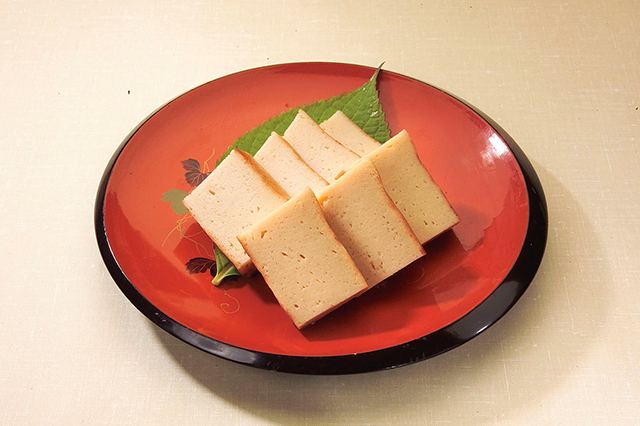
| Prefecture | Akita (秋田県) |
|---|---|
| Region | Tohoku |
| Japanese name | 豆腐カステラ(とうふかすてら) |
| Reading | Tōfukasutera |
| Home area | Sendai, Tokiji City |
| Main ingredients | Soybeans, sugars, eggs, pieces of flour. |
History and Origins
"Tofu cassera" is a sweet dish that is baked into a casasera by milking tofu and mixing sugar, eggs and so on while cutting water. It's a tofu dish in the southern part of Akita. It's been eaten as a wedding feast or as a snack or tea request. Although the average Casasa is famous for Nagasaki, it was built and developed by Japan's own recipe, based on the southern sweets that were originally passed from Portugal. But since the sugars and eggs in the ingredients were expensive to the common people, it is reported that the tofu casserra began to be made from the precious tofu that was eaten on Hale's day. The unique sense of food that has left the flavor of tofu is characteristic.
When It Is Eaten
After the war, all the ingredients for the eggs, sugar, flour, and soy beans were expensive. They were eaten on special days, such as New Year's, rice, and crown burials.
How It Is Eaten
Put the tofu in a warm bag, fill it up with sugar, egg, pieces of flour and salt until it is smooth, then paste it up and down in a dish called a casserica pot. The snacks and tea orders are common, but in Akita they are familiar to us and sometimes eat with stylus oil, like a knife. Since you have a lot of sugar in it and you're baking it up, it's better to keep it in the sun even if you have tofu. Today there are many variations, including tinctures and leatherings.
Recipe
Ingredients
- 5 blocks tofu
- 500 g sugar
- 2 egg white
- 1/2 cups potato starch
- 1 salt
Method
- (Tofu is soaked in water day and night, and whitely removed.)
- Put them in a pot, warm them from water to boiling, squeeze them in a bag, feel a little water in the bag, and not squeeze them too hard.
- Put sugar and eggs white in the grounded tofu and paste it until it becomes smooth.
- Put this in a casserica pot covered with a thick pan, and turn it over in a low fire for 30 minutes and then cook it slowly.
More About Tōfukasutera
Tofu casserella is one of the Akita Prefecture's native sweets that is made into casserole. "Tofu casserra" is written mainly by the candy store and is often written as "tofu" in the tofu shop. Like tofu in the food, it avoids the unmovable word "cash" and can be rendered "tofu rich Kassela" in some lands, and it is called "same tofu" in some lands.
Overview
It's made by adding sugar, eggs, salt, and so on, to a steamed tofu and then roasting it into a casserole. Sugar has the pernicious effect as well as the sweets of the kasta, and it can be saved for a week or so if you have tofu that you don't have in the way of your daily life.
In Akita Prefecture, it is known as a tea ceremony or annual dinner, and it is also a musty treat for weddings, trays and New Year's and other public gatherings. It was built in each home, and recently in the state supermarkets it's very common, and it's a familiar food for those who grow up in Akita. Especially in the southern part of the country are many tofu casserella lovers, and for Akita's people returning from the state outside to the trays and New Year's, it is also popular. After Shinji, fruit, coffee and other flavors are also varied.
For anyone outside of Akita Prefecture, sweetly sweeted tofu can be unfamiliar and may not be popular.
History
The history of Tofu Cassella is so old that it is said that it had already existed in the late Edo. In the days when the sugar and eggs, the principal ingredient of the Kasela, were expensive, it was difficult for the family to taste the kasta, and fresh seafood was difficult to obtain in the home, but in the south of Akita, the bean is also an important crop, and because of the use of tofu as a food for special days, it is thought that the tofu was born by making tofu and making it into a cascasthe.
Also, since there are examples of the cook's tofu casserars that were made early in the war, and by imitating the cook's product, remember that they were sold in the city, and that they became popular and passed on to the latecomers, there is also the theory that special dinners for the crown feast have become generalized and into everyday food, such as in the postwar morning.
By the middle of the Showa season, there were a number of women called town cooks in all of Akita, and they made tofu cassericas and so on, in exchange for boards and cooks. The town cook was also a man, but most were women. This is the theory that when sugar was expensive, men often hid sugar in their kimonos and stole it, and women who couldn't break the belt freely were hated, and it was convenient for employers, since they couldn't hide it.
In 2008, a variety of Japanese TV shows called "The Secret Kenming SOW" were presented as Akita's "Akita" show. In 2009, they recorded the sale of number 1 at the hotel and at Akita in Tokyo000.
Text adapted and translated from the Japanese Wikipedia article 豆腐カステラ by its contributors, licensed CC BY-SA 4.0.
Dish data: Ministry of Agriculture, Forestry and Fisheries (MAFF), “Uchi no Kyodo Ryori” (Our Regional Cuisines) database, used under the Public Data License (PDL1.0); translated and adapted from the Japanese original.