Hoshimochi 干し餅
| Prefecture | Akita (秋田県) |
|---|---|
| Region | Tohoku |
| Japanese name | 干し餅(ほしもち) |
| Reading | Hoshimochi |
| Home area | Districts |
| Main ingredients | Soy sauce, sugar. |
History and Origins
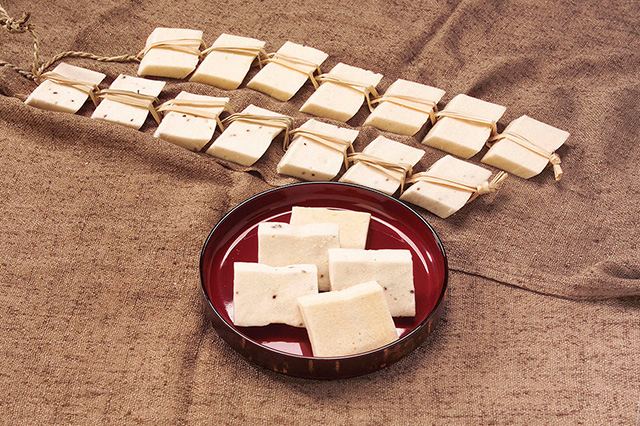
A dried chicken is a rice cake made with large quantities of water and cold water. Especially in the United States, it's a typical rice candy in Akita, and it's also called the frozen bush to make use of winter's cold waves. If you look at the "cold" period of freezing during the cold season, it will crack and fail, so a farmer working daily against the weather might be a sweet thing. Because they are hungry and energy-rich, they've been eaten during the rest of the rice-planting break, as well as the children. The sweets of vegetables and sugars are characteristic of the sweets of rice and the sweet taste in the teeth, which are smooth and simple. Among other things, the droughts in the North Akita region are made with a lot of water, so that they can be made with soft as they are fine and soft.
When It Is Eaten
Because they are hungry and save until summer, they are eaten mainly as a farm snack.
How It Is Eaten
After stretching out the paste and cutting it, we will hang it, knit it, and soak it in a lot of water and make it cold. After that, it can be dried in the room. Besides eating it as it is, it can be put into the soup or baked and eaten as it is normally. It's also delicious to fried with oil.
Recipe
Ingredients
- 1.5 kg(1) glutinous rice
- 300 g sugar
- a pinch salt
- Mix: 30 g shiso (塩づけ)
- Mix: 100 g azuki beans (煮たもの)
- Mix: 100 g kabocha squash (煮たもの)
- Mix: 20 g toasted sesame seeds
Method
- I soak rice in water day and night.
- Sweat.
- We'll make the cucumbers for about 20 minutes with a spare plane, but we'll do about one half cup of water to soften them the other.
- Add sugar, salt, and iron tools. You can have another ten minutes.
- If you don't have a single day's slat or daisies in a ground-up board or dassy, you can put a piece of wood in a square box and put it on top of it.
- Cut the matchbox size, and knit and prepare with sieves and wallows.
- The idea is to soak six for about eight hours in water or soft water (in the form of a cold wave) and freeze them with two days in the outside temperature below the freezing point. (Do not put it on the sun)
- We're going to put the wind out of the room and put it in a cool room where there's no wind, and we're going to dry it for 20 days.
More About Hoshimochi
The dried rice is traditionally preserved food that has contained a lot of water in the bush and frozen it, and then exposed to cold. In some localities, there are various names, such as "frozen" and "frozen ice."
Overview
Drowning is made by using winter cold waves to freeze the cucumbers. (The diet of such frozen cinders is seen from the Tohoku region to the sub-permeable, and the product of the Tohoku region is mainly called "Scrolling" in the area of Tsukoku, called "Founding").) They used to eat at the time and at the time of the day. Now, it's commonly recognized as a local treat, and it's sold by hand for reproduction and so forth.
Characteristics
It's better to have a good tooth, sweetness, and save to summertime than normal, so that it can dry up and dry for longer periods. It's a hard impression on the eye, but when it's pressed on the finger, it's so fragile that it's used as an ingredient for Japanese sweets.
In some places, they are made by mixing all kinds of ingredients with a mixture of cow's or lamb's or soup's or soy, and many are colored using vegetable colors.
The Process
The rice is steamed enough and made firm. I'll put it in a mold and cool it. Cut cold, solid objects into easy-to-eat size. It contains water that shapes a few pieces of straw in a shape that is easy to hang. I'll freeze it for about a month. It's best when it's cold and dry. (CLEARSSING)
How to Eat
There are other ways of eating, such as using stoves and stoves, in addition to being able to eat as much as you can eat as you can, in the water and eat as much as you normally do in the oven. Also sold are products that have been seasoned with sugar, salt, and so on for oiled dryers.
Text adapted and translated from the Japanese Wikipedia article 干し餅 by its contributors, licensed CC BY-SA 4.0.
Dish data: Ministry of Agriculture, Forestry and Fisheries (MAFF), “Uchi no Kyodo Ryori” (Our Regional Cuisines) database, used under the Public Data License (PDL1.0); translated and adapted from the Japanese original.