Home / Saitama / Kuwainofukumeni
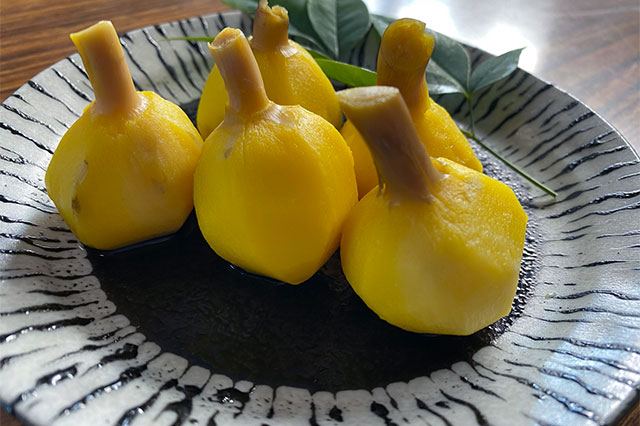
Kuwainofukumeni くわいの含め煮
| Prefecture | Saitama (埼玉県) |
|---|---|
| Region | Kanto |
| Japanese name | くわいの含め煮(くわいのふくめに) |
| Reading | Kuwainofukumeni |
| Home area | Saitama City |
| Main ingredients | I'm good. |
History and Origins
To plant rice in rice fields in late June and early July is a short diet from late November to late December. I've been raised in low-land areas in the Sushi River region, in the south of the state, in the south. It's not suitable for rice. It is reported that farmers were saved by selling rice crops at high prices. In the latter part of Meiji's life, seed seeds were introduced from Fukuoka Noda village, and the cultivation became real. Although production was temporarily lost during the war and after the war, it recovered, and in the year 40, the project was built on a large scale. For example, in the United States alone, there are now some 40 million people who are growing crops in the world. There are no variety of dishes in the country, and school meals provide a "boo soup" to cook and mix with the food. One of the traditional dishes of such a bowl is "Cook-in-the-Tree." It's a local dish that can be eaten by a celebration such as New Year's Eve and other things. Using the little berries, I'll finish them with a bright yellow.
When It Is Eaten
I'm sorry. It's essential to New Year's food. Because of the fact that the phytoplankton is used as an ingredient for "prosperity and success" because it is associated with the development of large, long sprouts, the idea of the mother feeding the infant, and the showing of a healthy growth. In the land of Saitama Prefecture, it is winter vegetables harvested from late November through December, and as an essential ingredient for winter celebrations, as well as for winter dishes, the "boo soup" is loved.
How It Is Eaten
When you wash the water, you peel it from the bottom toward the stem. With plenty of water, I have 15 minutes to boil. I change water and spill it until the bamboo passes through. I'll make the pot boil with wine, sugar, garlic, salt, and the empty berries wrapped in gauze. There you can put the boiled rice, put the sprout on top of it, and cook it. Keep it in the soup and cool it and add the flavor.
Recipe
Ingredients
- 600 g arrowhead
- Seasonings: 200 ml water
- Seasonings: 200 ml sake
- Seasonings: 60 g sugar
- Seasonings: 3 tbsp mirin
- Seasonings: 1 tsp salt
- 2 gardenia fruit (coloring)
Method
- Wash the water from the bottom and skin it toward the stem.
- With plenty of water, the first time is 1520 minutes after boiling, and the second time we boil until the bamboo is passed, and then we take it to the water and take it out.
- I'll put a pot in which the flavoring sauce is loosed and wrapped in gauzes and stuff.
- I'll put the shoots on top of the boiling three and cook them for 10 minutes in a medium fire. I'll leave it in the soup as it is.
Dish data: Ministry of Agriculture, Forestry and Fisheries (MAFF), “Uchi no Kyodo Ryori” (Our Regional Cuisines) database, used under the Public Data License (PDL1.0); translated and adapted from the Japanese original.