Home / Saitama / Nibōtōhimokawa
Nibōtōhimokawa 煮ぼうとう
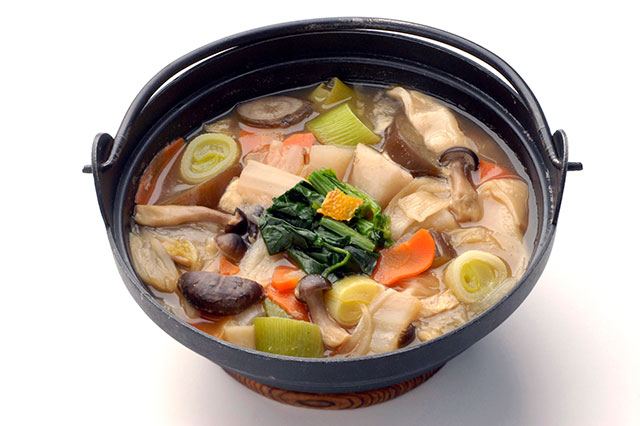
| Prefecture | Saitama (埼玉県) |
|---|---|
| Region | Kanto |
| Japanese name | 煮ぼうとう/ひもかわ(にぼうとう/ひもかわ) |
| Reading | Nibōtōhimokawa |
| Home area | I'm from Hajidani City, Interval County, Substitation District, |
| Main ingredients | I'm sorry. |
History and Origins
In Saitama Prefecture, where wheat was produced a lot as the back product of rice crops, there are a wide variety of rice plants in many places. One of them is "cooking" that is eaten in the center of Deepagawa City. In middle-age and controlled county, there have been called "stamps" and "crushing" and "crushing" in the father-in-law community. It was once a family gathering around the edge and pans, and was eaten for dinner on a birthday day, which is now made at home as a warm meal in winter. Also known as a local businessman, Akira, who served from Akira, from Japan, is also in love in the city of Hajiji, a businessman who came from a local community, and is also known for his love of the food served at a school feeding center in Hajitown.
When It Is Eaten
Since in every region it's mainly family food, and a warm, cooked dish, it's basically been eaten from fall to winter. In the city of Deepa, you will find yourself known as the local great and the great.
How It Is Eaten
Add water and salt to the flour, lay down, thin with a stick, and make plain fat rice. Cut the local vegetables, such as daikon, carrots, cabbage, and chicken, and then cook them lightly with oil. Add the soup or water and boil the vegetables until they are soft and taste them on the soy sauce base. In Hajidani, we put in a lot of famous deep valleys.
Recipe — Serves 4
Ingredients
- 200 g ひもかわ
- a pinch ) 50 g ホンシメジ
- 50 g chicken (小間)
- 100 g daikon radish (いちょう切り)
- 1/2 green onion (斜め切り)
- 1 aburaage (fried tofu pouch) (短冊切り)
- 100 g Chinese cabbage (ざく切り)
- 50 g komatsuna
- 50 g carrot (いちょう切り)
- 40 g かつお厚削り
- 1.4 L water
- 3 tbsp1/2 soy sauce
- 1 tsp sake
Method
- I'm going to take the broom. We put water and finely polished fabrics into a pot and boil them with a heavy fire. When it is boiling, I will boil it for about eight minutes while taking a weak cook. I'll put it back on fire.
- I'll boil the okuana and cut it into size that is easy to eat.
- I'll roast carrots with it (out of oil) and continue with chicken.
- When the chicken color changes, I add a large root to it and roast it and put a root in it.
- I'll put in the cabbage cores, leaves, oilings, rices, fried rice, and a hot potato sauce and add one raw raw raw sauce to the dish.
- If the vegetable is cooked, it will taste with soy sauce and wine, and then add the string to it in the same way as you use it.
- If the string is on fire, put in the boiled pineapple.
More About Nibōtōhimokawa
Cooking is a kind of boiled rice, a native dish of the Japanese Saitama Prefecture city. It's also called Yuzu Yuzu Yuzu.
It's a dish prepared with a wide spread of raw noodles with flour and special products of deep valleys and local root vegetables, boiled and seasoned with soy sauce.
It's also known as the B-class Gurmme, representing Saitama Prefecture.
There are similar dishes in other regions of Saitama Prefecture, but they are also called conjunctivatives and casserials in inter-valiting and strategic provinces.
Overview
Using a wide range of backs with medium or strong powder, noodles were boiled in raw rice with a device centered on vegetables and seasoned with soy sauce. Cooking from raw noodles produces a moderate wax.
The materials are often used with root vegetables as well as with the valley valley that is special to the valley.
Cooking.
(Introducing information from the Institute of Sung-song in Shikoku, Japan)
I put 1070cc of water in water, and then I put spools, dry mushrooms, and so on, and I make daisies. I put one daisy in the powdered daisy, and when I boil, I put chicken and eggs in it. When you boil, add the rest of the tools (students: deep valleys, cabbages, radishes, carrots, oil, and seasonal vegetables). When the whole thing is on fire, I will put in the noodles and roll around with vegetable chopsticks. If you have a clear sense of noodles, you can add oil and taste them. When you're done, you can turn off the fire, cover the lid, and boil two or three minutes and finish it.
In one of the restaurants in the valley, "The Torabears of the Sea and the Cook, " they use a sauerkraut, and they use 11 different types of materials, including carrots, chicken and chicken.
It's related to similar dishes in other parts of the world.
The soup of Aomori Prefecture-eight-X-O-K-E-N-N-N-N-N-N-E is also in common with public health.
The word "ga" is similar to the name and appearance of the native dish of the Kogo Yamanashi Prefecture, but it is usually tastey and the pumpkin is sweetened. On the other hand, boiling rice is a lubricant flavor. Besides having pumpkins, adding lots of vegetables, such as deep valleys, and so on, there are strong and cold features to boil raw noodles.
It is similar to the constipation of Gunma Prefecture (Ouhuju) but it is a broth of casserole, which is mainly a taste-in-the-mixed sesame. It's also sometimes called to boil the soy sauce.
The dishes that boiled thick noodles from their raw state with local vegetables are found in the Yamanashi Prefecture and the condensation of horse and horse, as well as in the region where the Japanese used to live and influence them. This means that the region eaten by the duck matches the scope of the occult. It could have been a mid-seat from the Takeda army. There's a theory that says "one."
History
In Saitama Prefecture, containing deep valleys, it was easy to obtain the flour that was the raw material of the noodles from the rice crop, which produced a lot of wheat. There is a culture in Hajia that eats "Googo" as a family dish rather than an old one, and it is said, "A woman who can't beat a man can't be married." It has been reported that the business man Sagishima, born in the late Edo, who was born in São Paulo, is fond of boiling rice, and he always ate it when he returned home.
But by the late 1980s, they say that boiling rice was a substitute for rice, that it was recognized as "Feel of the Home" and that it was not sold at a restaurant.
It is said that the dishwasher that became famous as a masterpiece of Deep Valley was sold in 1988 by the Hajidani-saurus-mooning company. The president's decision to be the mother and mother of the Yari-in-law has been based on the decision that the government "is delicious and has features so that it can sell." When it was first released, it quickly became the company's representative product.
In 2003 the Tokyo High Court of Human Rights, which has been called "The Bank of the Union, " was also called" the Confederate Court, " which has been called "The Battle of the War." The sales match won the Taco side two years in a row, and the stewers were defeated, but it led to a better reputation from topic to subject.
(The result is that the second most popular vote was: "The jelly fly" and the third place in Tota City was likewise "Flywood"). Kobayashi, the director of research at Tokuoka, Japan, says, "I'm not honest with B-grade, but I'm glad to have the taste from my ancestors. "I want to see the flavor of the national district."
Since then, widespread activity has continued to be established everywhere, resulting in boiling and selling in city restaurants as well. It has been established as a great dish in the deep. Besides being served as a school food in Deepa, there was to be a "Singing Club" held on November 11th, the very day of the Hanzawa festival.
In 2019, when the biggest portrait of Shinzawa was decided to be used for 10,000 yen bills since the turn of 2024, Shinkichi opened a shop next door to the source of Sazawa's birth.
At the end of 2022, about 20 percent of the restaurants that serve boiling in the valley valley have been published.
Text adapted and translated from the Japanese Wikipedia article 煮ぼうとう by its contributors, licensed CC BY-SA 4.0.
Dish data: Ministry of Agriculture, Forestry and Fisheries (MAFF), “Uchi no Kyodo Ryori” (Our Regional Cuisines) database, used under the Public Data License (PDL1.0); translated and adapted from the Japanese original.