Home / Shizuoka / Rakkaseinamasu
Rakkaseinamasu 落花生なます
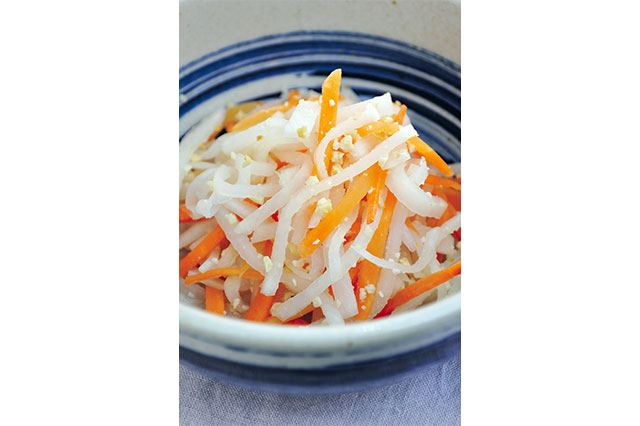
| Prefecture | Shizuoka (静岡県) |
|---|---|
| Region | Chubu |
| Japanese name | 落花生なます(らっかせいなます) |
| Reading | Rakkaseinamasu |
| Home area | (Singing) (Singing) |
| Main ingredients | It's like, "Oh, I'm sorry, I'm sorry. |
History and Origins
The "red-white" that is essential to New Year's meal is known for its sour flavored with vinegar and sugar. But in the east of the city and Tokugi, where the flower is special, the red color is usually added to the roasting flower. Adding crushed flower plants will soften the acid, add a couple of rose plants to it, and it'll taste like a trail, making it easier to eat even if you don't like vinegar. In addition, the "susten flower" that eats after eating a whole bowl is known to the locals in this area.
When It Is Eaten
It's a New Year's dish, but it's usually made at home for easy making.
How It Is Eaten
After cutting the radish and carrots, add a single salt and narrow it down to the point where it feels better. Add a peanut to the dish, add a mixture of vinegar, sugar and salt, and then add it until it has the fat of the peanut. Mix with the water-stained radish and carrots.
Recipe — Serves 4
Ingredients
- 1/2 daikon radish
- 1 carrot
- 120 g peanuts
- Mix: 4 tbsp vinegar
- Mix: 1 tbsp½ sugar
- Mix: a pinch salt
Method
- The haiku carrots are finely cut into pieces and salted and set in about ten minutes. I'll wash it with water and squeeze it lightly.
- I'll mix the cherry and paste it with a paste. Put all the ingredients in the big bowl and mix well.
Dish data: Ministry of Agriculture, Forestry and Fisheries (MAFF), “Uchi no Kyodo Ryori” (Our Regional Cuisines) database, used under the Public Data License (PDL1.0); translated and adapted from the Japanese original.