Hōbazushi 朴葉ずし
| Prefecture | Gifu (岐阜県) |
|---|---|
| Region | Chubu |
| Japanese name | 朴葉ずし(ほおばずし) |
| Reading | Hōbazushi |
| Home area | I'm going to take you to the nearest city. |
| Main ingredients | It's not just rice. It's leaves. |
History and Origins
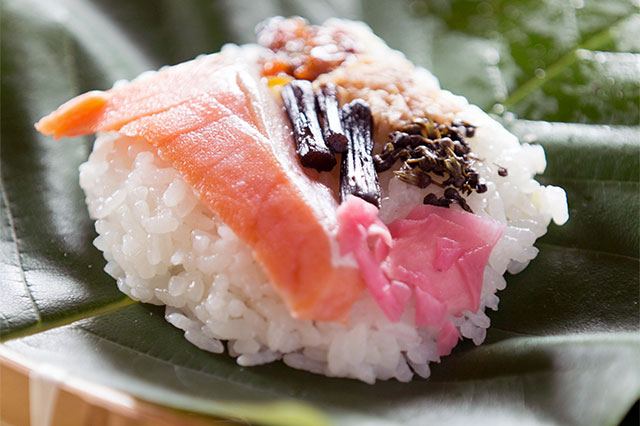
First summer's colorful dish, wrapped in plain leaves, with rice, has been eaten as a food for farming, such as rice, and so on. In homes around traditional areas, it was common not to be found in or around gardens, but to grow large leaves. The simple leaves have a protective effect besides the act of poisoning, and the enzyme "Hyokichiol" found in them is especially valuable during the season when plants are highly antibacterial, and are threatened with food decay because of high humidity. Using simple leaves, you can eat your hands untainted without chopsticks, so that you can start a mountain job or a frequent farm port, and in modern times, there are many colorful dishes of citrus, citrus stew, and silk eggs, but at first it was said to be nothing more than a simple dish of rice and rice made from the salt that came from the Northland with a hard - pressed rice.
When It Is Eaten
Since May is a good May month with the color and aroma of the leaves, it was said that these days the period of the "smell leaves" is when they would make the table of their families grow. In Tohokumura, in the dense region of Gifu Prefecture, water farming was done in a neighborhood project called "Singing" until mid-day. When we asked our neighbors to plant rice and so on, we were built from the previous day, and we didn't need any dishes, and we were given simple leaves to eat lunch.
How It Is Eaten
In the eastern part of the country, many families have wrapped up in seven rich species of tools, such as citrus, citrus, silky eggs, and peppers, after putting them on rice rice, and in the Kango region, the taste is tasteless, and it is simple to taste soy sauce and rice. There are many ways to wrap simple leaves, but there are many ways to wrap them in half, and there are many ways to fold them in half, and there are many ways to use simple leaves, but there are many different ways to make and use them.
Recipe
Ingredients
- 3 × 180 ml rice
- Mix: 30 ml vinegar
- Mix: 60 g sugar
- Mix: 1 tsp salt
- 20 g carrot
- Mix: 50 ml dashi stock
- Mix: 1 tsp sugar
- Mix: 1 tsp white soy sauce
- 30 g burdock root
- Mix: 150 ml dashi stock
- Mix: 2 tsp sugar
- Mix: 1 tsp soy sauce
- 4 dried shiitake mushrooms
- Mix: 70 ml dashi stock
- Mix: 1 tsp 1/2 sugar
- Mix: 1 tsp 1/2 dark soy sauce
- 30 g lotus root
- Mix: 50 ml dashi stock
- Mix: 1 tsp sugar
- Mix: 1 tbsp vinegar
- 30 g ざっこ (drowning)
- a pinch pickled red ginger
- 12 magnolia leaf
Method
- I'll wash the rice an hour ago.
- Since sushi is a little hardy, the water should be steamed up in a modest manner and then resuscitated while it is hot. (I'll leave this portion of the rice in a piece.) Using the rice with a thin stick, cut the rice, and mix it gently so that it doesn't get mixed. (I'll use vinegar as my favorite.)
- The carrots are round three centimeters in length and boiling with citrus B sauce. If you boil them with a weak flame for about ten minutes, or a little soup left. The rice is a round three-inch length, and when you do a draining, then you boil it in boiling water, then you cook it with weak heat for about ten minutes, and then a little of the sauce left over. The dried mushrooms are returned with water and cut into thin strips, and the flavor of the citrus is sweetly seasoned. The bowl is washed, cut thin, and put on the citrus water, then we drain it and we boil it. When you boil the vinegar that you leave in the vinegar, you should boil it and soak it. (You may add carrots and season with them when your hair is soft.)
- Wash the simple leaves well and cut off the branches a little.
- Mixing the ingredients with rice and then putting them on a simple leaf before they get cold, and putting some red pepper on a ball or on a plate so that the fresh leaves smell.
Dish data: Ministry of Agriculture, Forestry and Fisheries (MAFF), “Uchi no Kyodo Ryori” (Our Regional Cuisines) database, used under the Public Data License (PDL1.0); translated and adapted from the Japanese original.