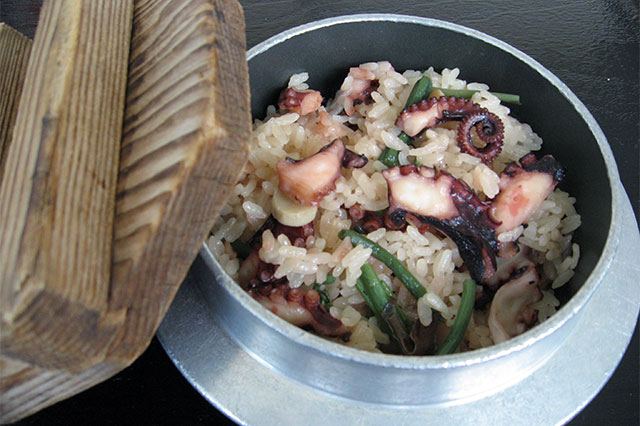
41 10 たこめし
| Prefecture | Okayama (岡山県) |
|---|---|
| Region | Chugoku |
| Japanese name | たこめし |
| Home area | The Treasurer's City |
| Main ingredients | Kite, rice, cucumbers. |
History and Origins
Okayama Prefecture's fish catch is the highest in the country. It is said that the kite that grew up in the Inland Sea, especially near Tsuzui, in the fast - current waters, has a distinctive tooth and is delicious. The well-being of the Treasure City's masterpieces is that they cut up the kites and cook them for rice, and the quality of the material that spreads through the fragrance of the bush is one of the best. It is said that the fisherman was eating the kite on the boat. Cooking with fresh mushrooms can be eaten anywhere in the city, and even if you say a word, there are many features in the shop that are useful, flavored, and topping.
When It Is Eaten
In addition to sitting at home, it is provided as a menu for a restaurant and can be eaten on a regular basis.
How It Is Eaten
Wash the rice and put it on the monkey. After waving salt on this foot, while holding hands, removing the stain on the surface, I cut it lightly with the knife's back. I cook rice, rice, peppers, chopped peppers, and flavored sauce. When you're ready to cook, mix the chopped onions.
Recipe — Serves 4
Ingredients
- 1.5 cups rice
- 100 g たこの足 (生)
- 1 cloves(14 g) ginger
- 1 leaf green onion
- 320 ml dashi stock
- 1 tbsp soy sauce
- 1 tbsp mirin
- 3/5 tsp salt
- 1 tsp sake
Method
- Wash the rice and put it on the monkey.
- After waving salt on this foot, while holding hands, removing the skin stains, cut the knife with its back to a little bit of an inch or so.
- I'll cut the ginger.
- I put 1, 2, 3 in my rice bowl, and I put some soup, salt, salt, and wine in my rice bowl.
- When you cook it, mix the leaves with a small cut.
More About 41 10
The rice is rice from an octopus and is one of the local dishes. There's something to cook with an octopus, something to put or mix boiling octopus on rice, or something to combine both.
Also made from the Pacific octopus, at Ibaraki Prefecture.
The pine cone.
It's a cook-in-the-box. Although the origin is unknown, it is believed that fishermen on the fishing boat cut up the octopus and put it into their food. In the beginning, I was born in the sand, where there are many shrimps, crabs, oysters, and octopus growths. The 200-pound daco, or "tree sprout," which appears first in spring, is pressed and delicious. Also, since nutrients - containing water enters the ocean during the rainy season, it is thought that octopus growth and this season also have a unique flavor.
An example of materials and construction.
(Singing)
1 / 2 cup [1.4 L] of raw rice, 3 cups [1.3 L] of citrus oil, 4 oz [45 oz] of wine...
How?
I can't get rid of the dirty dishes just because they're simple and light. First, salting the leg of a live daco, hand-to-hand, and remove the surface slip. And I'll clean up the stains in the inhaler using my fingers. The octopus is cut to the right size and lightly beat with the knife's back. Next, wash the rice, put it on a monkey for about 15 minutes, and cut the water well.
Put the rice in the rice cooker and pour all the flavors and flavors gently together. Finally, put the octopus in and switch it on and cook it up.
If you use raw silk, it will be painted with a pretty color, like red rice. You can use your taste to pick up the sprouts and the blues.
Station valve
What is sold at the following station is famous.
Toshihara Station, Fukuyama Station, Fukuyama Station, Hawa Station, Shinji Station. The "single" is the Long Island Station valve that began to be released in 1953. - "I'll eat you." Using a canister of citrus. - "The Akira-sama-sama soup plate." I'll have rice later. - "three beach lunches." I'm carrying a slice of rice on the rice bowl.
Annotations, Sources
Text adapted and translated from the Japanese Wikipedia article たこめし by its contributors, licensed CC BY-SA 4.0.
Dish data: Ministry of Agriculture, Forestry and Fisheries (MAFF), “Uchi no Kyodo Ryori” (Our Regional Cuisines) database, used under the Public Data License (PDL1.0); translated and adapted from the Japanese original.