Home / Okayama / Tenobesōmennobachijiru
Tenobesōmennobachijiru 手延べ素麺のばち汁
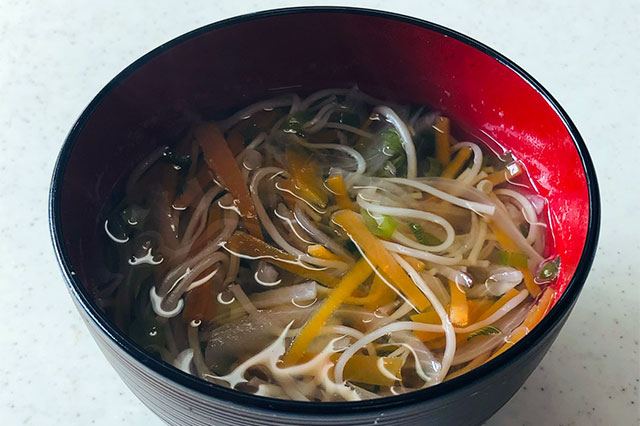
| Prefecture | Okayama (岡山県) |
|---|---|
| Region | Chugoku |
| Japanese name | 手延べ素麺のばち汁(てのべそうめんのばちじる) |
| Reading | Tenobesōmennobachijiru |
| Home area | Akaguchi City |
| Main ingredients | It's a lot of fun. |
History and Origins
In the process of making the noodles, they called the end of the noodles a "ga" and were named that because it resembles a triple - wire strip. It is characteristic of the poise that it is stronger than the part used as a walnut. Put it in a pot without boiling, use the salt of the rice itself, and finish the seasoning with less. It's made in a short time and it warms up.
When It Is Eaten
They can be eaten throughout the year, but they are eaten by the winter when it gets cold. It's not so much a special day as a daily soup to sit at the table. Tastes differ from home to house, soy sauce and rice are used. Pews are sometimes shorter than normal lentils, it is easy to eat small children and old people, and they are loved by a wide range of generations.
How It Is Eaten
I can boil the pot with my favorite tools, such as raw rice, root, carrots, oil, and so on. When the material is boiling, put the dough in the boiling juice. When you boil, you can put in soy sauce and taste it.
Recipe — Serves 1
Ingredients
- 10 g 手延べそうめんばち
- 10 g carrot
- 15 g onion
- 10 g daikon radish
- 5 g green onion
- 150 g dashi stock
- 5 g soy sauce
Method
- I'll cut the materials into pieces.
- I'll boil it in soup, carrots, radish, and so on.
- If the material becomes soft, it is recommended that you put it in the bowl and boil it, so that it should be served before eating.
- Add blue and soy sauce and taste better.
Dish data: Ministry of Agriculture, Forestry and Fisheries (MAFF), “Uchi no Kyodo Ryori” (Our Regional Cuisines) database, used under the Public Data License (PDL1.0); translated and adapted from the Japanese original.