Nijā 煮菜
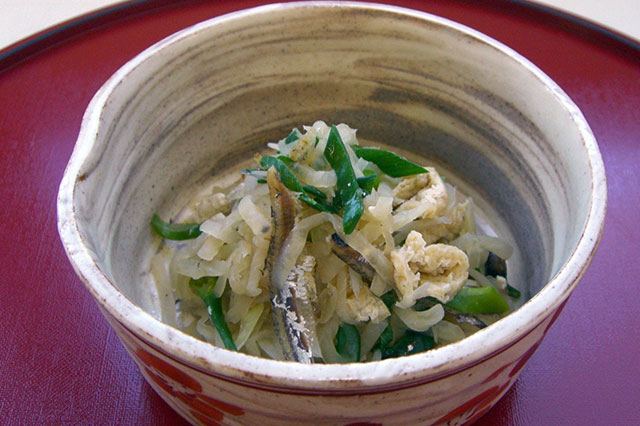
| Prefecture | Hiroshima (広島県) |
|---|---|
| Region | Chugoku |
| Japanese name | 煮菜(にじゃー) |
| Reading | Nijā |
| Home area | Fukuyama City |
| Main ingredients | It's a lot of stuff. |
History and Origins
A cut root was made into the main part of the cooking process, which was steamed, rooted, and peppered with a sauced sauce. I cook with only the water from the food, so I will not run away from it, so I will have a kok. It's called "sook" on the name, but it's closer to the roast. A busy farmer who was loved as a daily beggar who could make a lot of things quickly and deliciously. In northern Fukuyama, it's called "good bye" and in the South. You may add seasonal ingredients, such as chicken, clams, and rice, and cabbage. Also, this dish has a lot of white roots, which is good.
When It Is Eaten
When I was busy, I was eaten as a daily food that could be prepared quickly and deliciously. To make it easy, it can be made with various ingredients today.
How It Is Eaten
Cut the large root into slices, cut the short print oil, cut the root, cut the head off, roasted the chicken, and season the rice with the sauce. Add a variety of foods that are flexible, such as chicken, clams, and cabbage, cabbage, carrots, carrots, carrots, garlic, pines, pork, and so on.
Recipe — Serves 4
Ingredients
- 200 g daikon radish
- 1/2 aburaage (fried tofu pouch)
- 1 green onion
- 8 dried sardines
- oil, to taste
- 2 tsp soy sauce
Method
- The main root is pushed down.
- Oiling will cut a short three-inch book.
- The deep sink is cut.
- I'll keep the kite in my head and split it.
- If you have a hard roast of 1 and 4 with oil, add 2 and soy sauce and 3 and boil until you have no water.
Dish data: Ministry of Agriculture, Forestry and Fisheries (MAFF), “Uchi no Kyodo Ryori” (Our Regional Cuisines) database, used under the Public Data License (PDL1.0); translated and adapted from the Japanese original.