Kawarasoba 瓦そば
| Prefecture | Yamaguchi (山口県) |
|---|---|
| Region | Chugoku |
| Japanese name | 瓦そば(かわらそば) |
| Reading | Kawarasoba |
| Home area | Hot spring. |
| Main ingredients | I've got tea, beef, eggs. |
History and Origins
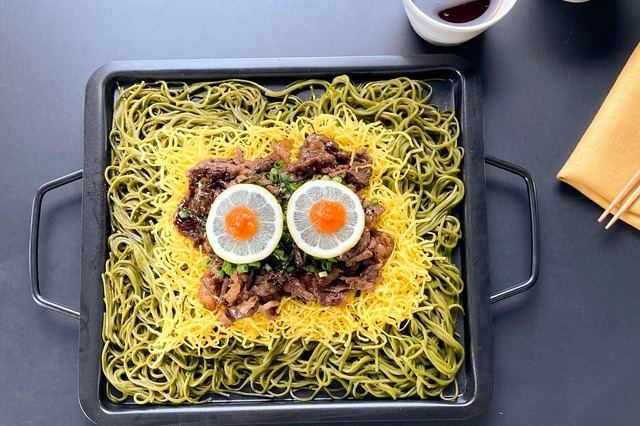
It's a soul food, representing Yamaguchi Prefecture, and it's known nationally. I'll serve tea on hot bricks with rice and rice, such as lentils and stringed eggs and beef. It's a dish where lemons are often added and taste change is enjoyed. "Breasts" was born in 1941. At the time when the shop that now specializes in "Breast" was in a travel business, it was said that he thought of "some of the best things in the hot springs of the river." What was hinted to me was the story of an old man who told him that during the Western South War, a machinist in Kumamoto had eaten meat and wild plants by burning in rubble. Also, in the river basin, during the Edo period, it was allowed to flourish as a hot spring, to keep order, and to use special pygmies by the people, which were essential to life. And there were episodes of burning and eating a lot of stuff on the rubble, and they said that there was a "Locks" tree. The decommission of the "Big" museum, which had been abandoned at one time, is said to be a "screw," but the voice of the customer, "I want to eat again," says that the shop opened up and offered it in other hotels and restaurants. History is a shallow dish, but we can expect to be left over to native food in the future of Yamaguchi Prefecture.
When It Is Eaten
Because it's easy to make and look nice with a hot plate, it's often eaten when people come to the house.
How It Is Eaten
The bricks are oiled and put on a straight fire and heated. I'll burn the steamed teapot with iron and then put it in the rubble. We'll put on roasted beef and rich silk eggs and chopped onions and then we'll stick on them a piece of seaweed. And then on top of the lemons that were cut, we put a bow over them, and then we serve them with some soy sauce. When you're making it at home, you should make it using fried bread or hot plate.
Recipe — Serves 4
Ingredients
- 4 packets(170 g×4) 茶そば
- Mix: 1 tbsp oil
- 200 g 牛肉切り落とし
- Mix: 1 tbsp oil
- Mix: 2 tbsp sake
- Mix: 2 tbsp sugar
- Mix: 2 tbsp soy sauce
- Broth: 240 ml dashi stock (bonito flakes)
- Broth: 3 tbsp 1/3 soy sauce
- Broth: 3 tbsp 1/3 mirin
- shredded egg crepe, to taste
- 40 g green onion
- grated daikon with chili, to taste
- 2–4 remnants Cut
- shredded nori, to taste
Method
- The mixture is boiled, but add soy sauce and garlic, boil it up, and blow alcohol.
- Hot plate, hot oil, roast beef. Once the red color of beef is gone, I'll put in wine, sugar, soy sauce, and boil it out until the soup is gone.
- I'm going to use the tea as a base for the tea.
- I can clean hot plates, draw oil, loosen tea and roast it. When the whole thing warms up, we make a nice place without touching it.
- It's made of silk, and it's made of silk. On the lemon slice, the base is shaped and scaled.
- I'll heat and put it in the soup.
More About Kawarasoba
It's one of Shimonoseki City's native dishes.
Overview
It's a dish that you put on hot bricks with your tea and utensils and eat with a warm soy sauce. The material is made of rich silk eggs and finely chopped beef. As a spice, they often place a little chop, a stamp, a slice of lemon, and a cast on the board.
In view of the fact that during the Western War of 1877, during the War on Bear's Castle, soldiers from the Bear's Castle burned bricks, meat, and other items during the field war, it was developed by Shinichi Takashi, who established a museum in the river's warm springs (in 1941) as a food for the host. This is a reputation that has begun to be served in other resorts of the river's terraces, and has become called "the finest dish of the river's hot springs." Also, there are shops outside of Yamaguchi Prefecture that first spread out as local gurgles in Yamaguchi Prefecture and provide them outside Yamaguchi Prefecture.
Generally, they're provided on bricks, but they're built exclusively for construction rather than for building materials. Some restaurants offer them with steak iron instead of rubble, and in this case they are often called "steel-steel."
In Yamaguchi Prefecture, a large household is also eaten. A set of steamed teas and soy sauces are sold at supermarkets and in homes, and may even be cooked at home. But, of course, in the family, there's not much to cook in the rubble, but hot plates and pans are used. The cooking method is close to the cooking place, but unlike the roasting rice and noodles that are often cooked together, the roasted noodles are baked in rubble and put on top of them, as you will see later on, and some products that are labeled "roasted" are listed in the home bag.
Text adapted and translated from the Japanese Wikipedia article 瓦そば by its contributors, licensed CC BY-SA 4.0.
Dish data: Ministry of Agriculture, Forestry and Fisheries (MAFF), “Uchi no Kyodo Ryori” (Our Regional Cuisines) database, used under the Public Data License (PDL1.0); translated and adapted from the Japanese original.