Home / Tokushima / Bōzenosugatazushi
Bōzenosugatazushi ボウゼの姿寿司
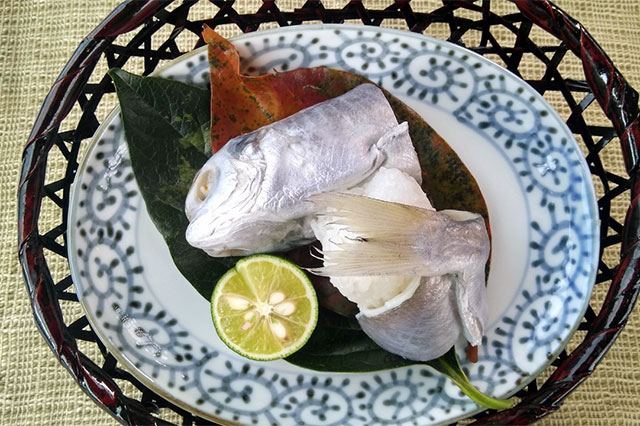
| Prefecture | Tokushima (徳島県) |
|---|---|
| Region | Shikoku |
| Japanese name | ボウゼの姿寿司(ぼうぜのすがたずし) |
| Reading | Bōzenosugatazushi |
| Home area | South and in the province |
| Main ingredients | Bozee. |
History and Origins
During the fall festival, sushi is often eaten in Tokushima, where various fish are left as they are left to live. It's a restaurant where you wrap your rice with fish that you've turned up. Fish used were mainly used by the fish that were once treated as luxury fish, as well as the fish that were used as an ace and cocholy. Boze is the name given to the Azoshima dialect. White fish, such as the Ibodai, the Uvoze, the Shizuzus, and white fish from summer to fall. Although the bowls themselves are eaten throughout the country, such as cooking, boiling fish, and opening, eating as a sushi is better for a Tokushima Prefecture environment where fresh boase is readily available. They say the fresher the meat, the more rigid it is, so it's easier to cook as a sushi. But now the fish catch itself is on the decline, and it is being made in Sheba and Samma more often.
When It Is Eaten
In the fall festival, sushi, smoking, sweet wine, and the sushi of this boze are served. In addition to being treated as a sushi with the shape of a bowl, you can be eaten as a "Busse Feat" with a slice of salt or vinegar holding it with a snack.
How It Is Eaten
We'll have 30 minutes of salt and then we'll have 30 minutes of salt. Then I'll pack the rice in vinegar, and I'll grab the rice every other hour, to the size of a bowl, wrap it in a bowl, and then I'll finish it up with a sushi. Sometimes the rice has a high smell, such as soy sauce, and it has a soft flavor. Also, they say that when you press the finish with the weight of the finish, it will be more tasty if you keep it longer than one day.
Recipe — Serves 4
Ingredients
- 8 ボウゼ
- 2–3 tsp salt
- 1 cups 1/2 vinegar
- 300 g(2 × 180 ml) rice
- 1 cups 2/3 water
- Vinegar: 3 tbsp refined white sugar
- Vinegar: 1 tbsp 1/3 vinegar
- Vinegar: 1 tbsp 1/3 yuzu vinegar
- Vinegar: 1 tsp salt
- Vinegar: a pinch umami seasoning
- 4 g wasabi
- to taste 30 g sweet-pickled ginger
- 2 sudachi citrus
Method
- Voze takes the kooka and turns his head left.
- Turn around and open up to the head. Even if you don't have to remove the abdominal bones, they will be soft with vinegar, except if you care.
- Turn right on your head and open up along the middle bone.
- Cut the middle bone out. The fins, chest, and tail are broken when taken, so I leave them behind.
- Wash clean with running water, except for gill eyes and blood.
- (It's even better if you shake the salt and stay 30 minutes an hour.)
- You can wash a bowl of wax with water and water with vinegar, dip it in the vinegar enough to hold fish, and dip it in 30 minutes. (You can put sugar in the vinegar with your favorite)
- I'll put a bowl of vinegar on the monkey and cut the vinegar off.
- Wash the rice and give it to the monkey. Put it in a rice cooker and add water to it for 30 minutes in summer and an hour in winter before cooking.
- I'll put the rice in a pot and put it in a pot and cool it down.
- We divide the rice by eight and then hold it to the size of the bowl and shape it. It's a bowl, and it's covered with a light weight and pressed into a sushi. Give me a cut-out bowl and add sweet pepper.
Dish data: Ministry of Agriculture, Forestry and Fisheries (MAFF), “Uchi no Kyodo Ryori” (Our Regional Cuisines) database, used under the Public Data License (PDL1.0); translated and adapted from the Japanese original.