Handasōmen 半田そうめん
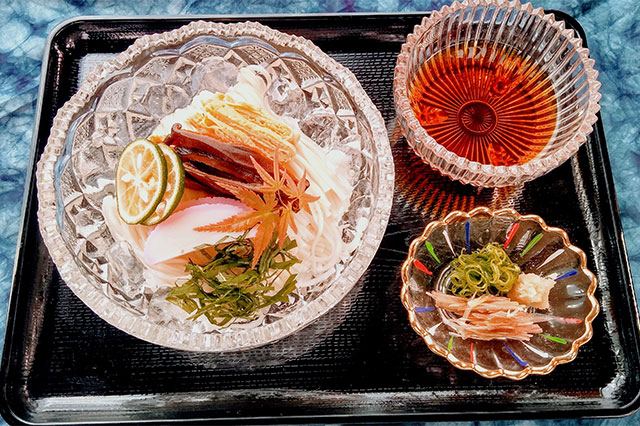
| Prefecture | Tokushima (徳島県) |
|---|---|
| Region | Shikoku |
| Japanese name | 半田そうめん(はんだそうめん) |
| Reading | Handasōmen |
| Home area | I'm going to take you to the nearest town. |
| Main ingredients | That's not fair. |
History and Origins
Handa's history of Handa's Tokyo district is long. Although there are many accounts of how it began in Handa, it is said that in the middle of the Edo, the captains brought it to Handa by way of the tributaries, the Hanagawa and the Sound Gate in Nara. At first, the sea captain's families were not only self-sufficient but also produced for side-work, but also because Handa's wind and climate were good for making it. It's a little fatr than a general comb, and it's a little more curdled, and it's characterized by food. There are many made-out noodles in Handa districts, and the taste of the food varies little by little according to the altitudes of each made noodles, the kinds of wheats and combinations and salts. So, noodle shops are branded, neighbors as well as tourists and many strong fans come from faraway places.
When It Is Eaten
It's said that it was usually done in the cold season of March 11th of March. Once upon a time, by the end of the fall festival, there was a "The Garden of the Sun" that was outside to dry its leaves. But now there are fewer noodles to do gardening, and they are being produced all year round over the course of the year.
How It Is Eaten
I'll boil the rice with a lot of water and then I'll have to boil it and then I'll have to wash it in a running water and I'll cut it down. Of course as a "cold-cold" you can eat it as well as as as a "sniff." In addition, the rich variety of food, such as candy, may also be characteristic of the place where it comes from. Also, the soup that you make with a sauce is well eaten.
Recipe — Serves 4
Ingredients
- 320 g somen noodles
- 80 g kamaboko (fish cake)
- 4 dried shiitake mushrooms
- 100 ml しいたけ戻し汁
- 2 tsp refined white sugar
- 1 dark soy sauce
- 60 g(1) egg
- a pinch salt
- 1/2 tsp refined white sugar
- a pinch vegetable oil
- 2 leaf green onion
- 20 g ginger
- 4 green shiso
- 20 g myoga ginger
- 2 sudachi citrus
- Broth: 400 ml(2 cups) dashi stock
- Broth: 80 ml(1/2 cups) light soy sauce
- Broth: 80 ml(1/2 cups) mirin
Method
- I'll cut the mushrooms into slices.
- The mushrooms are brought back in water and cooked lightly with rehydration and sugar and citrus oil.
- The eggs are melted, salt and sugar added to the fried bread, and the salad oil is poured into a pan and turned into a baked egg. Cut into four-inch lengths and turn into a silky egg.
- Leaves are cut small and tapered from a small opening.
- The ginger peels off the skin. I cut the blue, the blue, and the orange.
- I'll cut the sink.
- I'll make some soup. I'll boil the broth and sauerkraut together, cool it down in the refrigerator.
- The rice bowl is loosed in hot water (ten times the weight of a bowl of rice) and is boiled with twice as much water by the thickness of the cucumber. Take the cold water, wash it lightly, keep it warm and lift it up to the monkey.
- I put a bowl in a glass bowl, and I'll decorate my tools, and I'll put a leaf and a stick in it.
- I'll put some juice in a glass bowl and add some blue, blue, and sour to another dish.
More About Handasōmen
It's called Handa's Noodle. It's called "Santa's Noodle." It's called "Santa's Noodle." It's characterized by the weight of the same noodles as the duffel, and the strength of the back so strong that it's said "the noodles pop on the tongue."
It's registered as Handa Hanta's Trademark. Some manufacturers don't identify themselves as noodles, but sell them as "Santa Noodle."
Overview
In the days of the ShikokuXXXXXIO, called ShikokuIRO, the water supply of the Yoshino River was only increased.
The fertile deposits of this Yoshino River produce fine water that is essential for growing wheat, and the combination of them with the cold winds in the mountains between the Yoshino River and the Mount of Shang, and the making of them is one of the factors that has become a factor in the making of soy sauce in Hando.
In other plants, such as tricycles, kanji, and the little island, it is common to find that the coconuts are less than 1.3 millimeters. However, since the Japanese agricultural standard of 2000 (the Japanese Forest Standard of 12) says that if you have less than one and a half inches thick for the daisy, then you can use the term "majorism" (in 2016) and the current ZXZQ447X "Arguation Standard" section, it is no problem now to display the "Defly" if you have about one and a half millimeters of dry.
The product norms originally had a capacity of one to each producer, but manufacturers gathered to try to improve his reputation and so forth. A sheet of Japanese paper wrapped 100 grams, and a product standard of "streaking" is being unspoiled, and in April 2004, a massive partnership was formed.
Text adapted and translated from the Japanese Wikipedia article 半田素麺 by its contributors, licensed CC BY-SA 4.0.
Dish data: Ministry of Agriculture, Forestry and Fisheries (MAFF), “Uchi no Kyodo Ryori” (Our Regional Cuisines) database, used under the Public Data License (PDL1.0); translated and adapted from the Japanese original.