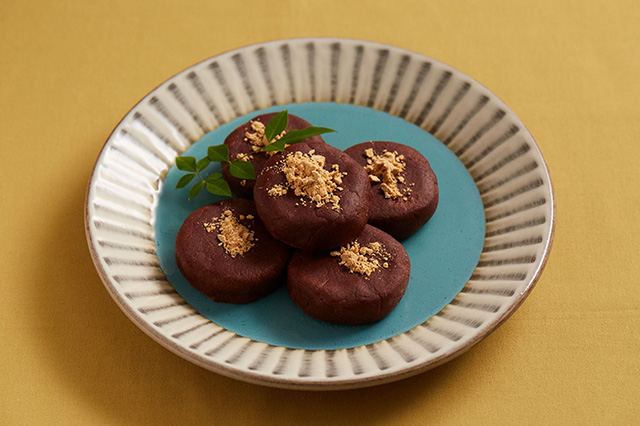
Akamochi 赤餅
| Prefecture | Ibaraki (茨城県) |
|---|---|
| Region | Kanto |
| Japanese name | 赤餅(あかもち) |
| Reading | Akamochi |
| Home area | I don't know. |
| Main ingredients | It's a very simple process. |
History and Origins
Red pepper is a red pepper made from red pepper flour. About the time of Kamakura, Akira Miyagi during the period, and Toshishio Takashi, who is said to have carried the seeds of the rosewood, the source of the Redwood, back to the port of the east mayor, from what is now the native land of Gunma Prefecture. While most of the crops on the river were ruined by the floods caused by heavy rains, only the tall droughts prevented the floods. Since rice is not so much served as it is today, it is thought that the "red rice" made of soy sauce could now be eaten. The carp is a year-old grass in the family, and it grows in summer, and in autumn harvests, it is nutritious grain that changes to red purple. The one that made this into powder is "red rice" and can't be made without the glue. Growing rice and wheat where it was difficult to grow, they were grown in areas where water was common. But now, improved land has made rice paddies grow, and it is difficult to make rice fields with limited people and stable, and to obtain congealed flour. In a time when the rice was less satisfied by weather and other conditions than now, "Ringo" was known as the staple food for feeding and also as the betweenructive snack.
When It Is Eaten
It is said that in the past it was made so well in autumn when the carp was harvested that it was prized for its staple food. Today, it is rare to eat it because it is rare.
How It Is Eaten
If you mix the flour in a mixture of boiling water, it will boil in the boiling water with a diameter of 5 and a half inches thick. It's good to turn around this time so that the fire will pass easily. The red color has improved. When the coral floats, you'll have to pick it up and have a big stick of chicken. Since the silkworms get cold, you should eat them while they're warm. If you're hardened, you'll boil it again and eat it after it's soft.
Recipe — Serves 4
Ingredients
- 300 g もろこし粉
- 320 ml hot water
- 6 g kinako (roasted soybean flour)
- 2 g sugar
Method
- Fill the ball with flour, add water, mix it, and then round it up to make a bow when it becomes soft enough to make ears.
- Put a round coral in the boiling water, and when it floats, place it on the hot side.
Dish data: Ministry of Agriculture, Forestry and Fisheries (MAFF), “Uchi no Kyodo Ryori” (Our Regional Cuisines) database, used under the Public Data License (PDL1.0); translated and adapted from the Japanese original.