Home / Shimane / Bakudanonigiri
Bakudanonigiri ばくだんおにぎり
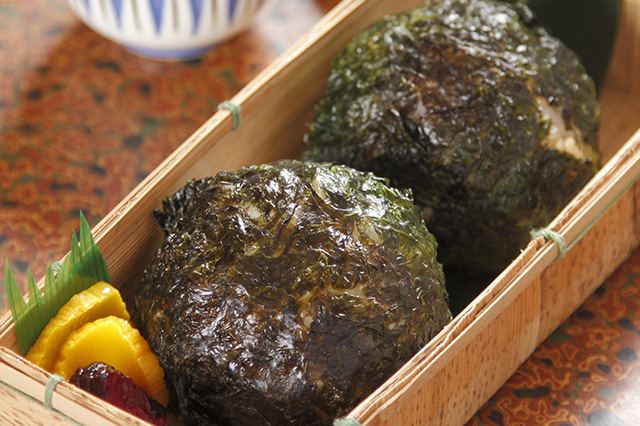
| Prefecture | Shimane (島根県) |
|---|---|
| Region | Chugoku |
| Japanese name | ばくだんおにぎり |
| Home area | Clouds, Concealed Areas |
| Main ingredients | Rocks, rice. |
History and Origins
The hidden islands are islands northeast of Shimane Prefecture and are made up of four main islands and over 180 small islands. The area is 346.22 kilometers. The coastline extends to 468 kilometers. The hidden islands surrounded by the sea also have a variety of harvesting algae. Winters can be spring, spring can be spring, and summer can be spent. The north wind will blow in December through February and the rock fishing will begin. In view of the day when the sea level is calm, we gather at the rocks at the water's edge to collect the seeds from the rocks. This "snatching" has become a cover-up winter wind poem. The hidden rocks are known for their thick, toothy, and high smell. The stone that is harvested will not be processed under the process of removing the pebbles or other objects, but will be made into a piece of board. Most of it is consumed locally, and some of it flows out of the province. It's an essential ingredient for the "rock-snap stew" eaten under cover and is an essential ingredient for New Year's Eve. It is "the last bowl" that is used for luxury and is often eaten for lunch and snacks. The rock is wrapped around a round, big - holder pot, covered with a rock, named "False" from its looks.
When It Is Eaten
The fact that rocks have been harvested and kept dry during the fishing season makes it a annual distribution. The "noodles" are eaten daily, including children's food and lunch staples, and is used by the locals.
How It Is Eaten
If you brush the rock so lightly that it becomes a little green, then paint one side with soy sauce, and wrap the face of the soy sauce around your chest, it will cook. Sometimes there are tools in the bowl, but many of them are simple without tools. Even without materials, the taste in the rock makes it good enough to eat. When I'm down, I have a sweet, sweet smell of citrus that spreads across my mouth.
Recipe
Ingredients
- 2 cups cooked rice
- 1 iwa-nori seaweed
- 1 tsp soy sauce
Method
- We divide the rice into two pieces, and then we pick it like a chicken, and make a bowl.
- The gas stove burns and burns rocks. This time the light is as light as the color of the rock changes a little green. You can use a fish net to make a fire easily, to the edge of the rock.
- Cut the hot rock in half, and put the sieve oil on one side. I'm going to wrap the sieved surface around the top of the top.
More About Bakudanonigiri
The Bakudan duck is a popular term meaning a large ball-shaped tip. It's also called the Bakudan-chike. Generally speaking, it refers to something with plenty of equipment in it and the whole thing wrapped in seaweed. Materials are not one type, they are often combined with multiple pieces.
For the origin of the word, there are many theories about the thick black, round look that reminds us of bombs and bullets, that it is large and edible, and that the tools can be played from within as we go on eating.
Okinawa Prefecture on the Bakudan.
It's the place where the Okinawa Prefecture thread is born. It's called "Bakudan's Knife" and simply "Bakudan." I wrapped the rice in a fish's skin, which is eaten by an ordinary pumpkin outside. It's common to use such things as jussy for the meal inside.
It's a hole in the desert of the remote islands.
In the Shimane Prefecture Separation Islands, a bowl of bowls of rice caught in a round bowl of rock sea in winter is eaten more often as lunches and snacks.
It's common to wrap a meal in a plate-shaped rock basin, or in a bowl. It's usually made and often not made. Because of the gap in the rock basin, it is good to squeeze oil and taste the unique aroma and flavor of rock moss.
In addition to being offered in restaurants in the remote islands, it's also sold at a grocery store.
Text adapted and translated from the Japanese Wikipedia article バクダンおにぎり by its contributors, licensed CC BY-SA 4.0.
Dish data: Ministry of Agriculture, Forestry and Fisheries (MAFF), “Uchi no Kyodo Ryori” (Our Regional Cuisines) database, used under the Public Data License (PDL1.0); translated and adapted from the Japanese original.