Ebimame えび豆
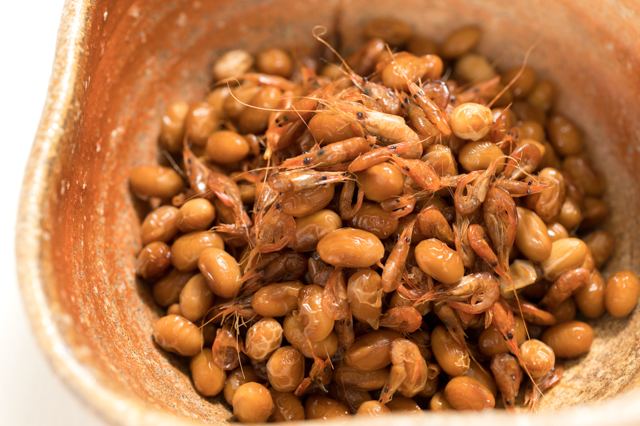
| Prefecture | Shiga (滋賀県) |
|---|---|
| Region | Kinki |
| Japanese name | えび豆(えびまめ) |
| Reading | Ebimame |
| Home area | All within the province. |
| Main ingredients | Soybeans, lobsters, vinegar, soy sauce. |
History and Origins
The "Singo beans" is a native dish of Shiga Prefecture, which is a delicious dish of the Shiga Prefecture, which is served in Lake Sung. It is rich in calcium and protein. In Shiga Prefecture, yagi beans and beans were grown in rice paddies, and from ancient times, beans were often eaten at festivals, law and festivals. "The lentils" are one of them. Besides being made of cheap food, stored in storage, eaten as a daily food, and being eaten as a shrimp, "Let me sit back for a long time," they were also eaten on New Year's Day, such as New Year's. The shrimps live in the shallow waters of Lake Sakura. They live within ten meters of the water level during their hatching season from spring to summer. In the winter, to go deeper, we have a traditional method of fishing from spring to summer, and we're doing "low fishing" in winter. The shrimp fisheries are traditional fishing methods using a basket called a "snake" and they feed them in the pot and plant them under water. It's the mechanism by which the shrimps can't get out after they've gotten in. And Okinawan fishing is a kind of deep net that uses fishing boats to plant and roll up nets.
When It Is Eaten
In addition to being presented as a celebration and a gift, the beans are also sold lunches and processed foods, so you can eat at a restaurant, and you can eat at an annual meal.
How It Is Eaten
The beans that have been soaked in water overnight are put in a pot and boiled to make them tender. In the pot, you put a taste-based treat such as sesame oil or vinegar. When you boil it, you put a washed shrimp. If you boil the shrimp until it changes color, then add the beans in the soup and cook it further. The last thing you need to do is take a whole bowl of lentils. vinegar has the effect of softening shrimp shells and making them last for the day. If you use beans with cans or other sauce, it's relatively easy.
Recipe — Serves 10
Ingredients
- 200 g(500 g) soybeans
- 150 g shrimp
- 80 ml soy sauce
- 120 g sugar
- 100 ml sake
- 40 ml vinegar
- 30 ml mirin
Method
- The beans that have been soaked in water overnight are boiled in a pot and made soft.
- The shrimps are washed and we're going to have to cut them.
- When you boil, add soy sauce, sugar, and wine to the pot, you put a shrimp.
- If the shrimps change color, add some beans to the boil for about 20 minutes.
- When the soup is low, add some garlic and cook it whole.
More About Ebimame
A native dish of Shiga Prefecture with a sweet mixture of peas with a shrimp shrimp from Lake Sakura. Even Kyoto will be eaten as one of the best.
Overview
Soybeans and lobsters are old and familiar foods at Shiga Prefecture, and lentils have been made cheaply and have been eaten daily as a saving dish. Because shrimps are a product of longevity, they are also eaten on New Year's Day, such as New Year's. In addition to being introduced to school meals now, supermarkets and restaurants are now popular as products and gifts. In 2009, potato chips that tasted soy sauce were limited to the Peace Hall and elsewhere.
The fishing of the shrimp in Lake Sakura uses fishing methods such as "low fishing" and "sunfish fishing" in the lake. "Frozen fishing" is a type of netting.
Diet.
In addition to being presented as a celebration and a gift, there are sales and drinks as home cooking and processed foods that can be sold in restaurants and eaten for the year.
How to Eat and Drink
After the soybeans are soaked overnight in water, and boiled until they are soft, they are served in a pot with flavored food and washed shrimps.
Association Links
A delicious collection of koi.
Text adapted and translated from the Japanese Wikipedia article えび豆 by its contributors, licensed CC BY-SA 4.0.
Dish data: Ministry of Agriculture, Forestry and Fisheries (MAFF), “Uchi no Kyodo Ryori” (Our Regional Cuisines) database, used under the Public Data License (PDL1.0); translated and adapted from the Japanese original.