Futomakizushi 太巻ずし
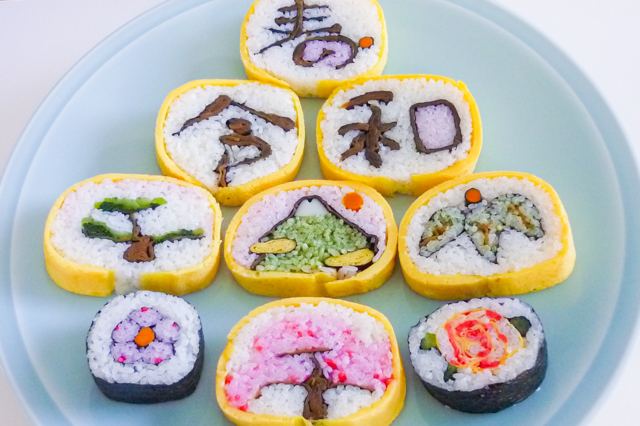
| Prefecture | Chiba (千葉県) |
|---|---|
| Region | Kanto |
| Japanese name | 太巻ずし(ふとまきずし) |
| Reading | Futomakizushi |
| Home area | Intensifies the prefectures, centered in the upper and lower states. |
| Main ingredients | I'm not sure if I'm going to be able to do that. |
History and Origins
There is also a theory that roots from a fisher's lunch box that has been chasing the eagle back about the year 1789 - 1801, which has been passed on to farmers and other families. They've eaten to match with annual celebrations, annual wedding ceremonies, family events, and so on. Before the war, local men of honor would create and behave, but due to the circumstances of the war, the creation of the maker to women has evolved more dramatically. They call it the "Creation Festival" or "Creation Day" or "Creation of the Cell" or "Susaki" or "Creation General" or "Creation General."
When It Is Eaten
The women gather to pray for a free homecoming course, a business course to celebrate the festival, a school to celebrate the festival, a school to celebrate the festival, a class to pray for prosperity, a class to get rid of pests and to send away insects to harvest crops so that there will be a few crops, and they are eaten year after year, in order that Japanese traditional ceremonies and festivals are no longer essential. Also, in addition to the festival, the entrance ceremony, the athletics, the flowers, and other family events are built and eaten by each family.
How It Is Eaten
Enjoy the colorful pattern of the spooling as you cut it.
Recipe — Serves 4
Ingredients
- 300 g sushi rice (白)
- 250 g sushi rice (ピンク)
- Sushi rice: 5 × 180 ml rice
- Sushi rice: 1/2 cups vinegar
- Sushi rice: 1/2 cups sugar
- Sushi rice: 1 tbsp salt
- 1 egg - roasting
- Mix: 3 egg
- Mix: 2 tbsp sugar
- Mix: 1 tbsp dashi stock
- Mix: 1/4 tsp salt
- Mix: 1/2 tsp potato starch
- Mix: 1 tbsp sake
- 6–7(50 g) kanpyo (dried gourd strips) (茶)
- Kanpyo (dried gourd strips): to taste () sugar
- Kanpyo (dried gourd strips): to taste () soy sauce
- Kanpyo (dried gourd strips): to taste () mirin
- Kanpyo (dried gourd strips): to taste () water
- Kanpyo (dried gourd strips): to taste () kanpyo (dried gourd strips)
- 1 nori seaweed
- 20 g pickled red ginger (みじん切り)
Method
- I cook white rice with vinegar. Pink rice is easy to mix with commercial sushi. I'll keep wet-kkin wet until I use it. I'm going to make it a little easier.
- I put all the ingredients in the bowl and stir well so that it doesn't bubble up. (2) Hot enough (a square of egg-burner) and lick the salad oil and wipe out the excess oil with paper, drain the egg fluid, and make sure the four corners are cooked. I'm going to insert two berries and then put them inside and then quickly burn them and put them in paper and cool them.
- I'll season the rice with the citrus sauce. The boiled paste is cut to 20 centimeters. It's convenient to have it packed up because you'll have about five times as much as dry ones.
- One long piece of mustard will be cut into three pieces in one half to one half day. Mix pink rice with chopped red pepper.
- I'll make a tree trunk. I'll cut the three bowls into four pieces and fold them in half. (Smooth the circle and increase the original)
- The eggs are placed in a sieve, and 100 grams of white rice is spread out in the middle by nine centimeters wide. On top of that, you have to expand one-third of pink rice with four centimeters wide and then flat the top. I can put one cup of tea on a pink rice bowl and one half a cup of rice.
- We can do it by adding one half of pink rice, one half of tea, one half of rice, one half of rice, one half of rice, one half of rice, and one half of the white rice. Take the chopsticks, place the trunk of the tree upside down in the center of the cliff, and add white rice to both sides. To produce a root, add more cans and roll up eggs.
- The end of the roll is down and the first volume is cut into eight pieces.
Dish data: Ministry of Agriculture, Forestry and Fisheries (MAFF), “Uchi no Kyodo Ryori” (Our Regional Cuisines) database, used under the Public Data License (PDL1.0); translated and adapted from the Japanese original.