Habazōni はば雑煮
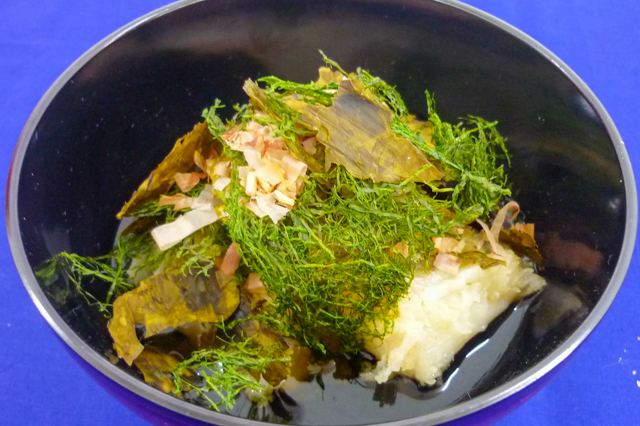
| Prefecture | Chiba (千葉県) |
|---|---|
| Region | Kanto |
| Japanese name | はば雑煮(はばぞうに) |
| Reading | Habazōni |
| Home area | The top level, especially mountain counties. |
| Main ingredients | It's like a ball. It's like a ball. |
History and Origins
The dove means "snaps" that dried the ocean algae from the state. The "Founding" will be laid on rocks in fall, sprouted in late fall, grew in winter and spring, and grew from a yellowishish - brown, about 5 centimeters wide, to a red - brown seaweed, and gathered in winter to spring. It was originally eaten as a substitute substitute for the assano, which was carved in about two centimeters, and spread out to dry in the sun. So we didn't go to the market very much, and we served here. If you eat this "snack soup" with a "sniff" in it early in the year, if you are lucky, it will be your local New Year's meal. The "snake" is a product of the southernmost tributaries of the island, such as Sakura and Nanjo City, but it is used to cook in the cities of Hajiyama, Kyushu, a remote area. In some families, it's not a habanori but a "heavy leaf with a large root" in the northernmost part of the island.
When It Is Eaten
At the beginning of the year, New Year.
How It Is Eaten
I'll eat it at home for New Year's. I'd like you to pour a bowl of baked or boiled rice, soup, and mix it with rice, green and pepper.
Recipe — Serves 1
Ingredients
- 1 mochi
- Broth: a pinch bonito flakes
- Broth: a pinch soy sauce
- bonito flakes, to taste
- 1/4 はば
- 1–2 g a pinch aonori seaweed
Method
- The soup is served at the kataka.
- Add soy sauce to the soup. Since the salt is so strong, I'll taste it lightly.
- I'm going to burn the dove and the blue wax in a fried pan or with an oven toaster.
- I'm going to cook or shake the broth.
- Put your shoes in the bowl, stick your shoes in the pot, wear a blue stripe, and put a lot of sharpeners on it.
More About Habazōni
Rural food from Chiba Prefecture. It's a stew with a bowl of honey.
It's a sultry that's required for New Year's in the top-up region, which is central to the Mountain Military County. It is estimated that it was eaten not only by the coastal regions of the coast but also by the inland area of Toyocho. The boiling with the pepper is unique to other parts of Japan.
The dried-out one calls the dove, and uses this dove as a tad. If you use a roasted horn, and you use a cassobar, and you take out the juice and you taste it with citrus oil, then you put a blue sauce or a cassoso. Since the bowl itself has salt in it, it is essential that the juice be tasteless.
It's not clear when they've been eaten, but why they've allowed the broom to be boiled.
There are partnerships like, "You can win the widest part of the year."
The mixture of rice, rice, green and casserole is also marketed.
Chiba Prefecture is a tourist diversion by creating a brochure that introduces local food in the province, but it contains a lot of knapsack.
In addition, in parts of Narita and Sakura, in parts of the northernmost part of the island, they dry and finely clean the root leaves and then pour them over the edge to eat.
Text adapted and translated from the Japanese Wikipedia article はば雑煮 by its contributors, licensed CC BY-SA 4.0.
Dish data: Ministry of Agriculture, Forestry and Fisheries (MAFF), “Uchi no Kyodo Ryori” (Our Regional Cuisines) database, used under the Public Data License (PDL1.0); translated and adapted from the Japanese original.