Home / Chiba / Seguroiwashinogomazuke
Seguroiwashinogomazuke せぐろいわしのごま漬け
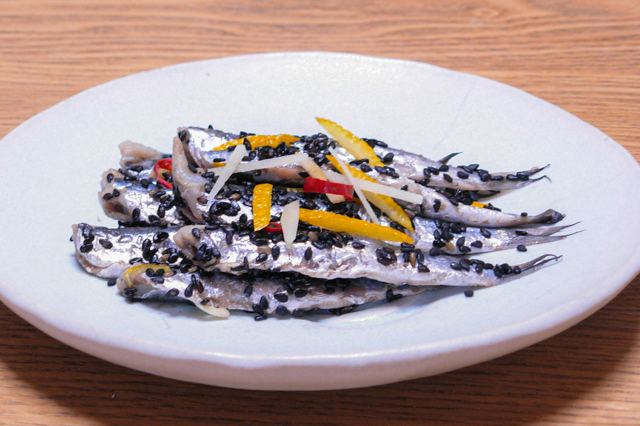
| Prefecture | Chiba (千葉県) |
|---|---|
| Region | Kanto |
| Japanese name | せぐろいわしのごま漬け(せぐろいわしのごまづけ) |
| Reading | Seguroiwashinogomazuke |
| Home area | It's the town of Kyushu. |
| Main ingredients | (Music) (Music) |
History and Origins
The eagle has been eaten since the peaceful days and is a familiar fish to the Japanese. From the fact that he weakened as soon as he went to land, the "Yo eagle" turned into "Illusion." The beach on Chiba is the largest water rise in Japan. Illusion fishing in this region has been on the rise since the time of Edo. It is said to have spread rapidly as fishermen from the province of Wakayama Prefecture emigrated and began fishing for the land. The seacoasts on the coast of Kyushu are a dark tide and are the best fishing grounds in Japan, where the katuo, Saba, and the eagles are on the black tide. The eagle, caught on the coast of Kyushu, comes from a local place and is called "Simoro." A long - known way to save a large but sunless eagle is to "scroll it"
When It Is Eaten
In the middle of the winter, they're made and eaten. It's a local dish known for drinking, drinking, and eating for business purposes, for example.
How It Is Eaten
It's a dish that uses and prepares fresh eagles. After taking away the eagle's head and entrails and washing them clean with running water, he soaks them in salt and repeatedly puts them on the water, removing the water. Add boiling rice, red pepper, and so on, for several hours, and then you'll be able to eat in two days.
Recipe — Serves 4
Ingredients
- 500 g sardine
- 1/4 cups salt
- a pinch yuzu peel
- a pinch red chili pepper
- 1/4 cloves ginger root
- sesame seeds, to taste
- Mix: 1/2 cups vinegar
- Mix: 1/4 cups sake
- Mix: a pinch sugar
- Mix: 1/3 tsp salt
Method
- The eagle takes away its head and internal organs, cleans itself with running water, dips it in thin salt water for 30 minutes, and drains blood.
- I'll water the water into a bowl and shake salt over it for about five hours.
- Red peppers are cut in small bites, root peppers in small slices, and the rice in a roast.
- We can wash the dishes and water them, mix the bowl with taste A, and dip them in for about seven hours.
- We use the water to form water, to roll three on a cushion, repeat it over and over again, and make heavy stones.
- I'm ready to eat with a preference for three days.
- I'll wear a slice of the skin of a sashimi.
More About Seguroiwashinogomazuke
It's a traditional dish prepared in the Kyushu region. The dishes are made with a mixture of silica in the vinegar of the eagle. It's all right. It's okay.
Overview
In Japan, the eagle is a familiar fish eaten from a peacetime, and the beaches are proud of their greatest water rise and the eagle fish have been the fishery since the Edo. However, I've been made to have many kinds of manual work to speed up corruption and prolong the saving time. The main dish is one of those dishes that the carpenter was made.
On the beach of Kyushu, they call them the "Syroa Loagle." It's a dish prepared and eaten in winter (which will be the time for the fish of the sea eagle to increase in fish gain). In addition to being eaten daily, we are also known for drinking and eating food.
How?
Making is published on a home page of Chiba Prefecture.
I'll take my head and my stomach, wash well, and bleed blood. I salt one for eight hours. A combination of vinegar, sugar and salt can be poured in to the size of a fish, and we'll cover it for five hours. The rice is roasted, the silky skin is finely cut, and the mustard is cut into little pieces. The three eagles and four ingredients are alternately wrapped in layers and glue. Leaves, or leaves of the Sasa, push them over and place them on heavy stones. Eat without water.
The tourist societies and roadside station are available on the market, but homes are regularly built. The time and recipes in each process vary from shop to house. Sometimes we put in citrus citrus soup, citrus skin, or cut-and-cut hawk claws. In other places, they can be made from fish such as age, abas, or a tuna.
Text adapted and translated from the Japanese Wikipedia article ごま漬け by its contributors, licensed CC BY-SA 4.0.
Dish data: Ministry of Agriculture, Forestry and Fisheries (MAFF), “Uchi no Kyodo Ryori” (Our Regional Cuisines) database, used under the Public Data License (PDL1.0); translated and adapted from the Japanese original.