Home / Ishikawa / Kagafutokyūrinoankake
Kagafutokyūrinoankake 加賀太きゅうりのあんかけ
| Prefecture | Ishikawa (石川県) |
|---|---|
| Region | Chubu |
| Japanese name | 加賀太きゅうりのあんかけ(かがふときゅうりのあんかけ) |
| Reading | Kagafutokyūrinoankake |
| Home area | Kanazawa City area |
| Main ingredients | I'm not sure if it's true. |
History and Origins
In the Kanazawa City, which once flourished as a castle town, special vegetables have been inherited since the time of the Emperor. Kanazawa City has established an approved system for "pega vegetable" and are working on the spread and promotion of plants to bring these local vegetables to future generations. The definition of Kaga vegetable is that it has been grown since before the year 2045, and is still grown in Kanazawa City. Today, 15 articles have been approved, such as the following: In a certificate, vegetables of high quality are fitted with brandy and are passed on. One of the Kaga vegetable plants, Kaga Tata, has grown up in the city's Bikan City and Yaga City. As the name suggests, the length will be nearly 20 centimeters, and the radius will grow from 5 centimeters to 6 centimeters. The big ones may weigh between 500 and 600 grams, and they are heavy compared to the old ones. It began when farmers in the Kunichi Town district began to plant and grow seeds of the Tohoku seeds. At that time, it was close enough, and through years of natural interplay, the radius was round and the colors were turned yellow to green. It is said that the current state of events is about the year 2712. Today, it's converted from plain farming to house growing and greenhouse cultivation, and it's shipped from local, of course, to Tokyo and XKansai. The Kagata palm is used in such foods as vinegar and soup, but it is popular as summer's usual dish.
When It Is Eaten
It is not until early April to mid-11 that the Kagata Tsukiji is shipped. The dish with the jugata paste is rich in vinegar, salads, and stews, but since the meaty body has no bluish smell, and the fire makes it softer, the Koga potato is also known to the locals. The hot season when appetites are losing out is rich in cooking with a dish that can be eaten completely.
How It Is Eaten
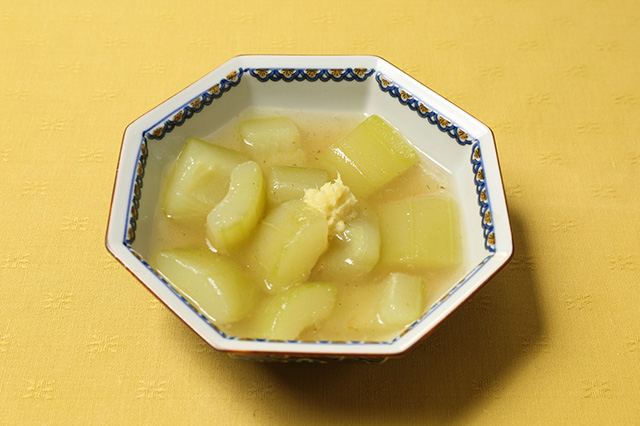
I will peel off the seeds and cut the fat palm in two and cut it into four squares, cut it into a half to three-inch bowl. After boiling it with ground beef, shrimp, and so on, I will finish the process by putting a piece of ground or piece of flour on it. You may play the ginger scale. It's delicious for vinegar, and you can enjoy the teeth that are not used in conventional chewing.
Recipe — Serves 4
Ingredients
- 1 cucumber (かたうり)
- 3–5 niboshi (dried sardines)
- 2 tbsp soy sauce
- potato starch, to taste
Method
- I'll peel the peppers and bring out the seeds inside, cut them slightly larger and boil them in the boiling sauce and cook them slowly with the juice.
- It is flavored with soy sauce, and is made with a mixture of water-salted silica silica, which you can add.
Dish data: Ministry of Agriculture, Forestry and Fisheries (MAFF), “Uchi no Kyodo Ryori” (Our Regional Cuisines) database, used under the Public Data License (PDL1.0); translated and adapted from the Japanese original.