Suizen すいぜん
| Prefecture | Ishikawa (石川県) |
|---|---|
| Region | Chubu |
| Japanese name | すいぜん |
| Home area | The area around the island. |
| Main ingredients | I'm not sure if I'm going to be able to do that. |
History and Origins
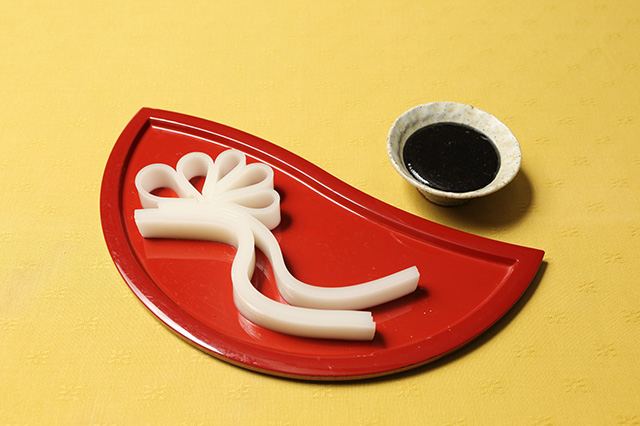
"Kye" is one of the oldest native dishes on Iwashima. It was boiled and made into rice flour and hardened. They have roots in the ostentatious dish and are eaten instead of stings. It's a dish served at law and at funerals, and it was said that a long time ago it was common for families to cook at their homes before the funeral. I also helped people from the neighborhood gather and cook. The essential part of the "n-n-n-n-n-n" is the misdemeanor. This is a mix of black sugar and soy sauce in a good black coat. It was the man's job to make this special gift. From this background, personalities appear in the taste and taste of the "smell" by the family. The "Kinji" is arranged and beautifully decorated in the form of citrus, dassies, flowers, and so on. A white, clear "knit" is often displayed on a yuji - colored taki. Apart from the beauty of their appearance, the cold weather is characterized by a different sense of food and flavor. And also enjoy the unique flavors of Hagu.
When It Is Eaten
They are behaved in law enforcement and funerals. In the past, it was built by each family, but now it's almost impossible to make. There are fewer sales and manufacturers to catch up with. Since you can't save it for a long time, it's not a tourist gift, and it's often consumed within the community.
How It Is Eaten
Put the rice in the water and add a little vinegar and boil. If you fold it in a cloth bag, add finely ground rice powder and pour it into the mold. When you eat, you use a push-out for longer periods. When you eat it, you have to prepare a bowl before eating. This pepper is sweet and sour because it contains black sugar. It's said that from this flavor, there are rare cases where you can eat with dessert. When it comes to law and funerals, they are often hung on and decorated with a yakushima-painter. The protrusions form a short, thin book, and they can be mounted on a flower pattern. Since the place where you have a good feeling will cause the water to boil, you need to boil it while making adjustments.
Recipe — Serves 2
Ingredients
- てんぐさ, to taste
- vinegar, to taste
- rice, to taste
- 3 tbsp black sesame seeds
- 2 tbsp brown sugar
- 1 tbsp 1/2 miso
- 2/3 tbsp soy sauce
- 2 tbsp 1/2 kelp dashi stock
- as needed seasonal fruit (みかんなど)
- as needed seri (Japanese parsley)
Method
- Add a small amount of vinegar to the water to cover the floor.
- When it comes to Doro, add a little bit of water and then rub it with a cloth bag when the shape of the bowl melts completely.
- The rice that has been in the water all night is a stone mill and let it sink.
- Add three to the sink, dump it in the sink, and then fold it into the sink and dip it in the water.
- Cut them into four-millimeter slices, shaped them in their favorite shape on the bowl, and served the fruit of the season and parsley.
More About Suizen
I'm sorry. I'm sorry. It's a kind of ostentatious dish that's eaten for stinging.
The tengusa is boiled into a condiment of rice flour and then thrusts it out into a short book about three millimeters thick and two centimeters wide. It looks like what's made from Tenguza, but it's more white. Also, unlike most, they are eaten instead of stinging while adding taste buds and black sugar to the dish. When you put them in, they'll fit in the pattern of a family brush or flower. And again, a ringushima paint is used for the turpentine tool.
It's eaten as an inveterate dish at law and at funerals, but it's sometimes eaten as a dessert as a Japanese sweet. In legal and funeral cases, it was common for people to gather around the neighborhood to help with their household chores, but today it's less likely to be done at home.
It's a common dish on the Isle Island, but it's either a legal dish or a tourist's reputation is low. There are reasons why it's not appropriate for a tourist to take a souvenir, since it's not going to go for long-term preservation.
The medieval Isle has a temple temple of the temples, which is thought to have been carried to the villages by the monks of this temple.
Text adapted and translated from the Japanese Wikipedia article すいぜん by its contributors, licensed CC BY-SA 4.0.
Dish data: Ministry of Agriculture, Forestry and Fisheries (MAFF), “Uchi no Kyodo Ryori” (Our Regional Cuisines) database, used under the Public Data License (PDL1.0); translated and adapted from the Japanese original.