Kashikiri かしきり
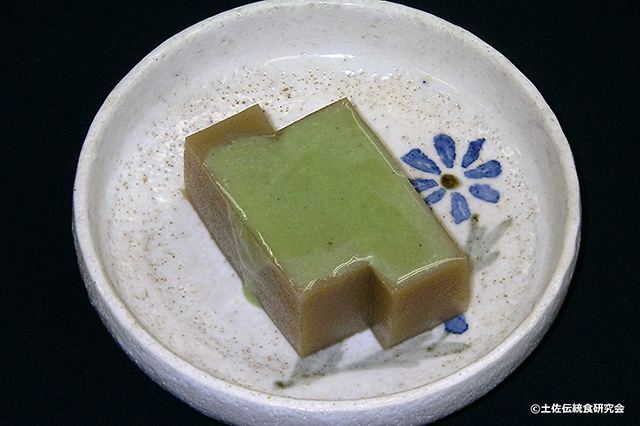
| Prefecture | Kochi (高知県) |
|---|---|
| Region | Shikoku |
| Japanese name | かしきり |
| Home area | South of the Fair. |
| Main ingredients | (Customeric seasoning, mixed with leaves, cucumbers, rice and so forth) |
History and Origins
The "supposing" is made of tofu made from a plant's fruit plant (and so forth). In mid-Kochi Prefecture, a relief diet is also called "snap tofu." It is said that the old Korean Peninsula passed on to them, and in areas where they didn't grow well in the mountains and in the mountains, they simply used the berries and water to cook and cook. It was an important food item in the times of food shortages. I hear that making "supremely" was often the job of old people protecting their homes. In the past, it was widely eaten at Kochi Prefecture, but now it has little opportunity to eat and it's a precious local dish that only is eaten in the cheap market. In Korea, even now, this dish called totrimuk is eaten with its "swisted" fruit.
When It Is Eaten
At the end of October, I had the habit of going to the mountains to pick up the berries. The berries are dried in the sun. (The fruit of a well dried plant is naturally cracked, and locals will take it out of the crack, dip it in water, and make it "sniff.") Now I cook the berries in a blender, but I used to grind them with stone mills. The "silence" made from palm berries and water was also used as emergency fuel fuel during famine.
How It Is Eaten
First of all, we'll start with a little preparation. I take the fruit from the shell and break it down with water. Add more water and water until the pure liquid is clear. I repeat this about ten times, and it will take about two days before the liquid is clear. When I'm ready to go downstairs, I'll burn the pot with water so that it doesn't burn. When the starch becomes thick, it cools down to the mold. When the fabric is solidified, it will be cut to the right size and finished. We eat with "a seasoning of unspoiled leaves, garlic, rice and so on," which is also a traditional dish of Kochi Prefecture.
Recipe — Serves 2
Ingredients
- 1800 ml(1) あらかしの実
- 2700 ml(15 × 180 ml) water
Method
- The berries are dried in the day, and the outer skin is broken, light with wooden mills, and remove the outer skin.
- The nuts that you took from your outer skin are torn in stone, and then put in cotton bags, and exposed to the flow of water two days and night, and relieved.
- Once again, he pulls the sour berries in a stone mill, puts them in a pot, and then adds water and then slowly boils them into the wood to make sure they are not too tight.
- I'll be ready in four hours, so I'll cut it out and eat it on a piece of rice.
Dish data: Ministry of Agriculture, Forestry and Fisheries (MAFF), “Uchi no Kyodo Ryori” (Our Regional Cuisines) database, used under the Public Data License (PDL1.0); translated and adapted from the Japanese original.