Kobumaki 昆布巻き
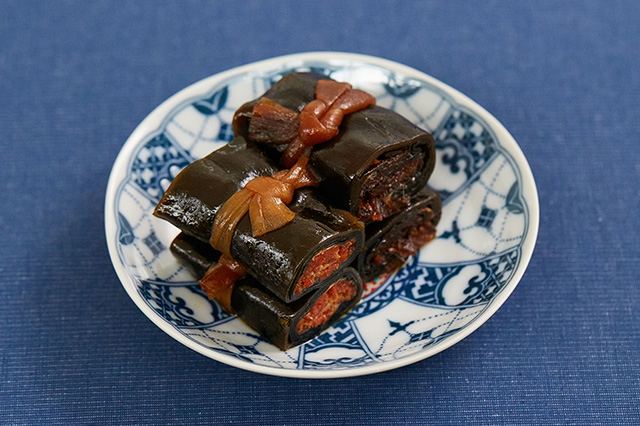
| Prefecture | Hokkaido (北海道) |
|---|---|
| Region | Hokkaido |
| Japanese name | 昆布巻き(こぶまき) |
| Reading | Kobumaki |
| Home area | Altitude |
| Main ingredients | It's a lot of stuff. |
History and Origins
In Hokkaido, which boasts the production of fabric in the top class of the country, the "silver scroll" is based on a roll of fish, such as squeeze and herring. The "scrolling" often uses a thin, soft cloth that has less fiber in the highlands. Now it's made all over the country, and is often eaten by New Year's soup. Hokkaido is the production site of a cloth representing Japan, which represents 90 percent of the country's production. The history of the fusai is old, and in the "Departure Japanese" book of 1697 (in Japanese, 1697) already has a description of it. In Kamakura's time, trade ships were traveling between pine and ZQ155X, and when they entered the city, the fabric was carried to the entrance of Fukui Prefecture, and it went to ZXXQXXXXXXXXXXXXXXXXXZQQQQ149X. Then, during the Edo, when fishing went well, it increased its consumption and became the main transport of the Kansai bound for the Seaside of Japan. And at the same time, we had a "scroll" that matched the high catch of herring and the famous Sake of Hokkaido, and it became a home dish of Hokkaido.
When It Is Eaten
Sakura can often be eaten on New Year's Eve. Also, by writing "I'm growing old," you may have a desire for senility, or "I'm growing up with a baby," you may have a sense of well-being. It is often used as a food food for Hare's day. Nicin is also considered a good food, so it often contains herring's "scroll." Since herring used to be like a parent who lives as a life-saving food for a severe winter of Hokkaido, it is also written in words, "Two parents" and is included in the hope of success and prosperity. Also, the "scroll" that is made of dried chicken has traditionally been valued as a winter preserver.
How It Is Eaten
After we have put the silkworms back in water, we wrap the fish in a cloth, and then we'll tie them in a glue, we'll boil them with sugar, oil and wine. Fish that are rolled with silk are mainly pumpkins and searing, but in some areas and in families, there are various types of tanned fish that are made from sash and cicada.
Recipe — Serves 4
Ingredients
- 3 dried herring
- 50 g kelp (konbu)
- 2 kanpyo (dried gourd strips)
- 1/4 cups mirin
- 1 1/2 cups sugar
- 1/2–2/3 cups soy sauce
- 1/2 tbsp vinegar
- 1/6 tsp salt
- rice-rinsing water, to taste
Method
- The cloth is wiped with frickin' cloth and cut into about 15 centimeters, and the wearer's nicin is put in rice juice overnight and washed clean and cut to match the width of the cloth.
- Put herring on top of the cloth, wrap it around, and tie it in a washcloth.
- After a few hours of boiling, add sugar, lentils, oil, and vinegar to the pot until it tastes good.
More About Kobumaki
The squawk is Japanese food that has been wrapped around fish and cooked. The sieve's roll using a hungry herring is the main thing.
Cooking.
The sieve of the sieve.
The absent herring is soaked in rice juice and brought back. It'll take about four days to replace the rysso every day. The bones are removed from the bones and they are boiled in a fool's way. The cloth is brought back in water, soft, and binds with a knot wrapped around herring. Put it in a pot that has been laid with a tree, and boil it sweetly with soup, broth, and flavor. We can turn off the fire and make it cool. A pepper cut to a small size and then applied to a needle is served in the sun.
Culture
It is believed that during the late days of the room town, a drying process was established, that the flow was expanded, that the distribution was expanded, and that the oil was made because of the spread of soy sauce.
It's one of the dishes that comes from getting to "good."
A circadre.
It's a coil of glue that is produced and consumed mainly with Toyama Prefecture. This skeleton is the basic shape of Toyama Prefecture, and it is similar if you don't use spools. In contrast, the common wooded chick in the whole country is hardly made by local cicada manufacturers, and is not sold at the supermarket. There's also a red scroll, which is commonly used but which should be avoided as a color for food. In the region of Toyama Prefecture, once under the control of Kasaka, the cucumber was eaten extensively as a substitute for fish that could not be eaten by the locals. At the same time, Toshiyama is a land where there is a high consumption of cloth, and there was a drought in which it had been mixed.
Text adapted and translated from the Japanese Wikipedia article 昆布巻き by its contributors, licensed CC BY-SA 4.0.
Dish data: Ministry of Agriculture, Forestry and Fisheries (MAFF), “Uchi no Kyodo Ryori” (Our Regional Cuisines) database, used under the Public Data License (PDL1.0); translated and adapted from the Japanese original.