Home / Kagoshima / Papaiyazuke
Papaiyazuke パパイヤ漬け
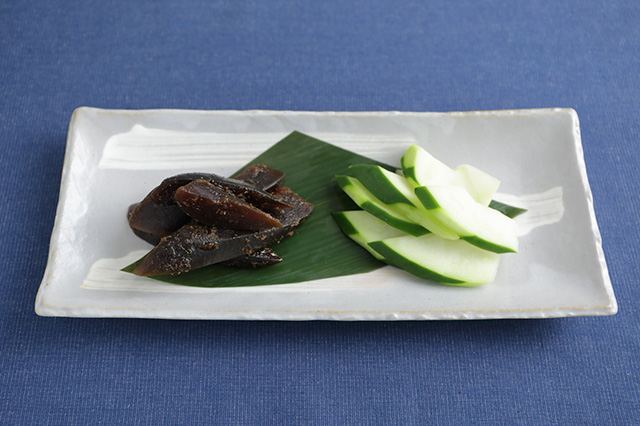
| Prefecture | Kagoshima (鹿児島県) |
|---|---|
| Region | Kyushu & Okinawa |
| Japanese name | パパイヤ漬け(パパイヤづけ) |
| Reading | Papaiyazuke |
| Home area | I'll be back in a minute. |
| Main ingredients | Papaya. |
History and Origins
"Buy Papa" is used as an easy - to - pop food in the home. After salting the young papaya nuts, and then filling them with taste buds and so on. It's also being eaten by Okinawa Prefecture, as well as in the Sushi region. It's not only the flavor of the widely known chicken fish, but it's also very popular with tea. It is said that Papaya's history is relatively new in the Kyoji region, and that it began when Miyoshi Island was under American control after World War II. Throughout the year, the climate of the warm Shikoku region spread rapidly, due to its strong breeding power and easy growth, and sustained the age of food shortages after the war. From that background, in Toshimi, there was a carpenter who made a delicious meal of papaya, and in that area, it could be that he also gave birth to "da-da-ya." In the haiku region and Okinawa Prefecture, the skin may turn yellow and eat ripe papaya as fruit, but more often than not, it still uses blue ripe ripeness as vegetables.
When It Is Eaten
Since Papaya is on the market from summer to autumn, it is often made at this time of the year, but "kidomi" is a long time to save food and has a good time.
How It Is Eaten
If you cut the pre-mature blue papaya in half, and take the skin and the seeds, you peel the salt, and then you get a heavy stone and then you dip it in it for two to three days. If you take it out of the understuff, you'll get water, mix the taste and sugar, and then you'll cross-float the papaya, add heavy stones, and then you'll eat it after ten days. In addition to flavoring, they have become known to you. When you eat it, you cut it thin, and, of course, as rice, you're served with tea or with pans. It also fits well with the drinking bowl.
Recipe
Ingredients
- (パパイヤの下漬け)
- 3 kg 青パパイヤ
- 150 g salt
- (パパイヤの味噌漬け)
- 3 kg パパイヤの下漬け
- 1 kg miso
- 50 g sugar
Method
- A blue papaya is cut in half and takes skin and seeds.
- Put one in a container and place a heavy stone on it while waving salt.
- In two days, two days later, I'll take out Papaya's dunking two and dry it for a day in the sky and get some water.
- I'll mix the taste buds and sugar well.
- We alternate with Papaya, which is soaked in a container, and Papaya's Taste 1, and make heavy stones.
- I'll be able to eat in about the tenth day.
More About Papaiyazuke
The papayaki is a seasoning made from flavors such as citrus and soy sauce after salted the immature juices of papaya. It's made mainly on the Isle of Kagoshima Prefecture, and it's also made in Okinawa Prefecture. It's a Parisian flavor, and it's also widely sold as a souvenir, and it's also a flavor for chicken food.
Characteristics
I've been known to do this as an easy medium to make at home in Mishima and Tokushima. It's also made in neighboring Happy Islands, subsidy and Kyrishima. In Kagoshima City there are manufacturers who use the raw materials of the Isle of the island or Okinawa Prefecture.
Although the ingredient's papaya is called "snap" and "snap" in Japanese, it is now commonly called "daya" in the southwest. The Southwest Islands of the subtropical climate are suitable for papaya growth, and the seeds in the home garden are less than two years old and fruit mature, and if left to mature in the garden, they are eaten by birds, and are more likely to be eaten as vegetables than tropical ones.
Tastes are preferred in different regions and families, but they can be divided into salt and salt, mainly in seasoning, oil, and so on. Sometimes the flavor is added to raw fish, hawk claws, and so on. In the 21st century, some of the kimchi flavors have appeared.
Even large blocks are sold at the grocery stores in Toshishima. Food stores and souvenir stores sell goods that are cut and sealed in plastic bags.
For condiments, the fruit is deep green, with strong meat and no damage to the surface. If you turn yellow green, you will be too soft, too painful, and too poor for cucumbers, but you can be soaked.
History
So, what's the point of this?
In the Edo period, there is no mention of papaya in the Niiyas, a shell-sharp plant whose detailed record of Japanese mobile plants was recorded in the 'Nazi' section of 1709. In about 1855, when Iseshima Kota recorded details on the food and habits of Oshima's island, "Santa's Sequoshima" contained trees of wild plants, but there were leaves and trees and white flowers, and the explanation is that the fruit resembles the southern.
In 1925, the book "School Photo 2" says that besides fruit diet, "it tastes a bit interesting, whether it's cooked or boiled or oiled, " and there were cases where they were eaten as cucumbers by this time.
In 1945, after World War II, Mizuzushi and Okinawa were placed under the control of the American National Government, and in Okinawa, where the building of the U.S. military base began, many migrants took their products back. In the 1950s, the island banana plant and edible papaya were tried on Miyumi Oshima. In fact, in 1962, there were records of an enzyme papain study of the fruit of Mishima in the Kagoshima Prefecture Industrial Test.
Since papayas grow easily, in the 1970's, home growing became common and some of them began to produce silk. In 1973 the Kagoshima Prefecture Industrial Test Office even considered and proposed making papaycha. In the meantime, they tried to make fish and pickles.
How to Eat
Take out what is bitter and eat it with a slice.
In addition to eating directly as rice, tea, and wine, it is also used for cooking as a food, such as the flavor of chicken in soy sauce and fried food.
Text adapted and translated from the Japanese Wikipedia article パパイヤ漬け by its contributors, licensed CC BY-SA 4.0.
Dish data: Ministry of Agriculture, Forestry and Fisheries (MAFF), “Uchi no Kyodo Ryori” (Our Regional Cuisines) database, used under the Public Data License (PDL1.0); translated and adapted from the Japanese original.