Home / Hokkaido / Tachinomisoshirusukesōdaranoshirakonomisoshiru
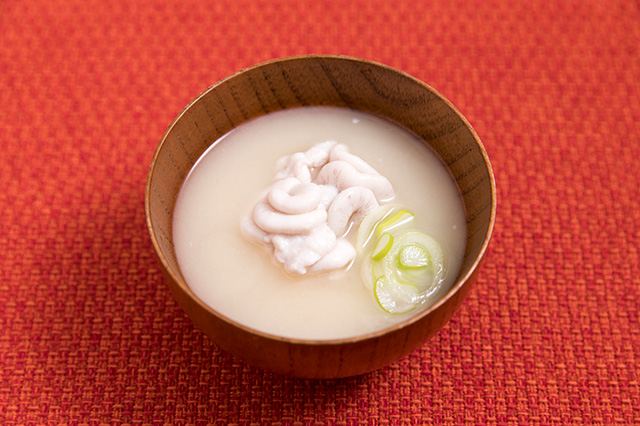
Tachinomisoshirusukesōdaranoshirakonomisoshiru たちの味噌汁
| Prefecture | Hokkaido (北海道) |
|---|---|
| Region | Hokkaido |
| Japanese name | たちの味噌汁/スケソウダラの白子の味噌汁(たちのみそしる/すけそうだらのしらこのみそしる) |
| Reading | Tachinomisoshirusukesōdaranoshirakonomisoshiru |
| Home area | All over the country. |
| Main ingredients | It's called a madala. It's called a madala. |
History and Origins
In Hokkaido, they call Tara's albinos "true" and distinguish the spotted albino as "true," and the female with the Sveta. The soup with the whole albino in it is "their yuzu." Hokkaido is a winter's regular dish. The fish that blooms during the cold, snowy season, as can be seen from the way they write snow. It's said that the best flavors are from around January to February. Tara is said to have already been eaten in many places, such as Edo and Kyoto since apartment town. In those days, the warriors were pleased with me because I didn't cut my stomach, took my intestines out of my mouth, and carried salt in them, to prevent corruption. The water temperature of the madala, belonging to cold - water fish, is low from 2 ° to 4 ° C. For this reason, it's spread widely around Hokkaido, which is low at sea temperature. Hokkaido has a high catch of national tops. Also, the scorpions that roam from summer to autumn to find food are caught almost all over the road.
When It Is Eaten
Tara is often eaten as home food in the early winter. Madala's albino, "trueness," is being traded as an expensive commodity. The "Feel of the Snacks" - the albino - can be obtained at reasonable prices from the top of supermarkets and other stores in late autumn.
How It Is Eaten
A simple dish to put raw "men" into the soup and melt the taste. It's easy to taste, so it's a winter home dish that is familiar to the people of Hokkaido. The soup with only "we" and long hair is the simplest, but you can taste it even if you use it for raw materials, such as radish, carrots, greens, lentils, tofu, and so forth. In many families, seasonal changes in the equipment they use. It's very important not to cook too much. When you thoroughly wash it with salt to remove the smell, it's a trick to get the water hot.
Recipe — Serves 1
Ingredients
- 50 g たち
- 10 g long green onion (斜め小口切り)
- 5 g white miso
- 4 g red miso
- Broth: 140 ml water
- Broth: 1 g dashi kelp
- Broth: 2 g bonito flakes
Method
- I'm making soup out of stylus and cachio.
- Soak the soup in the pot, boil it, and put them in the pan to heat it up. If they boil, add a long string and stop the fire.
- I'll put in the white and red pepper that I've melted into.
Dish data: Ministry of Agriculture, Forestry and Fisheries (MAFF), “Uchi no Kyodo Ryori” (Our Regional Cuisines) database, used under the Public Data License (PDL1.0); translated and adapted from the Japanese original.