Teppōjiru てっぽう汁
| Prefecture | Hokkaido (北海道) |
|---|---|
| Region | Hokkaido |
| Japanese name | てっぽう汁(てっぽうじる) |
| Reading | Teppōjiru |
| Home area | I'm sorry. I'm sorry. |
| Main ingredients | I've got crabs, long hair, tofu, taste. |
History and Origins
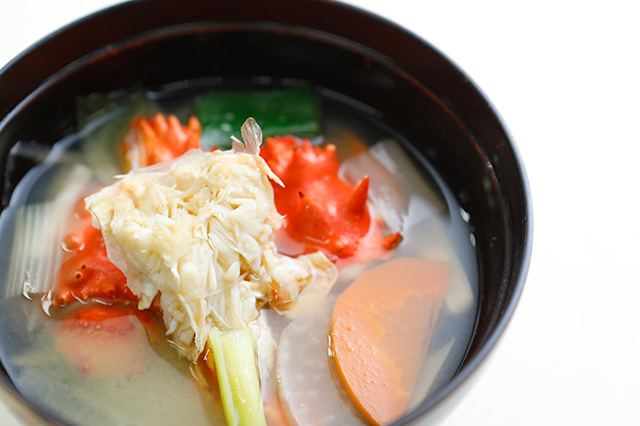
In the Hokkaido region, especially in the east, the citrus soup with crabs is referred to as "sew". "Syme" has been eaten as an old albino fisherman's dish. The name comes from the way that the way you eat a crab with chopsticks is similar to the way you put a bullet in a gun, so it's said to be named "smelly juice." Especially famous for the food used in the "Sweet of the Wild" meal is the flower crab, which is a flower crab in the root area, whose name is the crab, but it's exactly classified as a carnivore. (instrumental species of Tarabani). Nowadays, flower crabs are a valuable food because their catch is reduced and their harvest is only from June to September and three months. Although raw flower crabs are dark brown brown in color, some believe that they are named flower crabs because when they are boiled, they turn into a roselike color. The toge on the whole shell is also a feature.
When It Is Eaten
In Toyo districts, from the summer of flower crabs to the fall, the "sew at all" has been eaten. Today, frozen crabs and other areas can be used to make winter crabs, so they are eaten throughout the year.
How It Is Eaten
The ingredients used in the "Sweety" are known to flower moths, but often they are used by other crabs, such as the Hokkaido, such as the hair crab, the tarabad, and the zwei. The recipes are simple enough to cook crabs and vegetables that are fond of boiling them with citrus juice, taste them in taste, and then add to them a tofu and long cucumber. The juice that comes out of the crab produces a delicious, delicious "Fly" sauce. It's easy to cook and it's delicious, so it's popular for home cooking. Vegetables used can be used for long, busy roots in the home, but they can also taste the juice and flavor of the crab without the vegetables.
Recipe — Serves 4
Ingredients
- 4 花咲ガニの脚 (毛ガニ)
- 4 cups water
- 10cm kelp (konbu)
- 1 long green onion
- 1 tbsp sake
- 4 tbsp miso
Method
- I'll leave the pan with a little water and a short book of cloth in it for a while.
- Put the knife in the crab's leg so that it is easily eaten. The white part of the long hair is cut diagonally and the blue part is cut into a small cut.
- Put the white part of the crab and long hair in the pot, and as soon as you boil it, pour the wine and then melt the taste. I'm looking at the blue part of the long sleeve on the bowl.
More About Teppōjiru
It's a dish made of casserole, which is also a dish of tarab crabs, classified as carp crab. The names and flavors are different from those of the locals and the crabs.
In Hokkaido, it's called "major bong" and it's also a local gurme and native food.
Cannibal juice
The calypso, which is eaten in eastern and western Japan south of Tohoku and Northland, is popular with citrus juice, which has been used with lynx, iridium, iridium, and so on.)
Other things eaten by zwei crabs and other things in the Northland are popular.
Samphet.
The bong is a casserole made of casserole, and especially famous is the citrus, which uses the janx crab, which is used in the port of Hanaoka, Hokkaido. And also, even the Tarabani zwiani and his wounds are eaten.
The name "dong" is derived from the fact that the way the crab eats with chopsticks on its feet is similar to the way it is loaded with guns.
Text adapted and translated from the Japanese Wikipedia article カニ汁 by its contributors, licensed CC BY-SA 4.0.
Dish data: Ministry of Agriculture, Forestry and Fisheries (MAFF), “Uchi no Kyodo Ryori” (Our Regional Cuisines) database, used under the Public Data License (PDL1.0); translated and adapted from the Japanese original.