Torimeshi 鶏めし
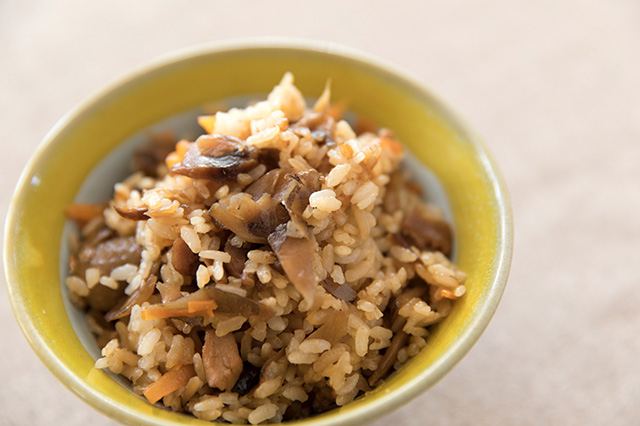
| Prefecture | Oita (大分県) |
|---|---|
| Region | Kyushu & Okinawa |
| Japanese name | 鶏めし(とりめし) |
| Reading | Torimeshi |
| Home area | All within the province. |
| Main ingredients | Chicken, chicken, rice, rice. |
History and Origins
The annual purchase of chicken per household is a national top-level Oita Prefecture. Chickens are rooted in traditional food, and Sasai City is also known as the site of the peppering season. There are a wide variety of dishes, such as "snap" and "snap" and "sniff" and "sniff" and "sniff" and "snack" and "snack" and so on, and the locals are able to taste the local flavor by the way they think about it. Chicken chicken is a dish prepared with chicken and chicken and carrots and so on. Although there are different ways of making and staying together by local and family products, it is a native dish that is widely loved in Oita Prefecture. In times when food was scarce, chickens were raised in their homes as a valuable source of protein. It's said that fewer families are being fed by netting under the edge of their own home. It is believed that what hunters made of chicken or other chicken to serve their customers.
When It Is Eaten
It's an essential dish for Hale, such as when relatives gather together and celebrate festivals. Also, if the chicken that you raise doesn't lay eggs, they'll be broken and used for the "hench." Now, chicken that goes to market is the main source of chicken, but many locals use chicken that has been raised for years to produce the old-fashioned chicken. The more a chicken is eaten, the better it will taste.
How It Is Eaten
There are two big ways of making it. First of all, we'll cook chicken, vegetables, mushrooms, and other ingredients in soy sauce and sugar, as well as mix them in cooked rice, and then we'll cook them together. The simplest is made of chicken and eggs. Using chicken from both young chickens and parents, it can also change the sense of food and taste. The rest of the tools use the vegetables that are readily available. The internal organs, bones, and fine meat that are missing during cooking are used and not wasted in "soy sauce."
Recipe — Serves 4
Ingredients
- 2 × 180 ml rice
- 150 g free-range chicken
- 120 g burdock root
- 100 ml soy sauce
- 50 ml sake
- 30 g sugar
- as needed oil
Method
- I'll pick up a little fish and put it in the water. The trick is not to change the water.
- Cut the chicken small.
- Hot pot with chicken fat or oil and chicken meat.
- I'll cook the chicken until it's white.
- I'll give the fish that were exposed to the water and put them on the running water and cut the water off.
- Add a bowl of rice to the pot and mix it and let the fire go.
- When the color of the nose changes, add and mix sugar.
- Add wine and soy sauce to it and boil until it's dry. If you want to color your rice, leave a little juice in it.
- I'll put eight on top of the cooked rice and water it for 15 minutes.
- Mix well.
- It's done. The way the materials are boiled makes different colors.
More About Torimeshi
Hanazawa, a stock company, is a station spokesman based on the Imperial Hotel Station. The station's valves, chicken chops, are taken up on national television.
Fabric
The main building station is open. With this, the Hanaoka Travel Hall began selling station valves. - A chicken chicken-crumb root will be born. At first, it was a good meal thought of as a remedy for food problems. - The lunch section is independent of the Hanaoka Travel Hall. The commercial is called Hanaoka Trade. - "Cow chicken" is released. At that time the price was 80 dollars. - Companyized. - He founded the cafeteria department and made it multi-sided. - Change the merchant ship to Hanoi. - The company's a tailor. (Laughter) We opened a street shop in Paris. We've been working on this for the last six months.
Chicken.
The soup made by itself from the soup of chicken and sugar citrus is cooked by the process, and the chicken is served with chicken sauce, and the chicken is boiled to add more to the flavor by adding to it. For example, at the beginning of the lunch, it was a simple, famous station valve.
Although the original sale was a public sale on the station's premises as a valve at the main station, it was used to sell at the main station's offices, including the construction of the building, or at the local supermarket and station's convenience store. Also, all of them are made and transported at the main museum book store, and the time is late to start the sale of a store far away.
At the election of the Tokyo Station General's General Assembly of Stations 2015, JR Japan's Tohoku Station, elected to the highest number of votes and total evaluations in the survey, and chosen for the next year. At the "State-State-State-Station 2021," which lasted ten years, I won the 10th anniversary.
Type
The lunches are prepared by five kinds of equipment, and the top three are required to make a reservation for distribution.
Hanaoka's chicken, chicken's chicken, chicken's chicken, chicken's chicken, chicken's chicken, chicken's chicken's lunch.
How to Buy
Since we continue to maintain the original recipe, there is no synthetic storage materials at all, and no communication sales has been done from matters such as consumption date.
In the main hall city, which will be held in mid- February, sales booths will be set up and the chicken is sold.
Events
For a month before the end of the "Creep" routine, the package had been selling a special version of the lunch box that said "Thank you for the "Thank you"
The new guy.
The new shop, completed in April 2017, has set up a dining room with fewer seats in the traditional manner so that it can be seen. I'm offering a menu containing chicken. Business hours are 10:00 to 14:30.
I also gave the new shop a space for sales and production lines and a gallery to show them how to walk.
Text adapted and translated from the Japanese Wikipedia article 花善 by its contributors, licensed CC BY-SA 4.0.
Dish data: Ministry of Agriculture, Forestry and Fisheries (MAFF), “Uchi no Kyodo Ryori” (Our Regional Cuisines) database, used under the Public Data License (PDL1.0); translated and adapted from the Japanese original.