Home / Yamagata / Tōyamakabunokasujiru
Tōyamakabunokasujiru 遠山かぶの粕汁
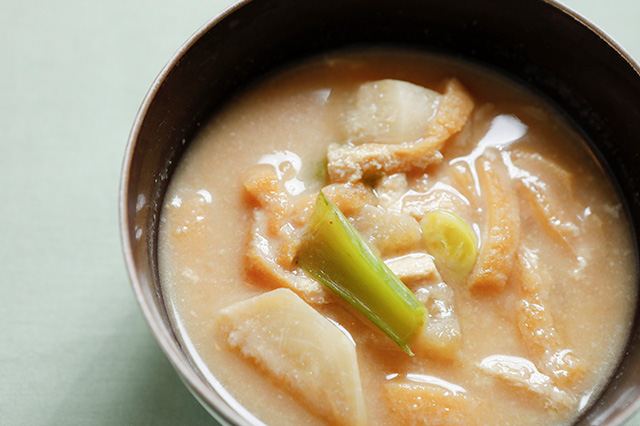
| Prefecture | Yamagata (山形県) |
|---|---|
| Region | Tohoku |
| Japanese name | 遠山かぶの粕汁(とおやまかぶのかすじる) |
| Reading | Tōyamakabunokasujiru |
| Home area | I'm sorry, I'm sorry. |
| Main ingredients | It's not just a dish. It's a dish. |
History and Origins
"Stretchtice" is a traditional Yamagata Prefecture vegetable that originated in the U.S. That name comes from the U.S. In about 1800, when I was brought up in the distant mountains, it was said that one of the ways that Takasaka Tsukayama attempted to develop his local industry was by saying, "You're in the west, you're in the far side of the mountain, you're in the far side of the mountain." There are a number of traditional suits in the province, such as Fujisawa and "Hub" and "Hub" and so on. But the white and round variety is only in the remotest. There are features that make it hard to boil because they are stronger and softer than the general suit. There is an episode where volunteers, who are at risk of decline, have gathered to preserve this taste and found the only producer of the last seed. Even today, the stripe has been identified as one of the "magnified traditional vegetables" and local production unions are working on producing and spreading the seeds to protect them. "The yuzu from the mountain is a dish of sesame and snowed rice, made of "Change beans," which is a dish for the Japanese city. The peas were made to flat with a wooden stick from a large bean that was simply soaked in water. The dried beans can be stored for long periods, but they are flat and easy to cook because the fire is hard to pass. By the way, we refer to the traditional vegetables of Japan's Tokyo City, as a hybrid plant with a wide variety of furs, such as a distant mountain and a long-oka vegetable. That is why older people still refer to them as "stuffs."
When It Is Eaten
The harvest season on the mountain is from late October to early November, and it's standard for the Haushu on the mountain to eat in the cold winter. They say that it used to be a long time ago when beans were harvested, it was the custom to make peas from house to house.
How It Is Eaten
I'll make a bowl of sesame and persame beans and add wine to the finish. It's good to adjust the amount of liquor according to your taste. Because of the hardy variety of a far-off mountain coat, winter can be preserved, but it is difficult to cut with a knife and clean because of it. So, using the corner of the knife, it is pulled tightly and small, but in locals it's called a moustache. Because it's different from the usual coat, it takes longer to heat, it doesn't taste bad, it keeps the evening before it, so the next morning it'll be fixed, and it'll taste best to boil a little.
Recipe — Serves 4
Ingredients
- 400 g(3) turnip
- a pinch 遠山かぶの葉
- 60 g(2) aburaage (fried tofu pouch)
- 20 g crushed soybeans
- 600–1000 ml dashi stock (水でも良い)
- 40 g miso
- 120 g() sake lees
- 3 tbsp mirin
Method
- (Totally use a black knife to peel off the skin and cut it with a knife.) "Drink" makes it easier to taste.
- The leaves cut the soft core into about three centimeters.
- With yuzu shi, or water, I will boil it until the fur coat is soft.
- I'll cut short the oil-driven fuel supply.
- If you put oil and beans in, and the beans are soft, then add a taste and a wine bowl.
- I'll put the leaves on the top and let them boil. Once it's cold and it's warm again, it tastes good and delicious.
Dish data: Ministry of Agriculture, Forestry and Fisheries (MAFF), “Uchi no Kyodo Ryori” (Our Regional Cuisines) database, used under the Public Data License (PDL1.0); translated and adapted from the Japanese original.