Home / Hyogo / Hatahatanokarāge
Hatahatanokarāge はたはたの唐あげ
| Prefecture | Hyogo (兵庫県) |
|---|---|
| Region | Kinki |
| Japanese name | はたはたの唐あげ(はたはたのからあげ) |
| Reading | Hatahatanokarāge |
| Home area | Horseland |
| Main ingredients | Hatahata |
History and Origins
A small picket that had removed its head and entrails was fried with oil. Because they have no scales and are fragile, they're easy to cook and are easily eaten because they are not habitless. That's why it's a familiar fish in horse families. Besides fried peppers, raw food can be boiled and dried and eaten in a variety of ways. At present, in the Hyogo Prefecture-XX, we are proud of the catch of one of the largest bees in the country. It's a roundfish, and the honey picker caught at the coast of Japan to go back to where it was born and lay eggs, but it's not in a state of immersion in the horseland to water the bees from the Korean Peninsula. The eggs are fed when they are laid, and nutrients are not passed on to the fish, but the bees that are boiled with horses have not laid eggs, so the fish have fat on them, and they are very sticky.
When It Is Eaten
The spring is when the honeys are fried by horses. As a family dish, they are eaten as a snack for the common food and drink.
How It Is Eaten
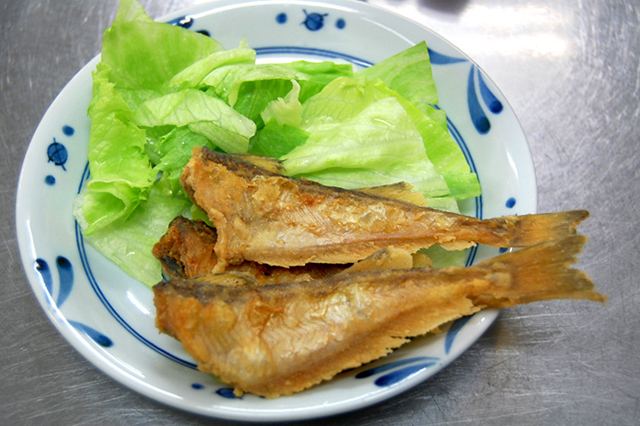
Take the head and the entrails of the Hatahata, salt peppers, and clothing them and fried them with oil. The small picket peppers can eat to the bone and can also be soaked in the south with slices of vegetables.
Recipe — Serves 4
Ingredients
- 12 hatahata (sandfish)
- 3 tbsp wheat flour
- 3 tbsp potato starch
- salt, to taste
- pepper, to taste
- oil for frying, to taste
- lettuce, to taste
Method
- She takes away her head and her intestines, cleans them, cuts them down, and peppers them.
- So, we're going to add a mixture of flour and flour.
- So let's say that you have a temperature of 70 degrees Fahrenheit.
- I'm going to cut the lettuce loosely, and then I'm going to place it on a plate with a honey tap.
Dish data: Ministry of Agriculture, Forestry and Fisheries (MAFF), “Uchi no Kyodo Ryori” (Our Regional Cuisines) database, used under the Public Data License (PDL1.0); translated and adapted from the Japanese original.