Home / Tokushima / Kintokimameiribarazushi
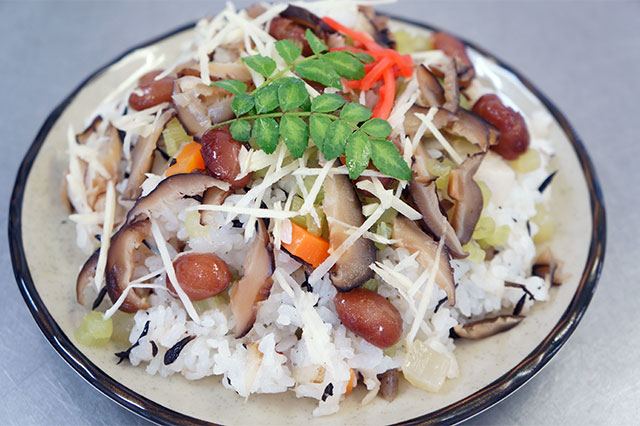
Kintokimameiribarazushi 金時豆入りばら寿司
| Prefecture | Tokushima (徳島県) |
|---|---|
| Region | Shikoku |
| Japanese name | 金時豆入りばら寿司(きんときまめいりばらずし) |
| Reading | Kintokimameiribarazushi |
| Home area | All within the province. |
| Main ingredients | I'm not sure if I'm going to be able to do that. |
History and Origins
"Sakisaki" made from citrus oil and sugar sweetly boiled beans and seasoned food mixed with rice. Since Tokushima was originally a difficult soil for rice, it is said that it was the beginning of this local dish that we thought we would increase our volume by adding plenty of tools instead of rice. In addition to the variety of foods used by the community and season, there are many different ways of calling them "smushi" and "the fifth" and "the "theme" and "the walnut" as well. The vinegar rice can be flavored with seams cut with seams, seams, and so on, and it is a Chinese or Chinese dish with aroma, looks, and taste. By the way, peas are a familiar food in Tokushima. There are various local foods known, such as "Spee peas" with golden beans added to the kanji, or "Snacks" with golden beans, black beans and root vegetables.
When It Is Eaten
Sushi is attached to celebrations such as festivals and phrases. They say that making lots and eating in each home can be done by acting up to customers and giving them as a gift. Also, in sushi, what we eat on the lunar day of the lunar month, we called it "sniff." This was known as a dish prepared with crops and with God's blessing. It is customary for a man to cover his eighth part to the limit and to hope that "the next year will be a full crop." When you act on customers, you add eggs, but instead of using them in your daily life, you make them using your own grown vegetables.
How It Is Eaten
I'll mix rice with vinegar and rice, but I'll mix the ingredients with sugar, soy sauce or salt. The vinegar is used for vinegar, such as soy sauce, soy sauce, soy sauce, and soy sauce. They say that in spring paragraphs, they may add vegetables, rice and other dishes during the season, such as chicken and chicken. In some areas, it is also possible to add a large crop or a dry crop. Or in the south of Tokushima Prefecture, you can dry flower plants instead of golden beans and boil them with oil and sugar. Taste the season and enjoy the personality of each household are also the charm of sushi.
Recipe — Serves 4
Ingredients
- 2 × 180 ml(300 g) rice
- 420 ml(390 ml) water
- Vinegar: 1/5 cups(40 ml) yuzu vinegar
- Vinegar: 1 tbsp1 tsp(20 ml) rice vinegar
- Vinegar: 2 tbsp(20 g) refined white sugar
- Vinegar: 1 tsp(5 g) salt
- 30 g(1) drowning
- 5 g(35 g) eclipse (干し)
- Mix: 1/2 cups(100 ml) dashi stock (niboshi (dried sardines))
- Mix: 3 g(1 tsp) refined white sugar
- Mix: 4 g(2/3 tsp) soy sauce
- Mix: 8 g(1/2 tbsp) mirin
- 3(6 g) dried shiitake mushrooms
- 1/2 cups shiitake soaking liquid (dashi stock)
- Mix: 9 g(1 tbsp) refined white sugar
- Mix: 9 g(1/2 tbsp) mirin
- Mix: 3 g(1/2 tsp) dark soy sauce
- Mix: 12 g(1 tbsp) sake
- 30 g(1/6) konnyaku
- Mix: 1/2 cups dashi stock (niboshi (dried sardines))
- Mix: 4 g(1/2 tbsp) refined white sugar
- Mix: 8 g(1/2 tbsp) mirin
- Mix: 3 g(1/2 tsp) light soy sauce
- Mix: 12 g(1 tbsp) sake
- 50 g(1/4) burdock root
- 50 g(1/3) carrot
- 150 g(2) taro
- 20 g(50 g) dried daikon radish
- Mix: 1 1/2 cups dashi stock (niboshi (dried sardines))
- Mix: 18 g(2 tbsp) refined white sugar
- Mix: 5 g(1 tsp) salt
- 130 g (1) butterbur
- Mix: 3/4 cups(130 ml) dashi stock (niboshi (dried sardines))
- Mix: 7 g(1 tbsp) refined white sugar
- Mix: 13 g(2/3 tbsp) light soy sauce
- 100 g 金時豆甘煮
- 5 g pickled red ginger
- 15 g ginger
- a few sansho leaves
Method
- Rice is washed and cooked with enough water.
- Mix the vinegar ingredients together and melt the sugar. In the case of the azure, which keeps the drying in place, it will be tanned, loosened, and remove bones and skin. (I'll put the loosed body together and mix it with vinegar.)
- The elbows are put in water and returned to wash well until the water is clear and boils with A until the juice is low.
- The dried bowl is boiled and boiled with a B in the juice as much as it should be. I'll cut the juice and cut it into pieces.
- I'll cook it with a c flavor. I'll cut the juice when the soup is low.
- I'll cut the carrots into two-inch-long strips, peel the skin and cut them into thick gold. The dried root is put in water, and the dried root is returned to the water, and the water is pressed well, and the knife is put in about two centimeters. Put these ingredients in a pot, taste them in D, and boil them. I'll cut the juice when the soup is low. Vegetables taste with sugar and salt to keep their colors clean.
- The wipe is boiled and peeled and cut into a small one-inch-long cut. E is boiling, cooling, and boiling.
- When the rice is ready, the two of them will combine while it's hot to make rice.
- Mix three, four, five, six, and seven half of the baths together.
- I'm going to put on a bowl, and I'm going to put the rest of the dishes, and I'm going to put gold beans, and a handful of ginger on top, and I'm going to put some red pepper and a bud in the tree.
Dish data: Ministry of Agriculture, Forestry and Fisheries (MAFF), “Uchi no Kyodo Ryori” (Our Regional Cuisines) database, used under the Public Data License (PDL1.0); translated and adapted from the Japanese original.