Kaki Maburi かきまぶり
| Prefecture | Wakayama (和歌山県) |
|---|---|
| Region | Kinki |
| Japanese name | かきまぶり |
| Home area | It's from Iwaji. It's from the river city. |
| Main ingredients | I'm not going to do that. I'm going to do that. |
History and Origins
In the Sasa district, located east of the river plain, crops have been produced that are adapted to climate-like climates, such as rice plants and shrubs. In particular, the irrigation system of the Edo was developed as a sub-state depression. This local product uses rice and dry and seasonal vegetables to make old colors and convey them to the taste of native land. One of them is the "sniffing" that was mixed with four-year-old vegetables in rice. Apart from acting like a lot of people when they're gathered together, we used to have a day off from paddy. "Sweet" was a dialect meaning "to stir" in Sasa, and it was mixed with "to stir" and became "toss."
When It Is Eaten
We make them at a time when there are many visitors, such as celebration and his bank. At dinnertimes for people who don't know how many guests are coming, we'll make a lot of soup and make a lot of it. It's easy to make a lot of stuff to boil all the materials in the soup together. In the past, it was made of dry and vegetable material instead of fresh fish, but today it is carried by home with shrimp and other tools.
How It Is Eaten
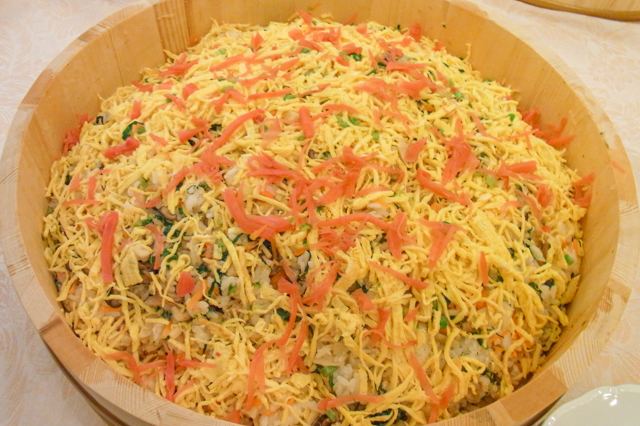
Put in dried foods and seasonal vegetables, such as citrus tofu, dried rice, dried rice and rice, mixed with rice, and made with rich silk eggs and garlic. In some areas, it can be apricot or apricot, or use local slats as vinegar, or add vinegar to the flavor.
Recipe — Serves 6
Ingredients
- 4 × 180 ml rice
- 2 cups dashi stock
- 1 freeze-dried tofu (koya-dofu)
- 3 dried shiitake mushrooms
- 100 g bamboo shoot
- 100 g carrot
- 1/2 kamaboko (fish cake)
- 70 g green beans
- 3 egg
- as needed shredded nori
- as needed pickled red ginger
- Vinegar: 75 ml vinegar
- Vinegar: 40 g sugar
- Vinegar: 1 tsp salt
- Vinegar: 2 tbsp mirin
- Mix: 2 tbsp light soy sauce
- Mix: 20 g sugar
- Mix: 1 tbsp mirin
Method
- Takano Tofu is put back in hot water, and when it's in the palm of your hand, it's best to fold it up in the water and cut it into small, short volumes.
- The dried grain is returned to the water, and the stone is removed and cut into pieces. The kite is small, and it is red and narrow. Carrots wash, peel and cut small.
- Xinya will work on the muscles and boil them in a hot, salted water with color and cut them in half.
- I'll put soup and seasoning A in the pot and boil it, cook it, add 1 or 2 ingredients, and add it until the soup is gone. I'm going to put it in just before I stop the fire.
- Add four ingredients cut into the rice and mix the whole.
- Put five on the vessel and scatter the rich silk eggs, peas, finely chopped red peppers.
Dish data: Ministry of Agriculture, Forestry and Fisheries (MAFF), “Uchi no Kyodo Ryori” (Our Regional Cuisines) database, used under the Public Data License (PDL1.0); translated and adapted from the Japanese original.