Home / Wakayama / Kinzanjimiso
Kinzanjimiso 金山寺味噌
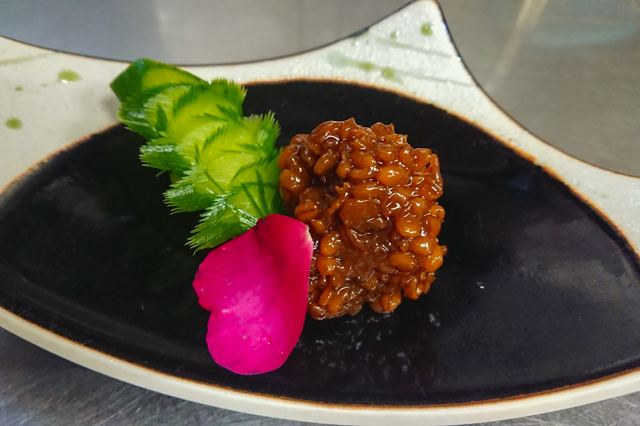
| Prefecture | Wakayama (和歌山県) |
|---|---|
| Region | Kinki |
| Japanese name | 金山寺味噌(きんざんじみそ) |
| Reading | Kinzanjimiso |
| Home area | Central Area |
| Main ingredients | It's a very simple process. |
History and Origins
In 1249, a high priest in Japan, Dr. Sekiya, learned how to make a mountain temple in his school school, and took it back to Japan. It is said that when the "Imagination Temple" was built, the quality of water was spread in Yuasa, where it was suitable for the manufacture of taste and oil, and in the area around it. It's supposed to be the founder of citrus oil and taste buds. For over 300 years, farmers had made their own food. But when we entered the Edo era, it became visible and commercialized by the Order.
When It Is Eaten
used to be built for home use to be home. In summer, when it is rich in lentils and peppers, it is cooked with three kinds of lentils, beans, wheat and rice. After about a month, you can eat it, but after a year of sleeping it's even better. Since it's preserved, it's been eaten all year long as a regular vegetable. The variety of vegetables and flavorings that you pack are different from the store and from home, and they have a taste for each other.
How It Is Eaten
We eat rice, roast fish, stabs, wine bowls, and not as flavored food. It's a good match with the Japanese tea soup of Mount Kikuyama.
Recipe
Ingredients
- 4 white rice
- 3 white barley
- 3 soybeans
- 3 kg sugar
- 1 salt
- 1 packets koji
- 3–4 kg eggplant
- 3–4 kg white - tailed
- 300–400 g ginger
- 400 g shiso
- 1 × 180 ml white sesame seeds
Method
- The day before: Wash white rice well and wash it overnight. Day one: Wash the barley well and put it on a soft hot water for about two hours.
- Sunlight: The beans are in hot water and the leather is in water. About 30 minutes.
- Sunlight: The white rice that has been cut from water is steamed.
- Day: Cut white pepper water, mix it with beans, and steam it and twist the mustard beans.
- Day: Wash vegetables well, cut them into 1 cm thick, salt them in a quantity of salt, and place light stones on them.
- Sunbae: The mustard bean comes out in the morning and the rice boy comes out around noon. Put a piece of salt on a thin sheet of salt and two pieces of salt in a cool place.
- Sunlight: Vegetables drain the moisture. I'll leave you alone. I cut a slice of ginger, and then I cut the salt into one centimeter and then I light it up.
- Day: Mix all the ingredients well and apply them thoroughly from the bottom to the tub. When you drop it, place a heavy stone on it and seal it. I'll eat in a month.
More About Kinzanjimiso
Kanyama-sama is the type of meat that can be made as a condiment dish. The theory of the Ch'injiang, although there are many theories, is one of the most powerful theories of which are found. After the introduction of the process, it was to be produced in many parts of Japan.
It tastes delicious.
Kanyama-sama is said to be one of the typical examples of the Japanese yakuza. In Japanese, it's not like the common taste used as a flavor, but it's a word that is still in its proper condition that is eaten as part of the diet, or that means taste that is produced as a food that is not available. That's why they call it a delicious dish. The process of making a delicious dish divides it into a great variety of flavors. The cider is the name of the citrus prepared during the citrus and ripe period of phytozo, after citrus, along with suitable vegetables, fish, spices and flavors, besides ingredients similar to normal taste. To make it clear, the taste buds are the names of the condiments that have been prepared by the ordinary taste prepared, plus the ingredients and flavors that are added and then boiled up and made.
Processing
Kanyama-san's age varies depending on how the manufacturer likes it and so on. It basically requires a period of maturity from a few months to a year, after preparation. The non-water raw materials include the dais Mugi and the vegetable salts that are cut at the right size. In some cases it is added as raw materials. In addition, vegetables may use pre-salted foods rather than raw ones. For example, salted lily, eggplants, peppers, and cyso fruits. However, the pepper has been carved with skin, and is simply carved with cisso and is sometimes used to paste it. Also, we can see that while other vegetables may be salted, the peppers alone will be used to prepare them. Even if you see only these things, such as peppers, there is a difference in the process of making the chogisaki plant. And not all of the vegetables mentioned above are put in here, but there are others. Which vegetables are processed, how they are processed, and used, are determined by the tastes of the manufacturer and manufacturer as well as by the decision of the mature period.
To be sure, the cucumbers used in making yuyama's rice bowl are made from roasted dais, omgi and salt water. These ingredients are stored in the right container, sealed, and then sealed into it for more than a few months to mature. Since this is how much time is set aside for the full effect of microbes after the process, we can classify the chrysanthemums as citrus.
We can also see cases where "goldyama" has been written into products such as "glycerin" without vegetables.
Lands and Geographical Display Protection
The source of the Kanyamaji story is the theory that has come to power amongst the theories that exist, and that it has come to the elevated temples of what is now called the Wakayama Prefecture. It has been reported that the production of yuzu - yama chrysanthemums has spread and that citrus oil has been made from the liquid that has been poured out by the plant. At least it is seen that it has affected Japan's making soy sauce oil. With such background, it was identified as "the first drop of oil made from the Yuasa, from the beginning of the oil-making era," and one of the Japanese heritage. On August 10, 2017, as "Akiyama temple," a geographical view system registered the range of production as "in Wakayama Prefecture." This is the first product of Wakayama Prefecture registered in the geographical display system. In addition, this is the 39th registration of the product registered to the geographical display system, and this is the first time the taste-stuff registration has been made.
History
The origin of taste buds is thought to have been produced in ancient China by adding salt, such as tin, by storing salt, and by controlling food decay and long-term development of safe microbes by eating them. In large measure, they were classified as three different types of rice, fish and rice, and among them were the citrus and soo. And in Japan it is said that in the '200s, which is just in the '200s' period, the Japanese have changed to taste buds.
In 1249, he went to work at the Hijigi, and also learned how to make a delicious meal made there. A sense of comfort is said to come home in 1254, and pass it on to the vicinity of the shrine of the rising nation, which has been opened in the Gyno Mountain. It is said to have boiled the roasted dais and omugi and added to them the citrus and salt, as well as a mixture of eggplants, cucumbers, silicas, and peppers, and it has been matured for over six months. And yet the reason why I chose the land of Yuasa, Akasaka, for the construction of the Hakasaka mountain garden was because the drinking water I could get here was good. So, in the early days of the Edo, it was sold under the name "Change Temple" and it is believed that it got a favorable reputation and settled as a masterpiece. At any rate, the Chrysanthemumaka has been called "Kilyama" because it reached Japan from the Hakayama temple. However, in Japanese, kanji is usually read "play," and in kanji it is replaced by kanji, which means "gold" which means "gold."
To be sure, the estuary of the estuary, the estuary of the estuary, has been filled with liquids at the bottom of the casserole, but this has affected Japan's soy sauce oil.
It is said that the water in the country is hard and seek better water, and that production of the haiku has spread around the river in the north and around the Sakura River in the south. On March 20, 2008, the Kashan Taniji, about 430 years ago, was found in the old temple area of Wakayama Prefecture from the city of Rockham.
Production and Sales Source
It's the Chinese Tsunama.
In the Chinese Yamayama mountain, where comfort has taught them how to make the yakuza chrysanthemum, the process of making the chrysanthemum is broken after that. There are debates on the Chinese side and on the resurrection.
Text adapted and translated from the Japanese Wikipedia article 金山寺味噌 by its contributors, licensed CC BY-SA 4.0.
Dish data: Ministry of Agriculture, Forestry and Fisheries (MAFF), “Uchi no Kyodo Ryori” (Our Regional Cuisines) database, used under the Public Data License (PDL1.0); translated and adapted from the Japanese original.