Home / Miyagi / Sendaihakusainotsukemono
Sendaihakusainotsukemono 仙台白菜の漬物
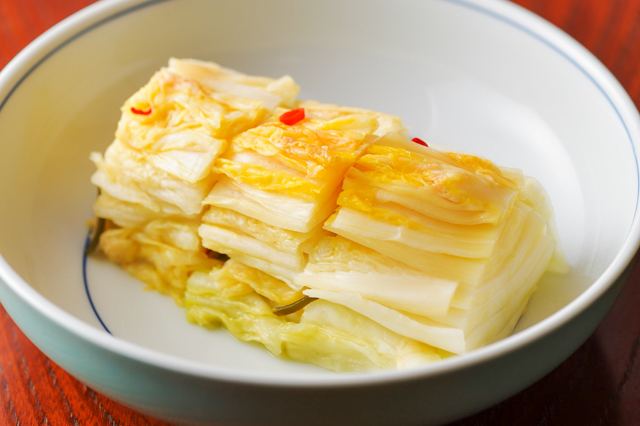
| Prefecture | Miyagi (宮城県) |
|---|---|
| Region | Tohoku |
| Japanese name | 仙台白菜の漬物(せんだいはくさいのつけもの) |
| Reading | Sendaihakusainotsukemono |
| Home area | Miyagi Prefecture |
| Main ingredients | cabbage. |
History and Origins
It was during the Meiji period that the cabbages began growing in Japan, and Miyagi Prefecture brought seeds from China during the victory of the Sun-Sun-Sun-Sun-sun-sun-sun. In the Great Fukuoka era, one of the root types of Japanese cabbage will be born called "Mamashima Shiba." The Matsushima Whitebe has also been developed with "The Matsushima Second and New Matsushima" and Miyagi Prefecture has become Japan's largest source of vegetables. Matsushima cabbages were white and soft and sweet, branded by the name "Syinta Tinta" and distributed throughout the country. However, as the transition to the new species after the war progressed, the growth of the traditional vegetable Sendai Tinta became less vulnerable to damage while the leaves were gently transported. In 2011, the tsunami caused by the Tohoku earthquake badly damaged coastal farms. While the effects of the salinity were a problem for resuscitation, JA, and goats became the center of JA's efforts to revive, raise, and consume the production of "Syenta Tinta" that was relatively potent to salt damage. Since the Sendai cabbage is soft and contains a great deal of amygdala, there is a characteristic of the plant that is so easy to grab when you are making it into a vegetable, that it is so good to hold on to, maintains a proper tooth, that it is so tasty that it lasts longer. At one time, this rice from Sendai albino was often eaten as a junk food.
When It Is Eaten
They are eaten as rice and tea. It's used in broad scenes, such as home and restaurant.
How It Is Eaten
The cabbage that comes in the middle of November, when the frost is falling, should be left for a while after the harvest, and then soak the salt in. Besides cutting it into easy size and eating it and eating it as it is, those that become old and more acidic are served with sesame oil and so on.
Recipe
Ingredients
- 10 kg Chinese cabbage
- 4–5%) 400–500 g salt
- 5–6 chili pepper
- as needed yuzu
- 20 kg weight (for pressing)
Method
- The cabbage stays for a while after the harvest, and when it's dry, wash it, cut the stock, and divide it by hand.
- Put a cabbage cut on top of the tub and then place it in a neat place before long. I'll stick a lot of salt on the base, put pepper in it, repeat this, place a heavy stone on it, and fill it for two days.
- If the water comes up in three days, take it all out once, and turn it over and over again so that the cabbage on top comes down. The heavy stones are about half cut, and the juice is about the size of a tassel.
- The skin and cloth of the small cut mustard will be put in when it is pasted back. It's about two weeks from now.
Dish data: Ministry of Agriculture, Forestry and Fisheries (MAFF), “Uchi no Kyodo Ryori” (Our Regional Cuisines) database, used under the Public Data License (PDL1.0); translated and adapted from the Japanese original.