Shisomaki しそ巻き
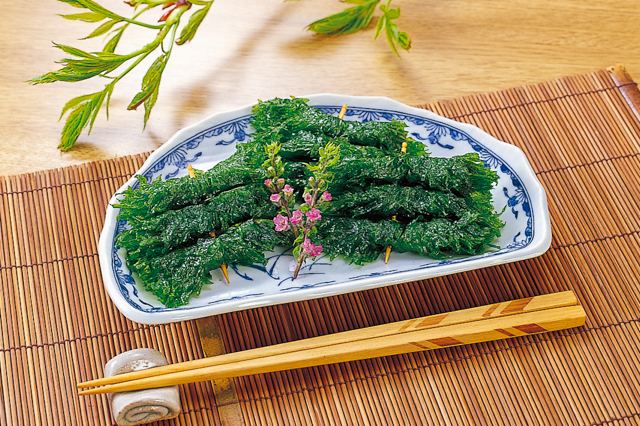
| Prefecture | Miyagi (宮城県) |
|---|---|
| Region | Tohoku |
| Japanese name | しそ巻き(しそまき) |
| Reading | Shisomaki |
| Home area | Miyagi Prefecture |
| Main ingredients | It's blue, tastey, sugar. |
History and Origins
In fact, it's the food eaten by the Japanese for ages, so that fossilized species from the ruins of the Taj Mahal are soiled. There is a red, blue, and red, which is wrapped up with a plump palm and so forth. The blue plant is called "The Leaves," and is prized as a tassel toes and flavored vegetable. For nutrition, there are also a lot of minerals, such as fiber and vitamin B, vitamins C, potassium and calcium. Miyagi Prefecture is a masterpiece representing Miyagi Prefecture by which Ise-sensei built "Saltba" in the castle during his reign, recommended that the Ise-Saltabian make "Saltba" and until he is present in our time, Sendai has become a masterpiece representing Miyagi Prefecture. It is the "single" that has been wrapped in a bowl of conch and wrapped in blue. There is also the theory that the beginning of it was made for the Yuzu Yuuki guests by lynko, the Ishi religious priest. It was said that it was originally eaten as nothing, but adding sugar and so on spread as tea and children. It's also common for lunches. In Miyagi Prefecture, supermarkets and roadside station are also sold year-old and are loved by many people.
When It Is Eaten
- Year of the year. They are eaten as tea, rice, rice and lunches. It's also liked as a place of Japanese wine.
How It Is Eaten
Add sugar, pepper, pepper, pepper, and so forth, to the taste buds, and then paste them together, and wrap them in a dip and point to the twig. If you pick up the water with the oil and you skip the water, you'll oil it tight. I can enjoy the taste of Paris in the freshly fried air. After that, you can store it in a refrigerator or something and save it for about a week.
Recipe
Ingredients
- 400–500 green shiso (ちりめんじそ)
- Mix: 500 g red miso
- Mix: 250–500 g sugar
- Mix: 250 g cake flour
- Mix: 150 g shelled walnuts
- Mix: 25 g white sesame seeds
- Mix: 6 g shichimi seven-spice chili
Method
- The leaves are washed, cut water, and take leaves one by one, and wipe the water with a cloth.
- I'll have the animals cut into rough pieces.
- Put ingredient A in a pot with thick hands and mix well. If the ingredients are all folded up, put them on the fire. We're careful not to rub the bottom of the pot on a wooden board and burn it, and we make a paste. If you add about 100 ml of water at this time, it's easy to think about it. With a slightly soft eye, I stop the fire and cool it.
- If the paste is cold, I'll take the right amount and put it in a stick.
- Put it blue under its leaf table, put four on the side of the leaf, wrap it around the edge of the leaf, and stick it in four sticks.
- I'll put it in oil that's heated at a temperature and then I'll throw it upside down once.
- Cut enough oil and save it in cold and dark places. If you freeze, you can save long-term.
More About Shisomaki
Sakura is one of the most important things not to be eaten in distant states and the Tohoku region.
Overview
In the far-off states, there is a variety of ways to make a cigar, as well as a red-dish roll and a bowl of boiling silica leaves.
The "scroll" eaten at the Tohoku region is usually wrapped and fried in blue jigsaws. In the cooking example of Miyagi Prefecture, some plants use b-juice to roll the Sendai with a mixture of salt and nut and oil.
The taste buds tend to be more sticky because the Far-off's 'Silver' is more of a flavored flavor, and the the Tohoku region is a mixture of nuts and flour. Tastes vary from sweet to sweet, to sweet, to bitter, to peanut, to plum to orange and to goat.
It's also used in other ways as well as in snacks and tea orders.
Both cyo and taste are simple foods that are familiar to the natives, but they are loved by them as foods rich in food.
Text adapted and translated from the Japanese Wikipedia article しそ巻き by its contributors, licensed CC BY-SA 4.0.
Dish data: Ministry of Agriculture, Forestry and Fisheries (MAFF), “Uchi no Kyodo Ryori” (Our Regional Cuisines) database, used under the Public Data License (PDL1.0); translated and adapted from the Japanese original.