Tenmon Dou てんもんどう
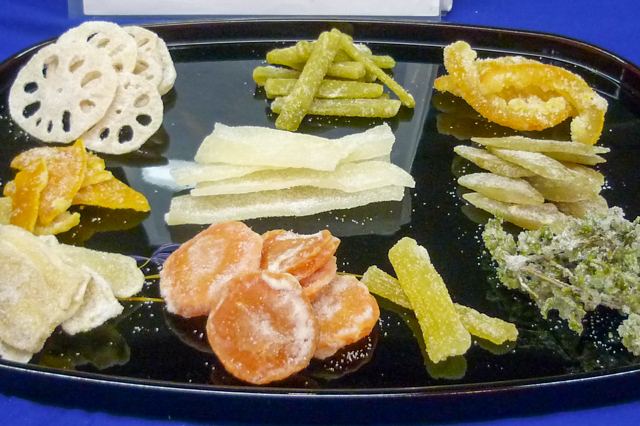
| Prefecture | Chiba (千葉県) |
|---|---|
| Region | Kanto |
| Japanese name | てんもんどう |
| Home area | All within the province, Tokiyong City. |
| Main ingredients | (Laughter) |
History and Origins
Chiba Prefecture produces a lot of vegetables and makes them so sweet that they can be boiled in sugar and stored for long periods. "How do you like it?" is originally referring to a Chinese medicine that has washed up the lye and left the skin of the lye cicada, which is dry, and has been used for a month or two with honey in it, hoping for a cough or for a resuscitation, and is derived from its name. The main thing was the boiling and drying of carbohydrates and roots with honey, but as time went on, different vegetables were used. Like a walnut, a lot of fibers are thinly cut and boiled once. And what has an ak is poured out in boiling water, sugar in it, and boil it slowly. It is said to have made a lot of this, stored it in large cans, and used it as an energy source during the agricultural period. Since it is possible to save it for about ten months without embalming, it has been widely known among farmers as a food preserve. In Tokugawa, Japan, there is a creation of "sachiko" from the Tokugawa family's hand-in-the-hand garden, using a variety of crops to make use of the season.
When It Is Eaten
You can eat them all year round as farmers' snacks and energy sources. It's been valued as a food preserve.
How It Is Eaten
Each ingredient is treated down, some of it is taken out and the hard one is boiled. Water and sugar boil and sugar dry.
Recipe
Ingredients
- Burdock root: 1 kg burdock root
- Burdock root: 1 tbsp alum
- Burdock root: 1 kg sugar
- Carrot: 100 g carrot
- Carrot: 100 g sugar
- Carrot: a pinch salt
- Carrot: a pinch potato starch
- Mix: 3 mandarin peel
- Mix: 500 g sugar
- Mix: a pinch vinegar
- Ginger: 1 kg(10、) ginger
- Ginger: 1 kg sugar
Method
- I'm going to dip it in and clean it for about three hours. (2) I'll boil quickly and water well. (3) I'm boiling sugar with salt and no lids. When it turns into candy, it'll get out of the fire and stir well and cool down.
- I'm going to cook it with a slice of sugar and salt. (2) If the soup runs out, I'll spread it out quickly and cool it. (3) Put a piece of flour in sugar, and add a cold carrot to the bowl.
- The skin of the cherry tree is (1) the skin of the cherry tree will tear the white part of the tree thin and cut it into thousands of pieces. (2) I'll do a little aug out of vinegar water overnight. (3) Add water and boil until the skin is soft. (4) When you boil it, drain water and add sugar and cook more. It'll be cooked until it turns to canin foam, and then it'll be cooked and then it'll be made with sugar.
- I'll cut it thin, dip it overnight, and do a little cleaning. (2)) Cut the water from the peppers. (3) Cut the water in the pot and boil the sugar with a strong fire. (4) When you are in a candy state, light it up and boil it more so that it doesn't bother you. (5) If you follow a condensation in a pot, put it down from the fire and let it cool on the rest of the sugar sieves spread out on a thick sheet of paper.
More About Tenmon Dou
How about Chiba Prefecture native food? It's sweets that have sugared vegetables.
Overview
Since it can be preserved for about ten months without the use of embalming, it is a food that has been widely known among farmers as a food reserve.
They are eaten throughout the year as farmers' snacks and snacks.
Similar vegetable sweets are found all over Japan, but only Chiba Prefecture is called.
Origins
The word "nature" is the word originally made from the raw medicine and the Chinese medicine made from the saxophone. When a natural winter was swallowed in honey for about a month or two, it was expected that cough would be coughed, that it would be healthy, and that it would be taken.
The main dish was the mustard and root peppers that were boiled and dried with honey, but when the time came, they were made of various vegetables.
Example of how to make
We'll treat the vegetables under control. Put the sugar in and boil slowly. I'll give it to monkeys, drop extra honey, dip a sugar in it, and dry it.
How do you like the East Golden Gate?
(In Tokiki City, Japan, Japan, Japan, Japan, Japan, Japan, Japan, Japan, Japan, Japan, Japan, Japan, Japan, Japan, Japan, Japan, Japan, Japan, Japan, Japan, Japan, Japan, Japan, Japan, Japan, Japan, Japan, Japan, Japan, Japan, Japan, Japan, Japan, Japan, Japan, Japan, Japan, Japan, Japan, Japan, Japan, Japan, Japan, Japan, Japan, Japan, Japan, Japan, Japan, Japan, Japan, Japan, Japan, Japan, Japan, Japan, Japan, Japan, Japan, Japan, Japan, Japan, Japan and Japan, Japan, Japan, Japan, Japan, Japan, Japan, Japan, Japan, Japan and Japan, Japan, Japan, Japan, Japan, Japan, Japan, Japan, Japan, Japan, Japan, Japan, Japan, Japan, Japan, Japan, Japan and Japan, Japan, Japan, Japan, Japan, Japan, Japan, Japan, Japan and Japan, Japan, Japan, Japan, Japan, Japan, Japan, Japan, Japan, Japan, Japan, Japan, Japan, Japan, Japan, Japan, Japan, Japan, Japan, Japan, Japan, Japan, Japan, Japan, Japan, Japan
Text adapted and translated from the Japanese Wikipedia article てんもんどう by its contributors, licensed CC BY-SA 4.0.
Dish data: Ministry of Agriculture, Forestry and Fisheries (MAFF), “Uchi no Kyodo Ryori” (Our Regional Cuisines) database, used under the Public Data License (PDL1.0); translated and adapted from the Japanese original.