Tōganjiru とうがん汁
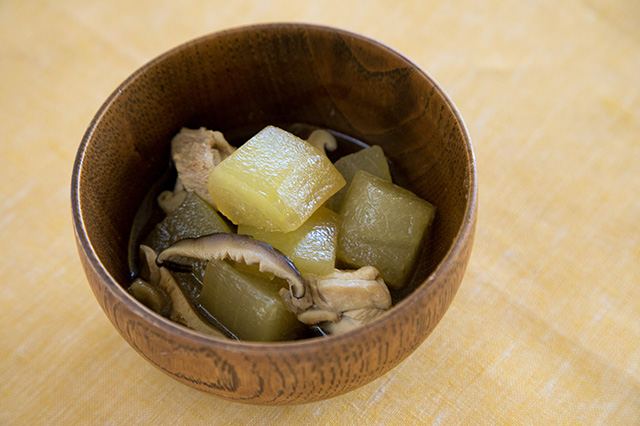
| Prefecture | Aichi (愛知県) |
|---|---|
| Region | Chubu |
| Japanese name | とうがん汁(とうがんじる) |
| Reading | Tōganjiru |
| Home area | The entire county is centered around the tributaries and the tributaries. |
| Main ingredients | You're gonna have to cut some chicken, cut some chicken. |
History and Origins
Aichi Prefecture is the second largest product of cancer in the country after Okinawa, and is also widely absorbed in its food. It's said that India was native to Japan and that it was also brought to Japan through China. There's a list of cancers in Nara's literature in the old days, and there's a possibility that they were eaten from old age. It is said that it is a vegetable in season, but its skin is thick, so it is so thick that if you save it in cold and dark places, it would have been better for you to last until winter. It is characterized by the white powder that is known as a traditional Aichi Prefecture vegetable, and the ripe fruit. In recent years, there has been an increase in smaller ones due to improved species, but in the past they were so big that they were often eaten during the postwar times of food shortages. Early and early cancers are avoided from the fact that the white powder is available, and the growth of chrysanthemum has been the main source of the growth of chromium mousse. Since it is easily flavored with a white taste, it is good for a variety of dishes, so it is used in a variety of dishes, such as citrus, stew, and broth. The most familiar of all the many dishes of cancer is the "Kinda" with which the juice has been poured.
When It Is Eaten
You can eat it during the harvest of cancers in July to October. More than 95 percent of the water is water rehydration for summer, and other things are valuable on summer menus, where appetites tend to be reduced because of the white taste. Sometimes we eat cold, eat cold, or hot, as summer heat.
How It Is Eaten
If you take the skin from the skin and cut it to a size that is easily eaten, you'll boil it in the juice with any material that has been made of chicken. When the material is cooked, use a piece of flour to cook it and eat it when it gets used to. Except for cancer, the tools vary from home to home, but they like more juice, so it's also popular to add oil. If you want to smooth your lips, cut them thickly. On the other hand, when you cut off the skin, you will have a better color when the green on the skin has been boiled a little. The juice is often made from the juice of the dried sauce, not the casserole or the boiling.
Recipe — Serves 4
Ingredients
- 1/2(900 g) とうがん
- 200 g chicken thigh
- 3 dried shiitake mushrooms
- Mix: 800 ml dashi stock
- Mix: 4 tbsp light soy sauce
- Mix: 4 tbsp mirin
- Mix: 3 tbsp sake
- Mix: a pinch salt
- 2 tbsp potato starch
Method
- Except for the watas, the cancer is cut into a three-centimeter cube and skin is thin.
- The meat is cut into small pieces, and the dried meat is turned back in water.
- Put A in the pot, boil it, add 1 and 2 and cook it for about 30 minutes.
- Add a solution of water solution and make sure it's ready.
Dish data: Ministry of Agriculture, Forestry and Fisheries (MAFF), “Uchi no Kyodo Ryori” (Our Regional Cuisines) database, used under the Public Data License (PDL1.0); translated and adapted from the Japanese original.